

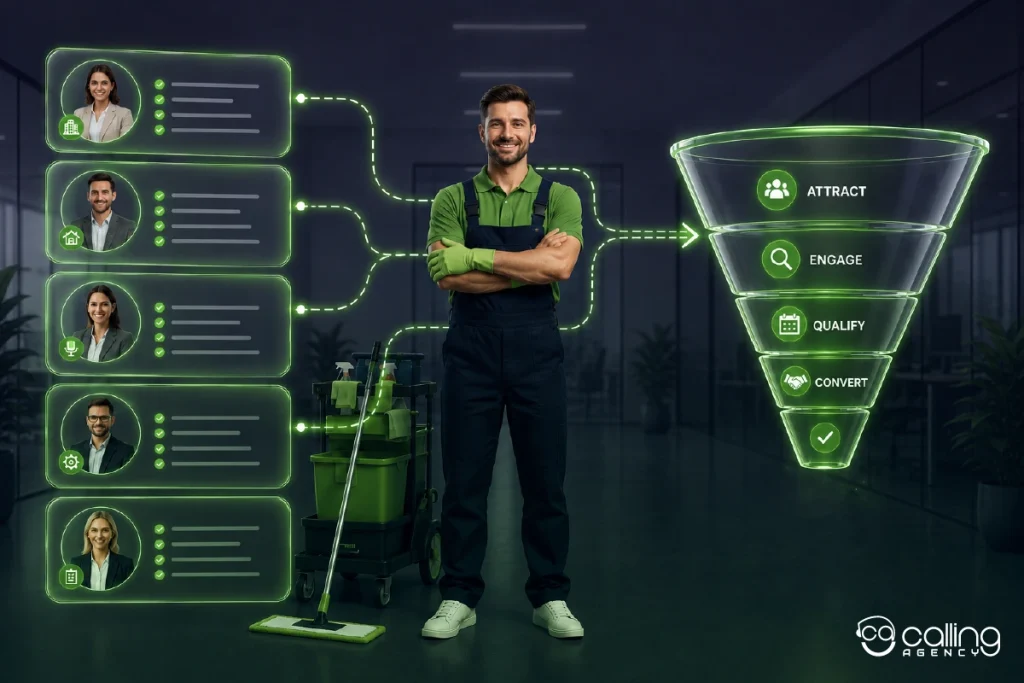
Before, we used to wait for referrals to get commercial cleaning leads. Now, referrals are not enough because one slow month can leave your sales pipeline empty. Then how to get commercial cleaning leads? Well, for that you have to combine many channels.
According to commercial cleaning industry benchmarks, the average B2B sales cycle for janitorial services is approximately 167 days. It means prospects often evaluate multiple vendors before signing a contract. That’s why companies that rely on only one lead source go through long periods with few or no leads.
So, it’s better to use a multichannel lead generation strategy. For instance, combine Google Business Profile optimization, local SEO, Google Ads, etc into one sequence. They all will create a predictable flow of qualified prospects. In this guide, you will learn exactly how to build that system.
Quick Answer:
The best way to get commercial cleaning leads in 2026 is using Local SEO, Google Business Profile optimization, paid advertising, cold outreach and referrals to get leads. Besides, we need to track cost per lead, appointment rate and customer acquisition cost. This is important for every marketing channel.
Channel Comparison At A Glance
| Channel | Cost | Time to Results | Best For |
| Local SEO / GBP | Free to low | 2-3 months | Long-term inbound, works on any budget |
| Google Search Ads | Medium to high | Days | Immediate lead flow when you need it now |
| LinkedIn Ads | Medium to high | 1-2 weeks | Targeting facility and property managers directly |
| Local Services Ads | Medium | Days | Fast visibility plus a trust badge |
| Cold Calling | Low (time-heavy) | 4-6 weeks | Direct access to decision-makers |
| Cold Email | Low | 4-6 weeks | Scalable outreach at volume |
| LinkedIn Outreach | Low to medium | 3-5 weeks | Warmer B2B introductions |
| SMS | Low | Supporting channel | Reminders and scheduling only, not a first touch |
| Referrals | Low (incentive cost) | Ongoing | Highest close rate once you have clients |
| ISSA / BOMA Networks | Membership fee | 2-6 months | Long-term relationship building |
| Institutional / RFP Bidding | Low to medium (admin time) | 2-6 months | Large, recurring contracts |
How To Get Commercial Cleaning Leads?
To get commercial cleaning leads, you have to know about your buyer, have a website, run campaigns, combine channels, and many more. Let’s now dive into it.
Understand Your Buyer And Positioning
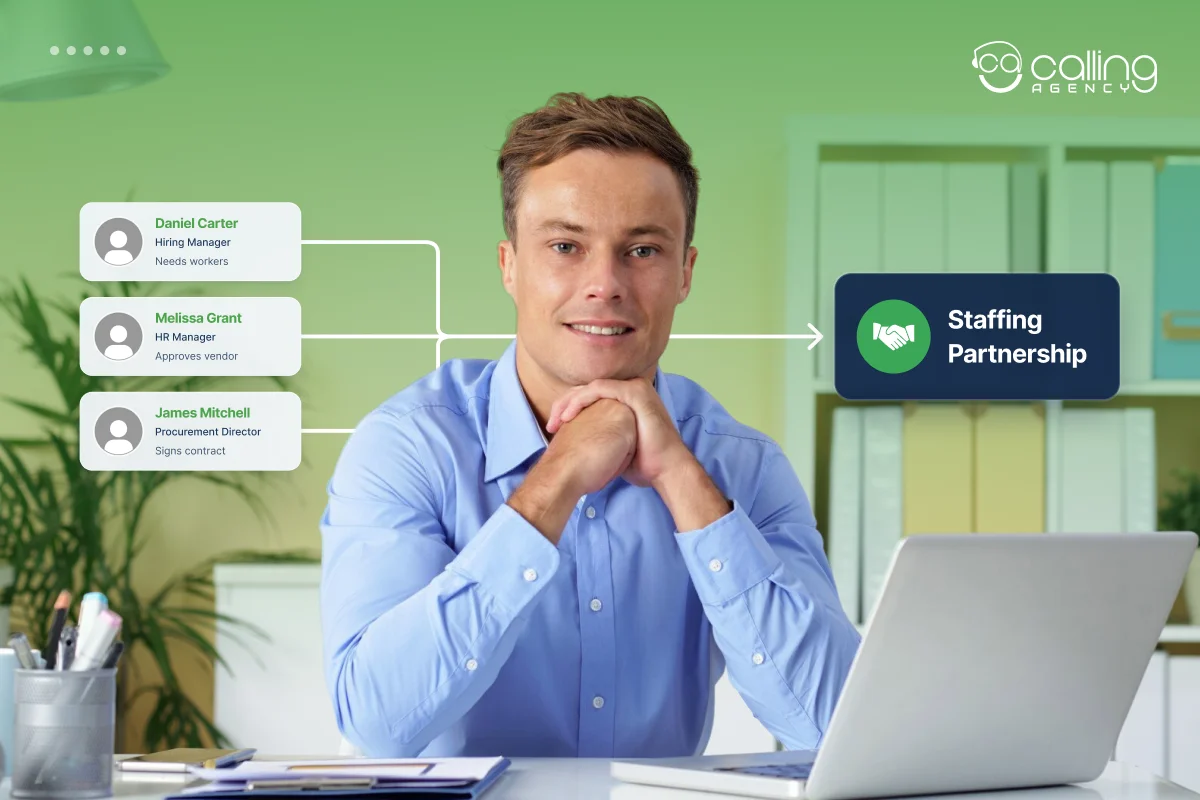
You have to first know about your buyer and position. Because each buyer has different priorities. Whenever you go to seek commercial cleaning buyers, you will find facility managers, property managers, office managers, operations managers, building owners, business owners and procurement teams. Facility managers want service quality and response times. Property managers want tenant satisfaction and to protect property value. Again, office managers think about reliability, communication, and budget. Just go through the B2B persona cheat sheet for your sales team and a breakdown of facility managers versus property managers. You will understand better.
Here’s more you can do:
Build Detailed Buyer Personas
You have to build several buyer personas for every industry and they all must be detailed. They should include industry, company size, number of locations, cleaning schedule, contract value, pain points, buying triggers and contract renewal period.
Let’s say you are building a medical clinic persona. Here, you have to mention daily sanitation, OSHA and HIPAA awareness. Make sure it also gives importance to infection prevention, training, and staff.
On the other hand, for a corporate office persona, you should focus on employee satisfaction and flexible scheduling. Here, presentation and professionalism are very important.
Build A High-Converting Website Foundation
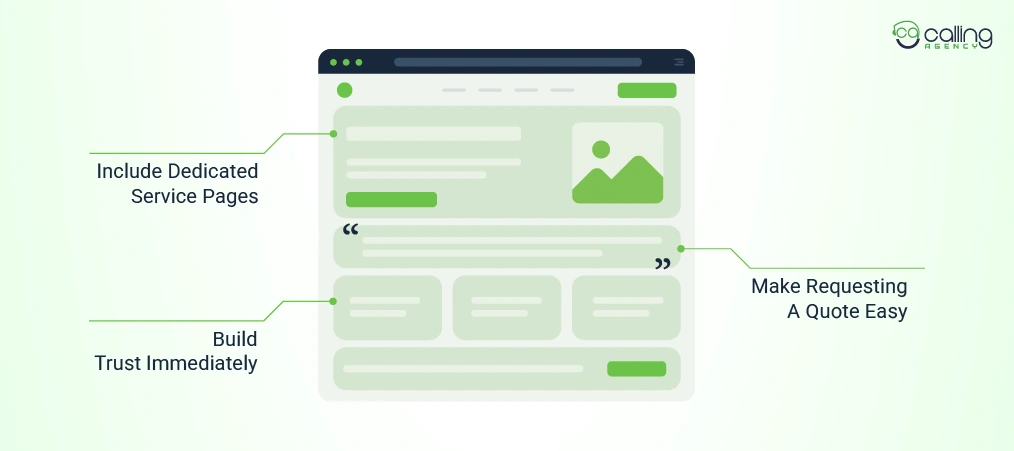
A high-converting website gives a positive impression to buyers. When they visit your website, they will only request a quote if it seems high-converting. But if your site looks outdated, they may not want to browse anymore.
To build a high-converting commercial cleaning website, give it answers to the following:
- What services do you offer?
- Which industries do you specialize in?
- Are you licensed and insured?
- Do you have experience with properties like mine?
- Can I trust your team?
- How do I request a quote?
Include Dedicated Service Pages
Dedicated service pages allow buyers to choose the service with no confusion. Always keep the listing different for office cleaning, medical cleaning, school cleaning, industrial cleaning, warehouse cleaning, etc. This is like targeting industry-specific keywords, which improves the SEO.
Build Trust Immediately
Your buyers will only trust you when they see proof of your effective service. In that case, you can include client testimonials, Google reviews, certifications, insurance information and so on. They are enough to trust.
Make Requesting A Quote Easy
Your prospect will request a quote if he finds it easy. That’s why keep your quote form short. Ask only for name, company, email, phone and property type.
Also make sure your phone number appears in the website header. Thus, prospects can contact you easily.
Dominate Local Search With Google Business Profile
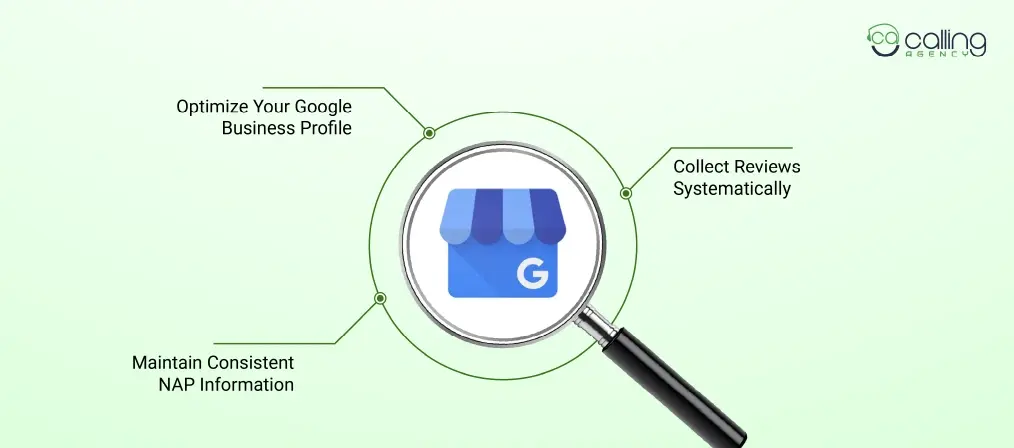
To dominate local search, put the words that commercial buyers frequently search for. It can be “commercial cleaning company near me,” “office cleaning services,” or “janitorial services in a specific city.”
There are more tricks on it:
Optimize Your Google Business Profile
Google Business Profile is a valuable free marketing tool available. Your profile should always be complete and optimized. Only then can it improve visibility in Google Maps. Just put your business name, phone number, service areas, business categories and website link correctly. It will be enough then.
Maintain Consistent NAP Information
To maintain consistent NAP information you need to put all details correctly. For example, put your name, address and phone number. Not only for your website, but also for Google Business Profile, Yelp, Bing Places, Apple Maps, and every online platform, you must follow the same rules. This will literally generate commercial leads.
Let’s say you are using “Suite 200” on one listing and “Ste. 200” on another. This is called inconsistency. This can weaken your local SEO signals.
Collect Reviews Systematically
Reviews influence both search rankings and buying decisions. According to BrightLocal’s Local Consumer Review Survey, most consumers read reviews before contacting a local business. This means that businesses with high-quality reviews will be trusted more.
So, don’t ask for reviews randomly. Just request a review from them within 24 to 48 hours. Or send a direct review link. Also, respond professionally to every review, even negative ones.
Run Paid Acquisition Campaigns
Running paid acquisition campaigns can put your business in front of buyers who are looking for cleaning services. The more people see them, the more you will get commercial cleaning leads.
Generally, SEO takes months to produce results. Whereas paid campaigns can do it within days.
Remember, not every advertising platform delivers the same type of lead. So, understand the strengths of each channel. Thus, you can invest your budget wisely.
Google Search Ads
Google Search Ads capture prospects with buying intent. These users are already searching for services. They look for terms like “commercial cleaning company near me,” “office cleaning services,” “janitorial services” and so on.
You just need to target location-specific keywords such as “commercial cleaning services in Chicago.” Then create separate campaigns for different service categories and use call extensions. Thus, mobile users can contact your business directly. Don’t forget to include trust signals in ad copy. Such as “Licensed & Insured,” “Free Walkthrough,” or “24/7 Emergency Cleaning.”
Another important thing is monitoring metrics. These are mainly click-through rate (CTR), cost per click (CPC), cost per lead (CPL), conversion rate, etc.
Google Local Services Ads
Local Services Ads appear above traditional search ads and display the Google Guaranteed badge. If you can ensure it on your website, you will surely gain credibility.
Always keep your ads highly qualified and make sure users can contact your business directly from the listing. If your company is serving multiple cities, in that case Local Services Ads will be worth it.
LinkedIn Ads
LinkedIn ads work best for B2B services like commercial cleaning. Here you can target decision-makers directly because their information, like job title, industry, company size and everything, is mentioned.
Don’t target everyone. Focus on those people who are in roles like facility manager, property manager, director of operations, office manager, and so on.
According to LinkedIn’s B2B marketing research, around 82% of B2B marketers say LinkedIn delivers the highest-quality social media leads. Because you have the most professional audience here.
Retargeting Campaigns
You must run retargeting campaigns because there is no guarantee every visitor will request a quote during their first visit. Even your previous visitors will remember your business when you run retargeting campaigns. However, make sure your ads feature customer testimonials, before-and-after cleaning photos and limited-time offers.
Measure Paid Advertising ROI
Every advertising dollar should be measurable. They must track cost per click, cost per qualified lead, appointment booking rate, customer acquisition cost (CAC), and return on ad spend (ROAS). This allows leads to become paying customers.
Combine Channels Into One Multi-Touch Outreach Sequence
Combine channels into one multi-touch outreach sequence, as there is less possibility to win from one interaction.
B2B buyers typically need several interactions before they commit, since janitorial contracts need more than one decision-maker. So, make a coordinated outreach sequence. This will make your company visible throughout that process.
Example of Eight-Day Outreach Sequence
For better understanding, just follow this eight-day outreach sequence:
Day 1: Personalized Cold Email
First, introduce your company. Then give reference to something specific about the prospect’s property or business.
Day 2: LinkedIn Connection Request
Send a connection request mentioning your email. Don’t pitch here. Just say, “Hi, Sarah. I recently sent over a quick email about helping reduce cleaning complaints for office buildings. Thought I’d connect here as well.”
Day 4: Follow-Up Email
Share a short customer success story. You can say, “We recently helped a 75,000-square-foot office reduce cleaning complaints by 42% within three months.”
Day 6: Cold Call
Reference your previous outreach, but make sure it sounds natural
Example:
“I sent you an email earlier this week regarding commercial cleaning for your property. I wanted to see if improving after-hours cleaning is something you’re evaluating this quarter.”
Day 8: SMS Reminder
Only send a text if you have an existing business relationship with the prospect. You can say, “Hi Sarah, just checking whether you’d like to schedule the free facility walkthrough we discussed.”
Why Multi-Channel Sequences Work Better
Every prospect prefers different communication channels. Some respond to emails. Others answer phone calls. Whereas some spend more time on LinkedIn. When you combine all these channels, you are more likely to reach decision-makers faster.
Keep Every Touch Valuable
Every touch matters. So, don’t send the same message repeatedly. Introduce something new in every interaction.
Here’s an example you can follow:
Email 1: Industry problem
Email 2: Customer case study
Call: Personalized conversation
LinkedIn: Helpful article
SMS: Appointment reminder
You may check out an account-based marketing approach and for budget, an inbound versus outbound comparison. This will give you better knowledge of trade-offs.
Prospect Through Cold Calling, Cold Email, And LinkedIn
Outbound prospecting works best for winning commercial cleaning contracts. You will see the highest-performing teams don’t rely on one outbound channel. They try multiple channels like phone calls, email, and LinkedIn.
Cold Calling
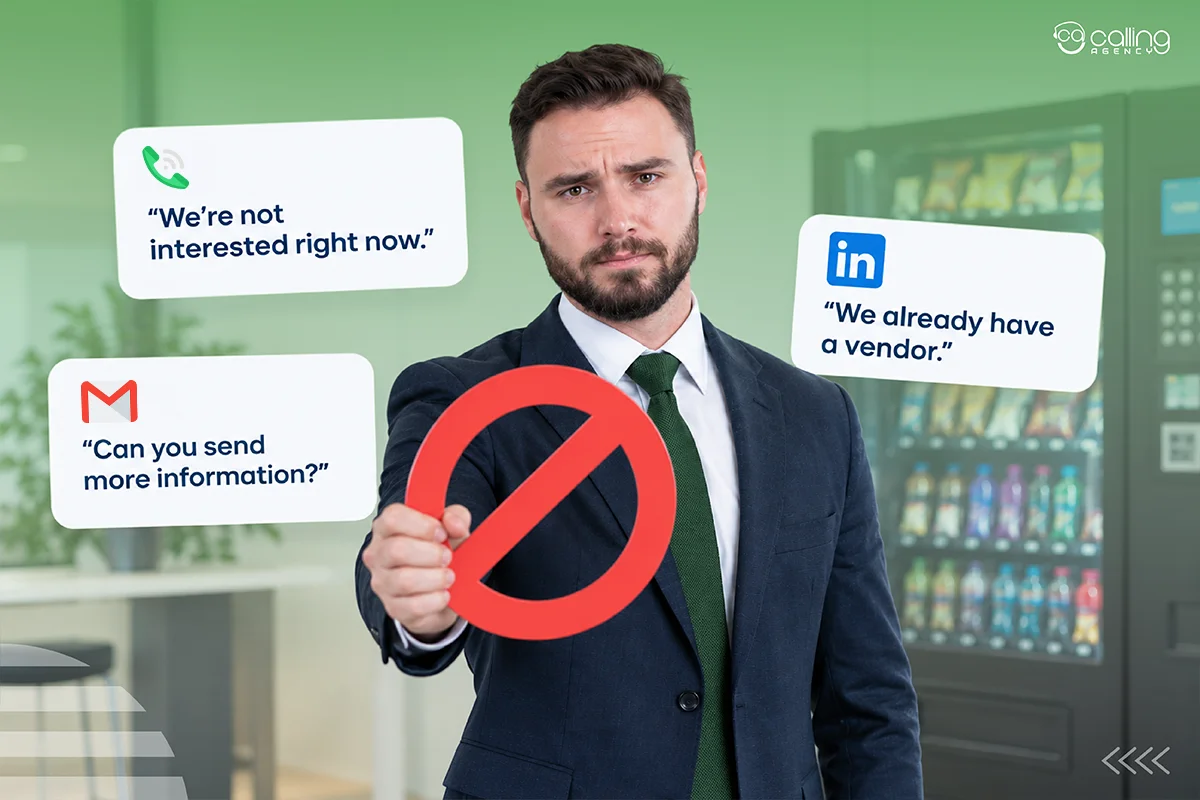
Cold calling works because it creates immediate conversations. Here, you shouldn’t pitch cleaning services immediately. Instead, you should focus on understanding the prospect’s current situation.
You can ask questions like:
- Are you satisfied with your current cleaning provider?
- How often do you review your cleaning contracts?
- What cleaning challenges are your tenants or employees experiencing?
If you think you are struggling to handle objections, just read out Cold calling scripts and objection handling
Cold Email
With cold email, you can reach hundreds of prospects. So, make it as effective as possible.
Give your email a personalized subject line, a reference to the prospect’s property, one specific business problem and one measurable benefit. Don’t write any long sales letters. Approximately 125 to 150 words if email is fine. Or just read out Cold email sequences built for janitorial buyers as an example.
LinkedIn Outreach
Facility managers and property managers frequently use LinkedIn. You can connect with them through this route.
Before sending a sales message, connect first, engage with their posts and comment thoughtfully. After you build familiarity, you make the sales conversation. This is like Winning contracts through LinkedIn outreach
Research Before Contacting Prospects
Don’t reach out to prospects directly. First, spend a few minutes researching their company. Look for other things too. Such as, their recent office expansion, new property acquisitions, hiring announcements, and news articles. Therefore, you can be clearer about their cleaning needs.
Focus On Booking Walkthroughs
The goal of outbound prospecting is to secure a facility walkthrough where you can understand the property.
Remember, commercial cleaning contracts are usually won through consultation. Not pressure.
Build Partnerships And Industry Networks
Try to build partnerships and networks through digital marketing and outbound sales. When you finally find trusted partners, you may get to know more decision-makers.
Join Industry Associations
Two organizations help commercial cleaning businesses grow. They are:
- ISSA (Worldwide Cleaning Industry Association): It mainly provides industry certifications, educational resources and networking opportunities. Many corporate buyers look for these things.
- BOMA (Building Owners and Managers Association): It connects cleaning companies with facility managers, property managers and commercial real estate professionals.
You may attend them to build relationships with buyers.
Build Referral Partnerships
Many businesses serve the same commercial clients. They are usually commercial flooring companies, HVAC contractors, commercial painters, security companies, etc.
These businesses often hear when a client is dissatisfied with their cleaning provider. But when they have a referral partnership, their pipeline becomes steady.
Become Active In Your Local Business Community
Just join your local Chamber of Commerce or business networking groups. This will increase your visibility.
You can also check our cleaning business referral ideas and janitorial industry networking tips.
Bid On Recurring And Institutional Contracts
Both recurring contracts and institutional contracts are worth bidding. Recurring contracts provide monthly revenue and institutional contracts provide long-term revenue. This lasts for one to five years.
Register For Government Opportunities
Before bidding on federal contracts in the United States, register your business. You can do it through SAM.gov and obtain a Unique Entity ID (UEI).
Make sure your business includes the correct NAICS code (561720 – Janitorial Services). Otherwise, you won’t be qualified for relevant bids.
Monitor Bid Platforms
To monitor bid platforms, you can take help from BidNet Direct, FindRFP, InstantMarkets, CleanBid and JaniJobs. There, you need to set email alerts for your target cities.
Never Bid Without Reviewing The Full Scope
Before bidding, check the scope. Because getting commercial contracts not only depends on price, it depends on other factors too. Such as, insurance coverage, square footage, service-level agreements (SLAs), certification, and performance.
Don’t miss any of them. Or else, you will be disqualified immediately. For the bidding process itself, see our guides on janitorial bids, writing a janitorial service proposal and janitorial bidding software that can help you track submissions.
Turn Reviews And Referrals Into A Growth Loop
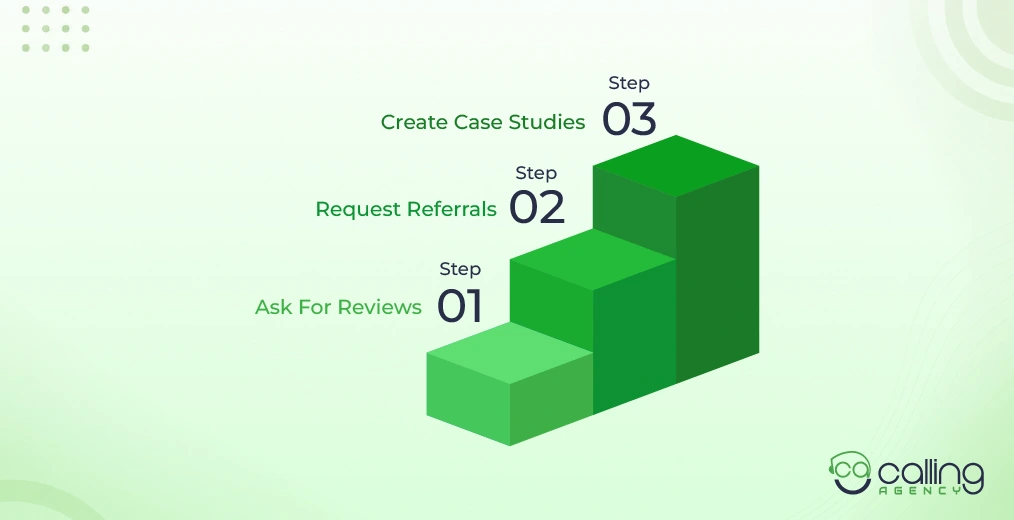
Your reviews can only turn into referrals when you ask the right question at the right time. Here are some simple steps that you can follow.
Step 1: Ask For Reviews
Request a Google review within 24 to 48 hours. At that time, the experience feels fresh.
Step 2: Request Referrals
When you receive positive feedback, ask whether they know another property manager or business owner. Because they may benefit from your services.
Step 3: Create Case Studies
Document all successful projects. There, you must include property type, square footage, cleaning schedule, initial challenges and services performed. As a result, you create stronger proof.
Prepare Sales Collateral That Closes
Sales collateral is another way to win commercial contracts. However, that depends on how professionally you present.
Here is a procedure that you can follow:
Create A Capability Statement
Generally, a capability statement is one page. It must include a company overview, years in business, industries served, insurance coverage, certifications, service areas and contact information.
Standardize Every Proposal
Make sure every proposal has the following:
- Scope of work
- Cleaning schedule
- Pricing structure
- Service-level agreement
- Response time guarantees
- Quality assurance process
- References or testimonials
Track The Metrics That Matter
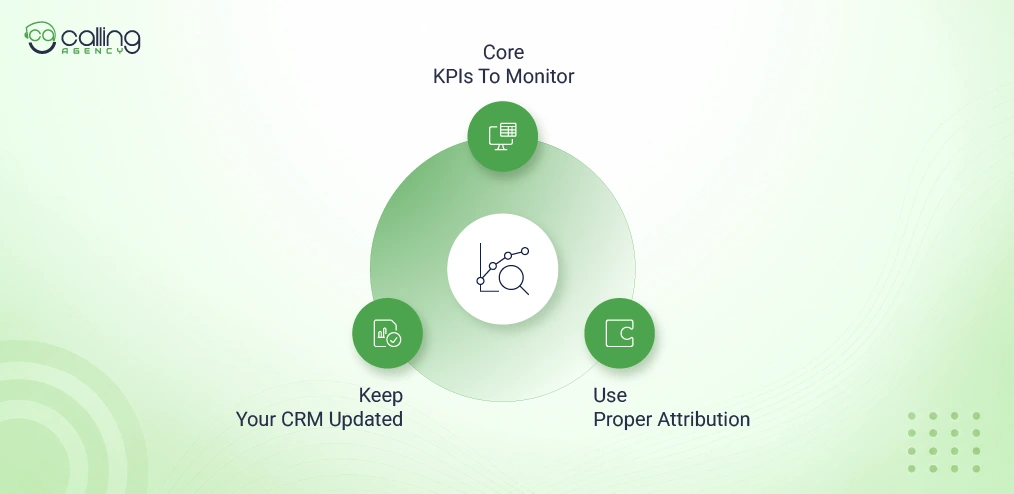
Track your every lead source so that it doesn’t become tricky later. It will also alert you to which channel you should invest in.
Core KPIs To Monitor
Track these metrics monthly:
| Metric | Why It Matters |
| Cost Per Lead (CPL) | Measures marketing efficiency |
| Lead-to-Meeting Rate | Shows lead quality |
| Meeting-to-Proposal Rate | Indicates sales effectiveness |
| Proposal Win Rate | Measures closing performance |
| Customer Acquisition Cost (CAC) | Shows total acquisition expense |
| Customer Lifetime Value (LTV) | Measures long-term profitability |
| Return On Ad Spend (ROAS) | Evaluates advertising performance |
| Close Rate By Channel | Identifies highest-performing lead sources |
Use Proper Attribution
For proper attribution, assign unique tracking methods to every campaign. Such as UTM parameters, landing pages, CRM source tagging and QR codes. If you don’t do attribution, you won’t know whether SEO, Google Ads, referrals, or outbound sales generated the lead.
Keep Your CRM Updated
Don’t forget to update your CRM because lead databases decay over time. It can be because of companies relocating, employees changing roles and phone numbers becoming outdated.
If you have any confusion, just check what the data says about lead follow-ups and how to build a repeatable lead engine for office cleaning.
Key Takeaways
- Referrals alone cannot create a predictable pipeline. So, combine inbound marketing, outbound prospecting and strategic partnerships. This will give consistent growth.
- Google Business Profile, SEO, and online reviews generate high-intent local leads over time.
- Paid advertising can give you visibility. Measure them by cost per qualified lead, not clicks.
- Don’t rely on a single communication method. Use multi-channel outreach like email, LinkedIn, phone calls, and follow-up messages.
- Government contracts and institutional bids provide recurring revenue. They also require proper registrations and documentation.
- Track every lead source separately. Thus, you can invest more in channels and get highest-quality clients.
Before you launch any of this, check our list of common lead generation mistakes cleaning companies make.
Frequently Asked Questions
How long does it take to start getting commercial cleaning leads?
For Google Ads and Local Services Ads, you will get commercial leads within a few days. In terms of cold calling and cold email, you will get results within four to six weeks. Again, local SEO, Google Business Profile for optimization and review generation will take two to six months to generate leads.
What is the best lead generation method for commercial cleaning companies?
There is no one best lead generation method as different channels come with different purposes. For instance, local SEO captures buyers who are searching for cleaning services or paid advertising. This can take you to decision-makers before they start looking. For better results, combine inbound marketing, cold outreach, referrals and networking. Hence, you can build a more stable pipeline.
Should I generate leads myself or outsource lead generation?
If you are a small company with limited resources, generate leads yourself. Thus, you can save costs and understand your market. When your business grows, you can outsource lead generation. Thus, you get time to focus on site visits and client relationships. You can also read the full comparison on both terms.
How many commercial cleaning leads should I expect each month?
How many commercial cleaning leads you will get depends on your location, competition, marketing budget and service area. So, don’t target a specific number of leads. Instead, focus on generating qualified opportunities that match your ideal customer profile. You can also use tracking metrics. Such as cost per lead, appointment rate, proposal rate, and close rate. This will give you a much clearer picture of business growth.
Conclusion
You can’t build a commercial cleaning pipeline just with referrals or occasional marketing campaigns. You have to use local SEO, paid advertising, outbound prospecting, networking, referral partnerships and performance tracking. Turn all of them into one integrated lead generation system.
Start by identifying your ideal buyers. Then optimize your online presence, reach prospects through multiple channels and measure every campaign. Also, make sure you are using meaningful KPIs. Over time, you will know which channels are producing qualified meetings.