

Key Takeaways
- The average cold call success rate in 2026 is around 2.7%, up from 2.3% the year before (Cognism/WHAM, 2026). Elite teams convert at 11%+; Cognism’s own SDR team hit 11.3% across 200K+ calls.
- Data quality is the biggest lever. SDRs calling verified direct-dial numbers achieve a 13.3% answered rate, nearly matching the 14.4% AEs get on warm opportunities (Cognism, 2026). The average connect rate across the industry sits around 5.4% (Gong, 300M+ calls).
- Buyers still take calls. 57% of C-level and VP buyers prefer to be contacted by phone, and 82% of buyers say they accept meetings at least occasionally with sellers who reach out cold (RAIN Group, Top Performance in Sales Prospecting).
- It works particularly well in B2B services, consulting, real estate, insurance and complex software where deals are high value and decision-makers can be reached by phone.
Is Cold Calling Still Effective?
Yes, cold calling is still effective in 2026. It delivers a 2–3% dial-to-meeting rate, works best in B2B industries with high-value contracts, and remains one of the fastest ways to reach senior decision-makers directly.
Random dialing is useless despite this, cold calling is still one of the quickest methods to contact senior stakeholders, assess prospects and schedule sales meetings.
Cold calling is still used by many businesses simply because it leads to human-to-human conversations that email, advertising & automated outreach often fail to provide.
This means that whenever a sales call is connected, sales representatives can instantly detect pain points, objections and intent to buy while providing a live phone call.
Cold calling is one of the reasons why it works:
- Aids easy connection with business owners, executives and decision-makers.
- Books qualified sales appointments faster than most digital channels.
- Instantly validates demand for the market and buyer interest.
- Effective for expensive complex products and services with high average deal value.
- Researched by account-based marketing (ABM) and multi-channel outbound.
Cold calling is mostly dependent on execution. Companies that rely on scripted messaging, massive contact lists with zero extra value beyond the data are unlikely to see anywhere near a fraction of the results compared to using verified contact data, business-specific messaging and CRM-driven prospecting.
As long as they have proper data, personalized outreach, and an outbound sales process in place, it still is a tried-and-true lead generation and sales development channel.
What Is The Success Rate Of Cold Calling?
The cold calling success rate in 2026 averages around 2.7%, meaning roughly 3 out of every 100 dials result in a booked meeting or pipeline opportunity (Cognism/WHAM, 2026). That marks a recovery from 2.3% in 2025, which had itself fallen from 4.82% in 2024 and it underscores how much contact data quality, targeting, and personalization now drive results.
If you’re on an outbound sales team, your outcome has nothing in common with a successful sale today. The only goal of a cold call is to generate a meeting, product demo, discovery call, or some other next action step that you have qualified that can later be converted into revenue.
Cold Calling Conversion Benchmarks
| Metric | Benchmark | Source |
| Industry-average success rate (2026) | 2.7% | Cognism/WHAM, 2026 |
| Industry-average success rate (2025) | 2.3% | Cognism/WHAM, 2025 |
| Elite-team success rate | 11%+ (Cognism internal: 11.3%) | Cognism/WHAM, 2026 |
| Answered rate, verified direct dials | 13.3% | Cognism, 2026 |
| Average connect rate | ~5.4% | Gong (300M+ calls) |
And guess what, there are a few reasons behind how cold calling works in both ways –
- Prospect and contact data quality.
- Direct access to decision-makers.
- Industry and deal size.
- Call messaging and personalization.
- Consistency of follow-up efforts.
The funnel explains the gap. At a typical 5–6% connect rate, a rep making 800 dials a month reaches roughly 43 prospects. Converting those conversations at the industry-average rate produces only a couple of booked meetings. A top-performing rep on the same volume better data, double the connect rate, and stronger conversion per conversation can book 15–20. Same dials, very different pipeline.
Which Industries Does Cold Calling Work Best In?
Cold calling only works well where deals are expensive, the value of cold calls is high because buyers need information before they purchase, and decision-makers only respond over the phone. Generate leads through cold calling because just one booked meeting can turn into a big sale in these businesses.
Cold calling success rate by industry. For example, some industries will have lower rates (as expected) because their services are usually a response to immediate tasks being solved by businesses. So they have shorter sales cycles and more complex buying decisions.
| Industry | Avg. conversion rate | Source |
| Janitorial /cleaning | 2.85% | Focus Digital, 2025 |
| Business services (marketing, HR, payroll, outsourcing) | 2.61% | Focus Digital, 2025 |
| Financial services | 1.54% | Focus Digital, 2025 |
| Telecommunications | 1.29% | Focus Digital, 2025 |
| Technology/software | 0.95% | Focus Digital, 2025 |
| Healthcare / medical | 2 to 6% (wide range) | AnyBiz, 2026 |
Keep in mind that conversion rate is just a part of the puzzle. Deal size often matters more. Enterprise deals equal to $1 million–$5 million convert (1.16%) compared to smaller deals under $10,000 convert ~2.64%. Although large deals close less frequently, a single sale can yield tens to hundreds of times more revenue.
Which Industries Have the Best Cold Calling Results –
- Business Services and Consulting – Marketing agencies, HR firms, payroll providers and consulting companies tend to perform well due to solving clear business problems with a fast return on investment.
- Real Estate – Cold Calling is used by agents, landlords, and investors by agents, brokers, and investors for real estate. Some good conversations can have extremely high order values.
- Financial Services and Insurance – Financial advisors, insurance agents, and wealth managers depend on phone conversations to earn trust by explaining more complicated products.
- Technology and SaaS – Software companies depend on cold calling to schedule demos, develop leads, and engage decision-makers. Conversion rates are lower, but values of sales contracts are much higher.
- Healthcare and Medical Services — Cold calling is utilized by healthcare providers, medical suppliers, and healthcare software companies to target practice owners, administrators, and procurement teams.
Cold calling is most effective for high-ticket products or services, where the purchase process is conversational and decision-makers answer the phone. Cold calling continues to be used in business services, consulting, real estate, insurance, healthcare and software sectors since even a small number of successful calls can prove quite profitable.
Why Do Some Teams Convert Far Higher?
Some teams convert cold calls at 11% or higher while the industry average sits at 2.7% (Cognism/WHAM, 2026). The gap comes down to better data, more consistent follow-up, and personalized, multi-channel messaging.
So many people think that high-performing sales teams have some need-to-know cold call script. The truth is, success often comes down to having a stronger outbound process.
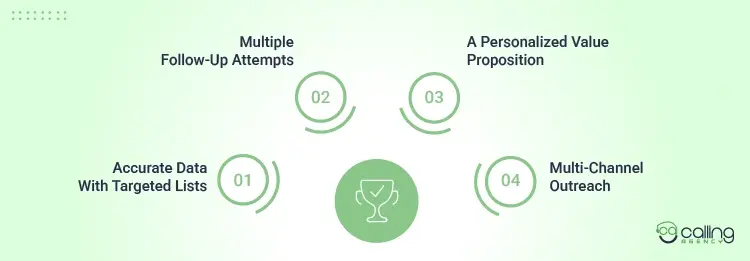
Accurate Data With Targeted Lists
Having the right information is essential to starting any successful cold calling campaign. Dialing the wrong person or dialing a previous phone number will consume time and decrease results.
Verified direct-dial numbers, correct job titles and accurate company data also provide high-performing teams. According to studies, bad contact data can decrease outbound performance by over 40%. Here the importance of data quality as one of the most crucial success factors.
Multiple Follow-Up Attempts
The first call is never answered by most prospects. In fact, it takes six to eight tries before a salesperson gets through to a decision-maker.
Most average sales reps throw in the towel after one or two attempts. High-performing teams keep following up via calls, voicemails, and emails until they hear back from you. The persistence helps create more conversations and book meetings.
A Personalized Value Proposition
The best cold callers get straight to the point. Their value proposition and a specific business problem they can solve. An engaging and contextualised value proposition within the first 20 to 30 seconds is critical since it not only ensures that consideration is kept but also leads prospects down the buying path more readily.
Multi-Channel Outreach
Cold calling is more effective with email and LinkedIn outreach. Multi-channel approaches improve responses by 30% to 40%, and result in up to three times more meetings than calling alone.
| “There is no secret script that teams outperforming cold calling benchmarks depend on. It is about better data, keeping the follow-up system the same, personalized messaging and multi-channel outreach. These four elements are the difference between average cold calling campaigns and dependable lead generation systems.” |
How We Help Businesses Generate Leads Through Cold Calling
We help multiple businesses to generate qualified leads with targeted cold calling campaigns. See the real examples of how we communicate through cold calling.
1. Generate Qualified Meetings for Payment Processing with Cold Calls
2. Book Cleaning Consultation with Commercial Cleaning Company
3. Schedule Qualified Appointment with Solar Clients
Also, we ensure sales-qualified appointments through targeted cold calling campaigns for different types of industries like SaaS, transportation and logistics, real estate, cybersecurity, medical billing and roofing companies.
Check them here – Cold Calling Examples: Listen to Real B2B Cold Call Recordings
What Do The Experts Say?
Cold calling remains effective in 2026, particularly when the calls are highly targeted, personalized and backed by reliable data on prospects, sales experts agree.
One of the biggest mistakes that companies make is that they think cold calling does not work anymore because no one picks up the phone. Sales leaders will claim bad targeting and out-of-date outreach as the problem most of the time.
Lisa Earle McLeod is the founder of McLeod & More and author of Selling with Noble Purpose. She argued in her article that the lack of research on the targeted person before dialing is one of the biggest mistakes in cold calling.
According to Michael Edwards, Vice President at EBQ, “Cold calling is still one of the quickest ways to get entry into decision-makers and create opportunities to generate sales conversations”. Sales reps can qualify prospects, discover needs and land meetings in real-time through a live phone call.
The majority of outbound sales experts agree that the success of cold calling relies on:
- Targeting the right decision-makers.
- Using verified contact data.
- Personalizing the message.
- Following up consistently.
- Using calls with email/LinkedIn outreach.
Why Does Cold Calling Fail For Many Teams?
Cold calling doesn’t perform because of the wrong strategy, not the used channels. The most common reasons include:
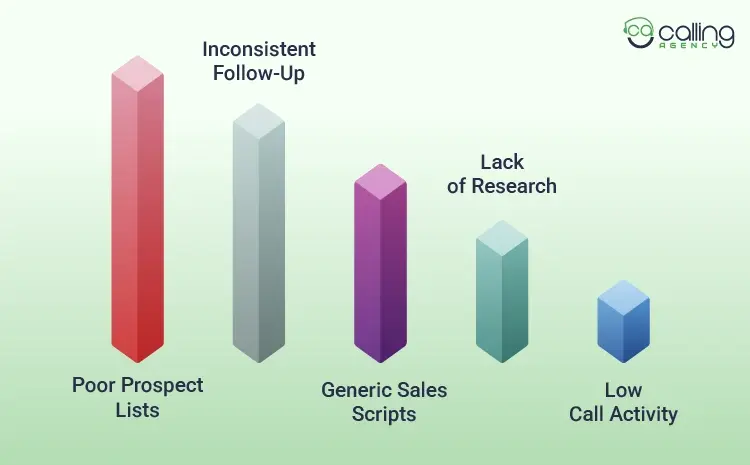
Poor Prospect Lists
Reaching random contacts instead of qualified decision-makers decreases connect rates as well as meeting rates. The core of every successful outbound campaign depends on accurate prospect data.
Inconsistent Follow-Up
Research suggests that 6 to 8 touchpoints are often needed to get through to a prospect. Most sales reps give up after one or two attempts, losing references that would have otherwise landed as qualified meetings.
Generic Sales Scripts
Quickly, prospects turn in defiance to calls that seem scripted or irrelevant. Teams that perform well don’t read a standard pitch. They relate the solutions to the business challenges of the prospect.
Lack of Research
Without basic research, sales reps are unable to personalize conversations or pose high-impact discovery questions. Just a few minutes of preparation can help improve engagement rates.
Low Call Activity
At the end of the day, cold calling is still a numbers game. Not enough dials, not enough conversations, not enough sales opportunities.
| Cold calling is destined to fail as long as teams are working with bad data, weak targeting, generic messaging and a lack of follow-up. This works when sales reps get to the right prospects, provide relevant value, and stick to a consistent outbound framework. |
Legal Rules to Follow for Cold Calling
Cold calling is legal in the US, companies must only call customers if they comply with federal and state laws that protect consumers from unwanted calls.
If you do use cold calling for lead generation, sales prospecting or appointment setting, compliance should be one of the processes that you put in place on your first day. They can collect fines against you, lodge legal complaints and also damage your corporate reputation if you fail to abide by cold calling laws.
At a minimum, sales teams should ensure that prospects are not on Do Not Call (DNC) lists, call only at certain hours and clearly identify themselves, all while complying with opt-out requests in real time.
Key Cold Calling Compliance Requirements
| Requirement | What It Means |
| Do Not Call (DNC) Compliance | Call consumers only after checking national and state DNC lists. |
| Calling Hours | Only call at permitted times, mostly 8 a.m. to 9 p.m. local time. |
| Caller Identification | Clearly tell who you are and the company you represent. |
| Opt-Out Requests | Stop contacting prospects who request not to be contacted |
| Record Keeping | Wages of opt-out and assurance method documentation |
| International Rules | Follow GDPR, UK GDPR, or other local privacy regulations when contacting prospects outside the U.S. |
Why Compliance Matters
Most organizations obsess over scripts, technology and call volume while neglecting compliance. Nonetheless, what makes a cold calling campaign successful is both performance and legality.
Following the rules helps you:
- Prevent penalties and lawsuits for your business.
- Build trust with prospects.
- Improve brand reputation.
- Develop a sustainable outbound sales process.
- Reduce complaints and negative responses.
| Cold calling happens to be lawful if businesses choose to comply with the applicable regulations. Primary regulations include checking the Do Not Call lists, calling during legal hours, establishing your identity and your business, respecting opt-out requests when individuals wish you never contact them again, along with privacy laws in place for international calls. |
What Is The Future Of Cold Calling?
Cold calling is progressing fast. AI, data and smarter targeting change how sales teams prospect. What cold calling will look like in 2026 or beyond.
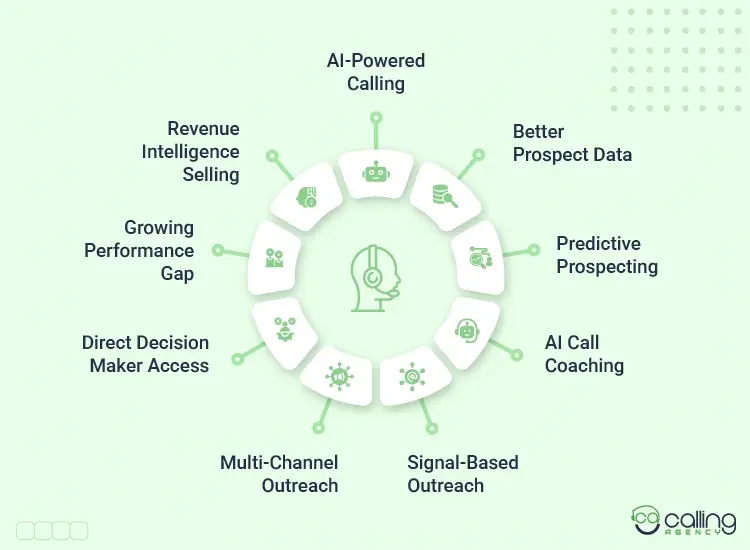
AI-Augmented Calling Is the New Standard
AI-assisted sales tools help SDRs in research before every prospect call. Immediate identification of intent data, firmographic indicators and buying signals decreases ramp time, improves talk tracks and improves meeting-booked rates.
Data Quality Drives Pipeline Velocity
The basis of high-performing outbound sales is accurate, verified contact data. Wrong data, wasted dials, poor connection rates and an over-inflated cpm. Most SDRs use compliant, enriched data in real-time to achieve greater answer rates and shorter sales cycles.
Predictive Targeting Makes Cold Calls Behave Like Warm Outreach
With proper ICP targeting and lead scoring, you can get answer rates in cold calls nearly as good as those from warm outreach. SDRs can stop discussing cold prospects and begin to consult with in-market prospects that are showing active purchase signals over the phone.
Real-Time Conversation Intelligence Coaches Reps Live
Conversation intelligence platforms analyze calls in real time. They monitor tone, sentiment, pacing, and keyword triggers, delivering prompts for coaching while on the call. Platforms like Gong, Chorus, and Wingman help SDRs respond to objections sooner, increase talk-to-listen ratios, and follow tried-and-tested winning call frameworks with less guesswork post-call.
Signal-Led Outreach Replaces Dial Volume
Dialing that involves high volumes, unqualified contacts, and a spray-and-pray approach is no longer viable as an outbound tactic. Signal-led outreach identifies job changes, funding rounds, tech installs and engagement data that help prioritize the right prospects at a timely time.
Cold Call Outcomes Improved with Multi-Channel Sequencing
You should not consider using cold calling outside a properly structured outbound sequence. SDR avoids calling with customized email & LinkedIn touchpoints. This improves conversion rates to as high as 28%. Every time each prospect sees your message through multiple channels. It gets into their minds, allowing for better brand recognition and is significantly more likely to drive the desired response.
Decision-Maker Accessibility Keeps Phone Outreach Relevant
Phone outreach is among the select group of most direct methods to contact B2B decision-makers. 57% of C-level and VP buyers prefer phone as their first contact channel, and 82% of buyers accept meetings at least occasionally from sellers who reach out cold (RAIN Group).
The Performance Gap Between Elite and Average SDR Teams Is Growing
The best outbound teams convert cold calls at 11% or higher, while the industry average is at 2.7%. The only differentiators are tech stack quality, contact data accuracy, call coaching infrastructure and ICP definition. With AI becoming mainstream, teams that do not adopt it will lag behind on every critical sales metric
Cold Calling Is Becoming a Revenue Intelligence Discipline
Modern cold calling can not be a tactic alone. It is a sequence lane in larger revenue intelligence frameworks together with CRM data, sales engagement platforms, AI-driven insights and multi-touch attribution. Teams adopting cold calling into their complete funnel outbound motion will keep to generate predictable pipeline and adaptable revenue growth.
Frequently Asked Questions
Is cold calling still effective in 2026?
Yes. The industry-average success rate in 2026 is 2.7%, and top-performing teams convert at 11% or higher (Cognism/WHAM, 2026). It’s especially well-suited to B2B sales, where talking directly with decision-makers often outperforms email.
What is a good cold calling success rate?
The 2026 industry average is 2.7% (Cognism/WHAM). Anything above 5% is strong, and elite teams sustain 11%+ Cognism’s own SDR team hit 11.3%. The difference is almost always contact-data quality and follow-up consistency.
How many cold calls does it take to book a meeting?
There’s no universal number it depends on data quality. A 2011 Baylor University study of real estate agents dialing random lists found it took 209 calls per appointment or referral; that’s the worst-case, zero-targeting baseline. At the 2026 industry-average success rate of 2.7%, a meeting takes roughly 35–40 dials. Teams with verified direct dials and tight ICP lists do better still.
Which industries does cold calling work best for?
Cold calling is the preferred way of getting in touch with customers, especially valuable for industries such as B2B services, consulting, real-estate firms, insurance and software ( SaaS ) sales. These industries generally consist of larger deals that a buyer as well as decision-maker is more willing to take business calls. From less than 1% in certain technology sectors to close to 3% within business services (Focus Digital, 2025).
Why do most cold calls fail?
Most cold calls fail because of poor data, weak targeting, and giving up too early. Reps dialing outdated contact lists waste the majority of their call volume on wrong numbers and gatekeepers. Generic scripts that ignore the prospect’s specific business context kill engagement in the first 10 seconds. And most reps stop after one or two attempts, when research shows 6 to 8 touchpoints are typically needed to reach a decision-maker.
What is the best time to make a cold call?
The best times to make cold calls are mid-morning (10–11 AM) and late afternoon (4–5 PM) local time, Tuesday through Thursday. These windows consistently see higher answer rates because prospects are settled into their workday but not yet in end-of-day wrap-up mode. Mondays and Fridays tend to underperform. For a full breakdown by industry and time zone, see our guide to the best time of day for cold calling.