



Most salespeople focus on scripts, offers, and try to handle sales objections. But here’s the truth. Your tone often matters more than your words. That’s why you should know how to master tonality in sales.
According to a research by Albert Mehrabian, tone accounts for about 38% of communication. Meanwhile words account for only 7% of communication. That means even a perfect script can fail if your delivery is wrong.
So, it’s clear that we have to understand how tonality actually works. Only then can we think about closing deals. In this guide, we will tell you the psychology behind it, how to master it and close more deals.
What is Tonality In Sales?
Tonality in sales means how your voice sounds when having customer communication. This can be about your pitch, speed, volume, and emotional expression. It’s not what you say. It’s about how you say it. Because your tone says a lot. With this, you can communicate about your confidence, insecurity, authority, hesitation, empathy, indifference, urgency, or passiveness.
Even if there are any small changes in your tone, it can change everything. Especially how your message is perceived will have a different angle then.
Why Tonality Matters More Than Your Script?
Most salespeople underestimate the power of tonality. But in reality, it directly impacts outcomes. For example:
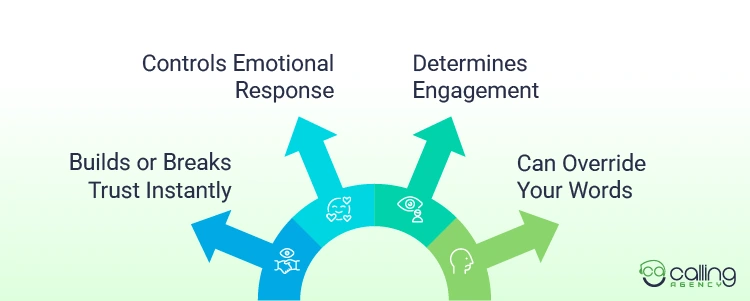
It Builds or Breaks Trust Instantly
People judge you within seconds based on your voice. If your voice gives a confident tone, that will signal expertise. But if your voice gives a shaky tone, that will create doubt within the prospect.
It Controls Emotional Response
Your tone influences how prospects feel. Because humans naturally mirror emotions this is called emotional contagion. So, keep your tone in that way how you want the prospect to feel about your pitch.
It Determines Engagement
When you come up with a monotone voice, that will kill the conversation. That’s why try to keep a dynamic tone always. That will keep the prospect interested and involved.
It Can Override Your Words
Even the best pitch fails if your tone sounds weird. Especially, the nervous, pushy, and scripted tone kills everything. Always keep in mind, “How you say something is often more important than what you say.”
What Are the Core Elements of Tonality You Must Master?
Tonality is not random. It’s built on specific vocal components. These are:
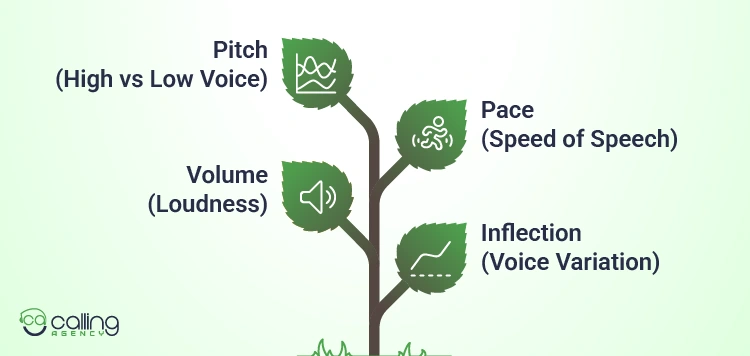
Pitch (High vs Low Voice)
Generally, pitch can be low or high. A lower pitch signals authority and confidence. Meanwhile, a higher pitch signals excitement or nervousness.
Pace (Speed of Speech)
As always, we either keep our pace slow or fast. When you maintain a slow pace, you reflect confidence and control. But when you have a fast pace, you reflect anxiety or pressure.
Volume (Loudness)
Our volume can be either moderate, loud, or soft. Always try to keep a moderate volume. This will show clarity and authority. On the other hand, too loud volume will show that you are aggressive. And too soft a volume will show that you are weak.
Inflection (Voice Variation)
Inflection is also important to engage a prospect. It simply means having a voice variation or changing tone within sentences. Thus, your conversations will seem more natural..
What Are the 5 Most Powerful Tonalities in Sales?
Top-performing sales reps don’t use one tone. They switch tones strategically. Here are some of them.
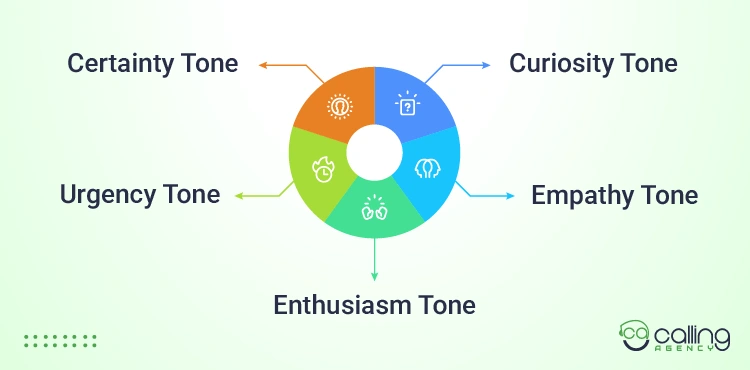
Certainty Tone
We usually use the certainty tone when we show confidence and authority.
Example:
“This will work for your business.”
With this line, you can build trust instantly.
Curiosity Tone
Generally, we use the curiosity tone when we want to ask questions.
Example:
“How are you currently handling this?”
With this line, you can encourage the prospect to open up.
Empathy Tone
You can use the empathy tone to show understanding.
Example:
“That makes sense, many businesses face this.”
This line will help you build rapport and reduce resistance.
Enthusiasm Tone
The enthusiasm tone is perfect to create excitement.
Example:
“This is where things get really interesting…”
By saying this, you can transfer energy to the prospect.
Urgency Tone
We generally use the urgency tone to drive action.
Example:
“Most clients move forward before the next billing cycle.”
This line can encourage making faster decisions.
What is the Psychology Behind Tonality: Why Does It Work?
Tonality works because it taps into human psychology. Let’s break it down more clearly.
Emotional Contagion
People subconsciously mirror your emotions. If you sound confident, they feel confident.
But if you sound unsure, they feel unsure. This is called emotional contagion.
Status Signaling
Status signaling is powerful. It’s a calm, controlled tone that signals authority and leadership. And try to avoid a needy tone. This signals low status.
Trust Signals
Trust signals come from authentic, conversational tone. It reduces “sales resistance.”
Remember, buyers avoid anything that sounds scripted or pushy.
How To Master Tonality In Sales And Close More Deals? Step-By-Step
Now how to master tonality in sales so that we can actually close deals? Let’s see.
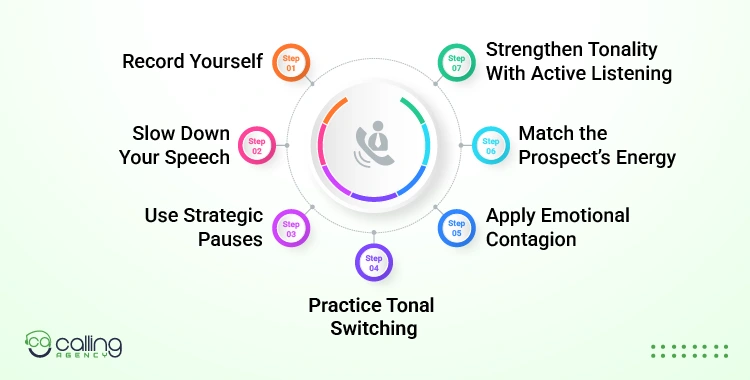
Step 1: Record Yourself
You can’t improve what you don’t measure. And that’s when you become unaware about your tone habits. That’s why it’s very important that you practice.
Record 1 to 2 calls daily. Use tools like Gong or Chorus for this. Especially listen to the first 15 seconds on your call. See if you sound confident or rushed. Then notice the pace. Are you speaking too fast or controlled? Also, look for variations. Is your sound engaging because of variation or flat? And most importantly, does your tone match the prospect’s tone?
See if there any negative outcome, like rushed, monotone, or scripted in your call. If yes, then you must work on your tonality.
Step 2: Slow Down Your Speech
There is a principle saying, slower speech signals confidence and authority. Meanwhile, fast speech signals anxiety.
What you can do is, read a script aloud, and intentionally slow down by 20%. Then add pauses after key sentences. Now record again delivering the same line with a slower pace. And then compare the clarity and impact of both the recordings.
Keep a target. Say 140 to 160 words per minute. This is for when you have a general conversation. But when you are explaining value or handling objections, slow down. That time, keep a target of 130 to 150 words per minute. Again, when you will be describing light rapport or casual parts, go slightly faster. Say 150 to 170 words per minute at that time.
Step 3: Use Strategic Pauses
Silence is powerful. It creates authority and gives weight to your words.
To practice silence, you have to pause in some specific moments. Like after asking a question, after stating value, and before responding to objections. Or exercise by counting “one, two” silently before you respond to calls.
Don’t try to interrupt or rush just to fill the silence. Or else, you will lose control of the conversation.
Step 4: Practice Tonal Switching
Remember, variation in tone keeps attention and builds engagement. Top sales reps don’t just use one tone. They switch based on the moments in conversations.
To practise it, you have to emphasize key words in sentences. Also, change pitch slightly when asking questions. Here’s a simple framework you can follow:
- Use curiosity tone when you are asking questions
- Use certainty tone when you are stating value
- Use empathy tone when you are handling objections
Let’s say, you are curious. So, you can ask, “How are you currently handling your payment processing?” When you are at certainty, you can ask, “We help businesses reduce fees without changing operations.” Or when you are being empathetic, you can say, “That makes sense. Many businesses face that issue.”
Make sure your each tone should sound natural and match the situation. It shouldn’t sound forced or scripted. Lastly, do a self check. Do all your sentences sound the same? Then you must work on switching tones effectively.
Step 5: Apply Emotional Contagion
Humans subconsciously mirror emotions. This is known as emotional contagion. Here’s how you will practice emotional contagion:
If you sound calm = Prospect feels calm
If you sound confident = Prospect feels confident.
One exercise will be to adjust your state before calls. Like, stand up, smile, and take a deep breath.
From this, you can get a self-assessment cue. For example, the prospect sounds disengaged. It means your tone is lacking energy or clarity.
Step 6: Match the Prospect’s Energy
People trust those who sound like them. That’s why you have to match your prospect’s energy. So practice matching their speed and tone level. It can be formal or casual.
There is a simple exercise. If the prospect seems slow or calm, you also slow down. Thus, you can have longer conversations and better tone alignment.
Step 7: Strengthen Tonality With Active Listening
Good tone comes from listening, not just speaking. So, practice tonality with active listening. Like, repeat key phrases, acknowledge responses, and adjust tone based on what you hear.
Example:
The prospect says, “We are frustrated with delays.”
In reply, you say, “That sounds frustrating. How often does that happen?”
Try not to talk more than 60% of the time. Or else, your tonality will feel false and salesy.
What Are The Tonality Mistakes That Kill Deals?
If you actually want to handle prospects, avoid these mistakes at all costs:
Sounding Scripted
Don’t sound like you are reading a script. That gives a robotic delivery, and prospects can instantly detect that.
Talking Too Fast
Don’t talk too fast. This will make you sound nervous and pushy.
Being Monotone
Try to avoid a monotonous tone. Or else, you will kill the prospect’s engagement and interest.
Showing Over-Excitement
Don’t be too excited. Because too much energy can feel fake and salesy.
Having A Approval-Seeking Tone
Avoid ending statements with questions. For example, when you say, “That makes sense… right?” This reduces authority.
Real Example: Bad vs Good Tonality
Now, what makes a good tonality different from a bad tonality? Let’s figure it out with an example:
Bad Tonality:
“Hi, I’m calling to tell you about our service.”
Here, the tone seems flat, nervous, and scripted.
Good Tonality:
“Hey, how are you currently handling your [problem]?”
Here, the tone shows that you are curious, confident, and conversational.
Conclusion
Tonality is one of the most overlooked yet powerful skills in sales. It determines a lot of things. Like, whether prospects trust you, whether they stay on the call, or whether they buy
The biggest takeaway is simple. People don’t just listen to your words. They feel your tone. If you can master tonality, you win. All you need is to control your pitch, pace, and emotion. And you will instantly stand out from average sales reps and improve your conversion rate.
Frequently Asked Questions
What is tonality in sales?
Tonality in sales refers to how your voice sounds during conversations. This includes pitch, pace, volume, and emotion. In short, tonality has everything that influences how your message is received. If you have a confident and calm tone, that’s going to build trust among the prospect. But if you have a monotone and rushed tone, that’s going to reduce engagement.
Why is tonality important in sales?
Tonality builds trust, keeps prospects engaged, and increases the chances of closing deals. It mainly does it by making communication more natural and persuasive. Even if your script is strong, you may sound pushy if you have a poor tone. But if your script is not so strong, you may sound confident only if you have a well-mannered tone.
How can I improve my sales tone?
You can improve tonality by practicing. Like you can do it out loud, record calls, control pace, and use pauses. You can also practice speaking with intention by using different tones. Like each tone for questions, objections, and statements. Besides, you should match the prospect’s energy and embrace active listening. Thus, your conversation will seem more natural and engaging.
What tone works best in sales calls?
A confident, calm, and conversational tone works best. Because it builds trust without sounding pushy or scripted. However, sometimes you need to give it a mix of curiosity as well. A curious tone will help you start the conversation, while a confident tone will build trust in you. And make sure you don’t sound aggressive or rushed, but clear and controlled. If possible try to show more interest in the prospect’s situation.