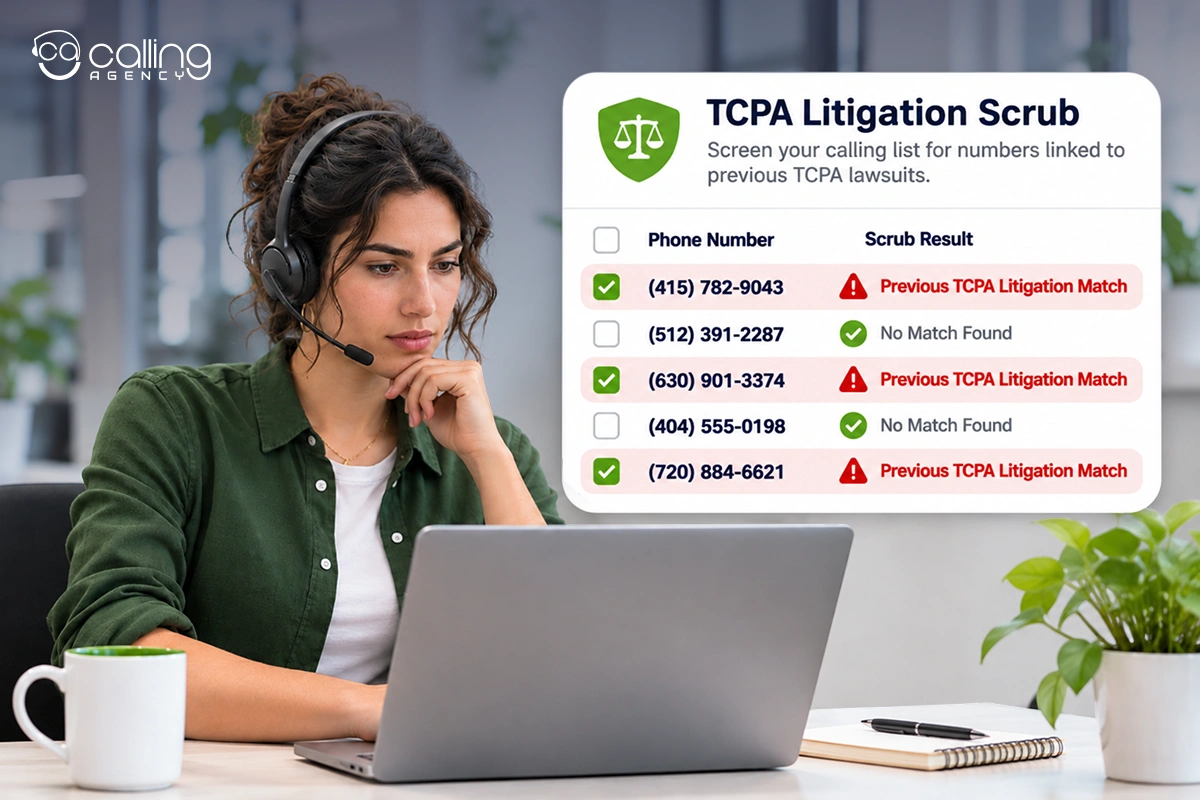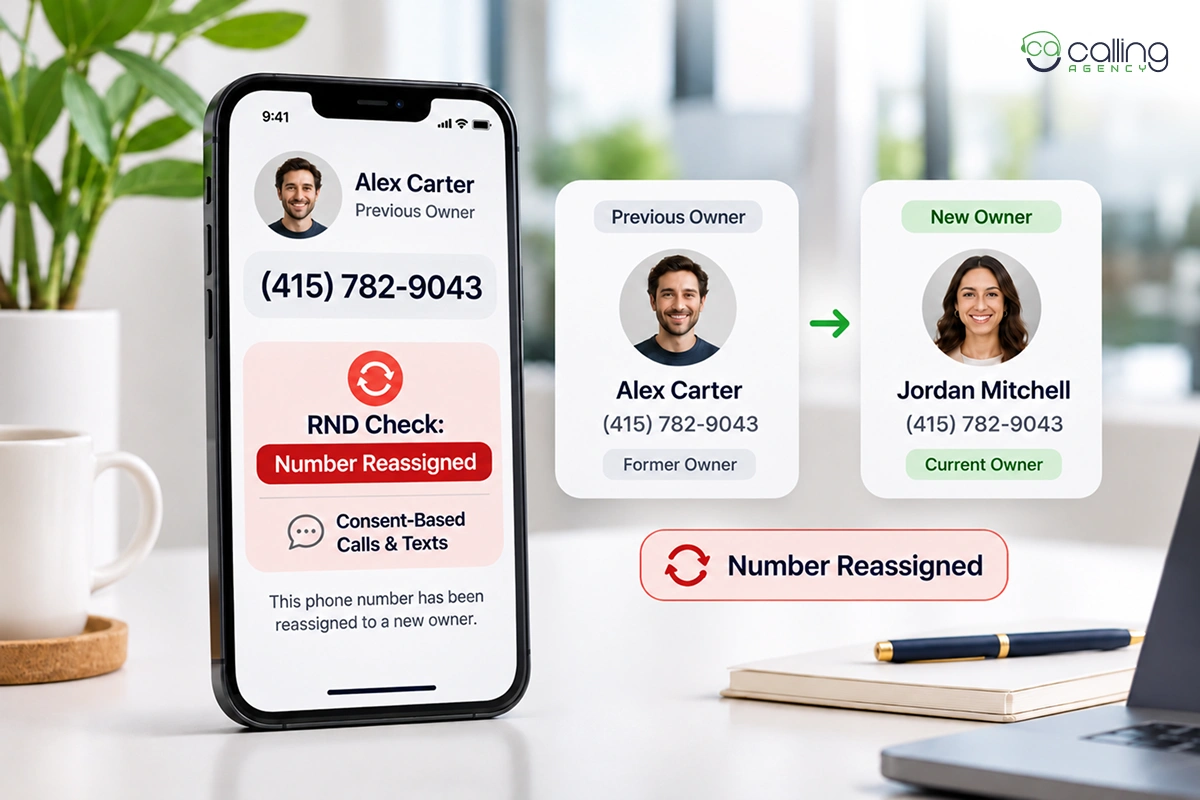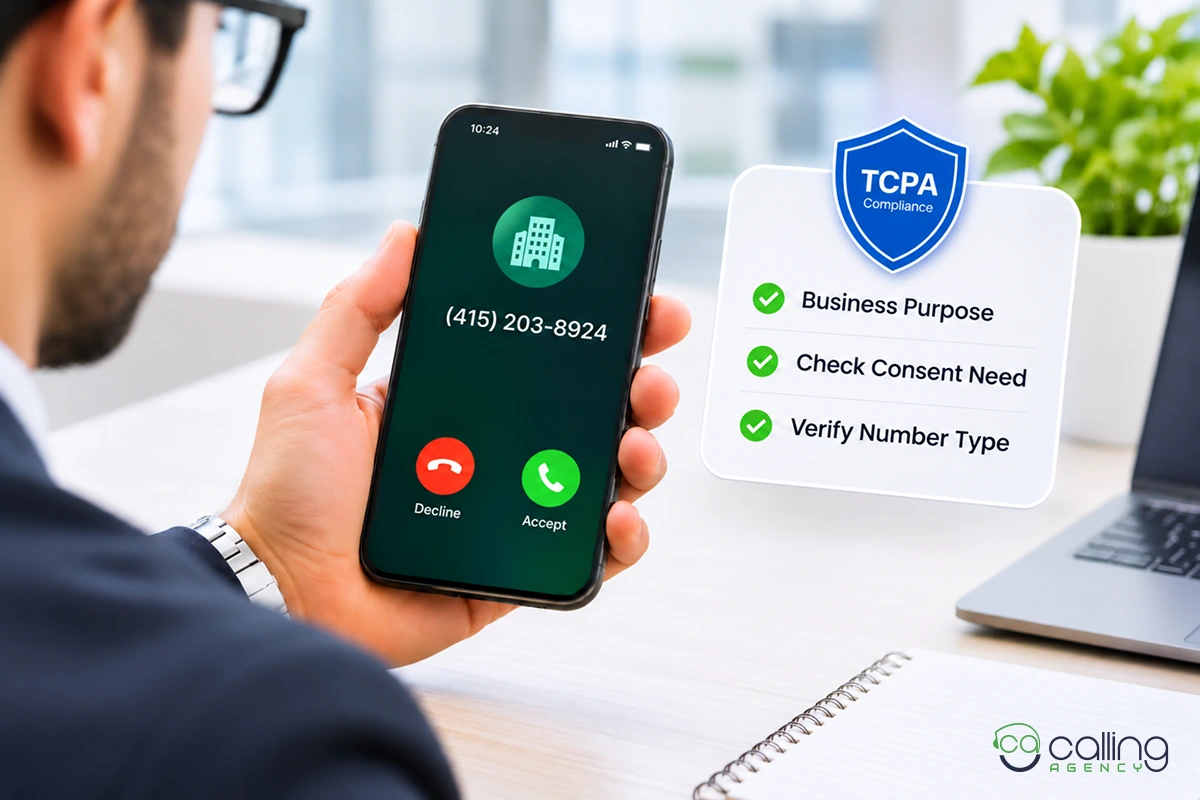


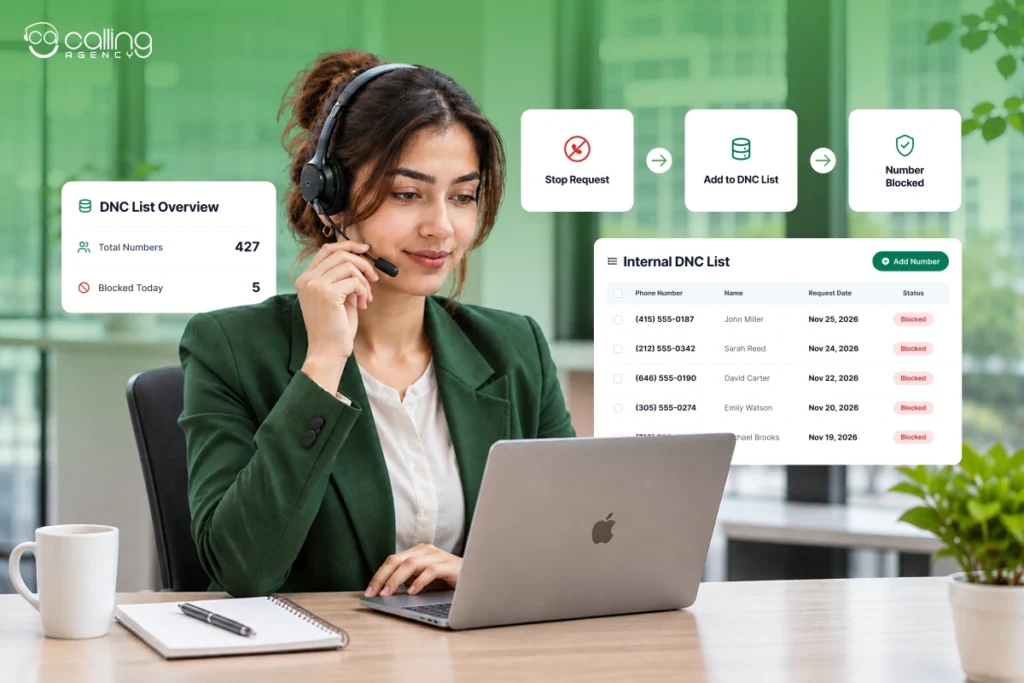
An internal Do Not Call (DNC) list records the numbers that told your company not to call them again. Your company must have this list because it will prevent you from making unwanted calls.
The 47 CFR § 64.1200(d) rule says that businesses must record each request not to call and stop those covered sales calls within 10 business days. Then they have to keep each request from the individual for at least five years. Whether it’s for B2B calls made or personal phone numbers, the same rule applies to both.
This guide will explain to you some more DNC rules that you must follow while making calls or sending texts.
What Is an Internal Do Not Call List?
An internal Do Not Call (DNC) list is a list of people who have asked your company to stop calling them. This list includes those people’s phone numbers and names, if they have provided them.
Internal Do Not Call (DNC) list and National Do Not Call Registry are not the same thing. In the National Registry, you will find the list of people who do not want covered sales calls from businesses. Meanwhile, your internal list or DNC list includes numbers of people who do not want calls from your company. Your company must check both lists before calling.
As per 47 CFR § 64.1200(d), businesses that make covered telemarketing calls to residential subscribers must have written rules for handling stop-call requests. Besides, they must stop calling those numbers that made requests within 10 business days. That’s why many businesses that work with a cold calling agency share their internal DNC list with it before any campaign starts.
Do Internal DNC Rules Apply to B2B Calls?
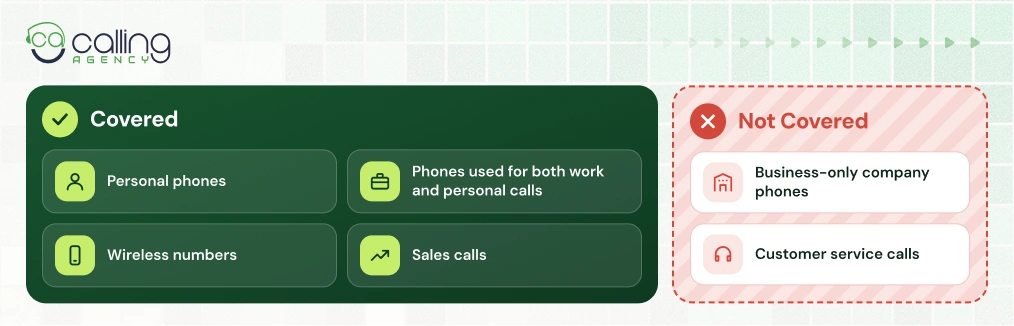
Yes, internal DNC rules apply to B2B calls when they reach a personal phone number. 47 CFR § 64.1200(d) says that businesses must keep a list of people who have asked them to stop calling. This includes all personal phones and the phones that are used for both work and personal calls. But company phones that are used only for business are not included here.
Moreover, the FCC declared in its 2003 TCPA order under Section 64.1200(e) that DNC protections apply to wireless numbers too. But the rule will only cover those calls that try to sell products or services. Calls that are made only for customer service are not covered here.
In 2022, the Ninth Circuit, in Chennette v. Porch.com, held that when a phone number is used for both personal and business purposes, it is treated as a residential number. But before accepting it as a residential number, the business must show how it uses and lists that number.
The FTC has a separate rule on its B2B outbound compliance, called the Telemarketing Sales Rule (TSR). It says that businesses should keep an internal DNC list, which is also ruled under 16 CFR § 310.4. However, Section 310.6(b)(7) exempts most B2B calls from the TSR, but with some exceptions.
The 6 Requirements Under 47 CFR 64.1200(d)
Under 47 CFR § 64.1200(d), companies must follow six rules for their internal Do Not Call (DNC) lists. These are mentioned in the table below:
| Standard | What the rule says | What to build |
| (d)(1) Written policy | Maintain a written policy for keeping the list and make it available on demand. | A written policy that explains how your company records and handles requests. |
| (d)(2) Training | Inform and train personnel involved in telemarketing about the list and how to use it. | Training during onboarding and whenever the policy changes, with dated records. |
| (d)(3) Recording and honoring | Record the request and add the subscriber’s number and name, if provided, at the time of the request. Honor it within 10 business days. | A DNC option in your dialer or CRM that records the request immediately. |
| (d)(4) Identification | Provide the caller’s name, the seller’s name and a telephone number or address where the seller can be contacted. | A call script containing all required identification details. |
| (d)(5) Affiliates | Apply the request to the caller or seller. Extend it to affiliated companies only when the subscriber would reasonably expect it. | A written rule identifying which related brands share DNC requests. |
| (d)(6) Maintenance | Keep a record of the request and honor it for 5 years from the date it was made. | A record with the original request date and a retention rule of at least 5 years. |
Before, the deadline was 30 days. But now the FCC mentioned in FCC 24-24 that the deadline will be 10 business days.
The FCC also made separate rules for people who withdraw consent to receive robocalls and texts. Earlier, it gave a deadline of January 31, 2027, under DA 26-12. But now, under FCC 26-67, it gave a new deadline of November 25, 2026.
Who Owns the List When an Agency Calls
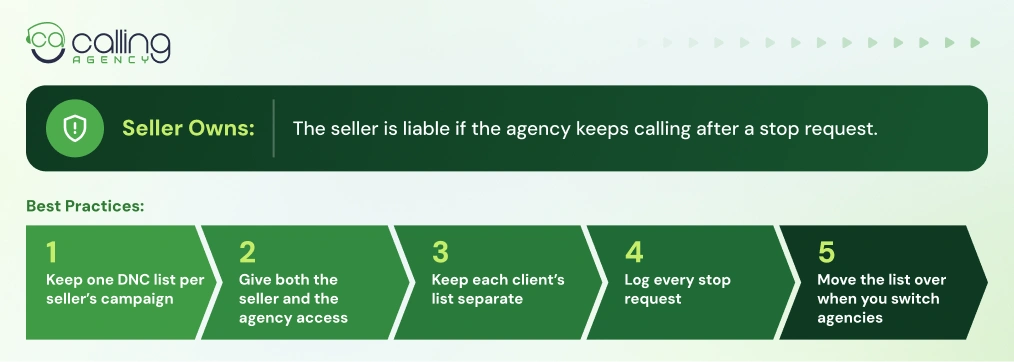
The seller owns the DNC list when an agency calls. In fact, the seller can be liable for outsourced caller TCPA violations, even when an agency makes the calls for it.
Let’s say the agency receives a request to stop calling from a person. But it still continues to call that person. In that case, the company that hired the agency will be responsible for making the call.
Here, the seller and the company are the same. They are the entity whose products or services are being promoted. An affiliate is also considered a company under the same ownership or control. The § 64.1200(d)(5) rule says that a stop request covers an affiliate only if the person would reasonably expect it. But that should be done based on the caller’s name and the product that is advertised.
When you hire cold callers to make sales calls, keep one DNC list for each seller’s campaign. Both the seller and agency should have access to it. Then keep each client’s list separately. Because sometimes a request for Client A may apply to Client B mistakenly.
The § 64.1200(d)(4) rule says that every sales caller must tell the person their name and the name of the company they represent. They must also provide a phone number they are using. But that phone number cannot be a 900 number.
Most importantly, the company must record every stop request, even if a sales representative forgets to report it. The agency should then add it to the Do Not Call (DNC) list. And if a seller changes its calling agency, it must transfer its existing DNC list to the new agency so that previous requests are not lost.
How to Build an Internal DNC List
To build an internal Do Not Call (DNC) list, keep one list of people who have asked your company to stop calling them. Add every request to the list as soon as you receive it. Then block those numbers in all your calling and messaging systems. If you hire outside calling agencies, do the same for their systems too. If they don’t follow these procedures, that’s a cold calling agency red flag.
What to Store for Each Request
For each request, you must store the person’s phone number and name in your DNC list. Then input all the details of the request, like channel, rep, seller, date, time and the stop date to your CRM data for cold calling. Here, recording the request date is most important.
Your company must stop calling the people who requested not to get calls within 10 business days.
Where the List Has to Sync
Your DNC list must sync to every system your company uses for calls and marketing texts. Don’t just save a number in your CRM because another system can still call it. That’s why update all your systems as soon as you receive a request.
Here are some updates you must make:
- Once someone asks you to stop calling, add their number to your DNC list. Your best dialer for cold calling should sync with the list and block that number before the next call.
- Mark the contact as Do Not Call. As a result, employees won’t add the number to another calling campaign.
- Make sure your outside calling agency receives the updated DNC list.
- Record requests to stop marketing texts and block further messages. If someone asks your company to stop all marketing contact, apply the request to calls and texts as required by law.
Always choose one person to manage these updates. This could be your CRM administrator or sales manager. Give them the responsibility to check whether every system has blocked the required numbers or not.
What Goes in a Written DNC Policy
A written DNC policy explains what employees must do when someone asks your company to stop calling. And whenever you are making a DNC policy, try to keep it short.
However, make sure you include these eight things in the policy:
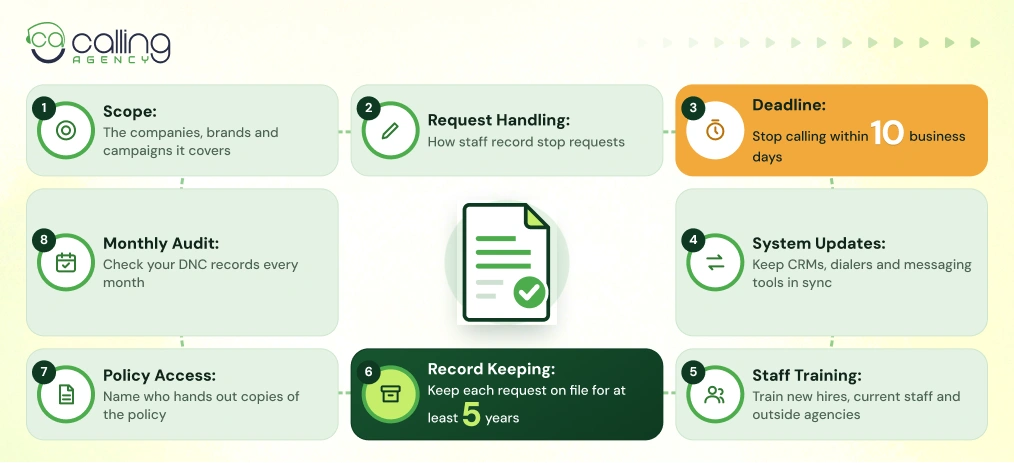
- Scope: Here, you must mention the companies, brands and campaigns that the rules cover.
- Request Handling: Here, you have to say how employees should record stop requests after receiving them.
- Deadline: Clearly guide your employees and agents to stop calling the person who requested not to be called within 10 business days.
- System Updates: Don’t forget to update your CRMs, dialers and messaging tools so that they can receive DNC updates easily.
- Staff Training: You must add the policy for cold calling training for your new employees and existing employees if the policy changes. If needed, train outside calling agencies too.
- Record Keeping: Always keep a record of each stop request on the DNC list for at least five years.
- Policy Access: You must include the name of the person who is responsible for providing a copy of the policy.
- Monthly Audit: It means checking your DNC records every month.
What Happens If You Break Internal DNC Rules?
If you break internal DNC rules, your company can face a TCPA lawsuit. Generally, the internal DNC rule is broken when a company calls someone multiple times even though the person has requested not to be called.
Cold calling is legal, but at the same time, the 47 U.S.C. § 227(c)(5) rule has given rights to people to sue a cold-calling company if it makes more than one illegal call within 12 months to them. In that case, the company may have to pay up to $500 per violation. And if the company breaks the rule intentionally, then it may have to pay $1,500 per violation.
However, there are some records when some companies got an escape even after making internal DNC violations. For example, in 2021, in Fischman v. MediaStratX, the company called the plaintiff more than 25 times after he asked it to stop. At that time, the court allowed his lawsuit to continue.
Again, in 2022, in Powers v. One Technologies, the court allowed private lawsuits over internal DNC violations. But it dismissed this claim because the plaintiffs did not provide enough facts that the company was responsible for its agents’ calls.
These cases are past. Now, your company will only be responsible for agency calls. The FCC’s 2013 ruling (FCC 13-54) and section 64.1200(d)(3) clearly say that if another company handles DNC records for a company, the seller or the company will be held responsible for their actions.
Conclusion
When you use an internal DNC list, you get to know whom you should not make sales calls. This also helps to stay away from legal problems because many people do sue companies when they make unwanted calls even after requesting not to do so.
But keeping a DNC list is not enough. You have to follow it as well. If employees or outside calling agencies are working under you, they must also follow it. If you or your agency miss even one request, in that case your company will have to face legal trouble. So, always record the numbers whose owners made requests and stop calling them.
Frequently Asked Questions
How long do you have to honor a Do Not Call request?
You must honor a Do Not Call list within 10 business days. When a person asks you not to call them, add the person’s number to your DNC list. If they have provided their name, record that too. Remember, your company will be responsible for making unwanted calls even if an outside agency makes them.
How long do you keep internal DNC records?
You must keep each internal DNC record for at least 5 years. The timeline should start from the day the person asks you to stop calling. Then save their phone number and their request date.
Does one request cover all your brands?
One request does not always cover all your brands. It covers the company that makes the call and the company that it represents. The request may also cover related brands if the person would expect them to be included.
Can someone opt back in?
Yes, someone can opt back in if the person gives permission to receive calls or texts again. But if they buy from your company, it won’t cancel their DNC request. So, you should get clear permission before contacting them again.