

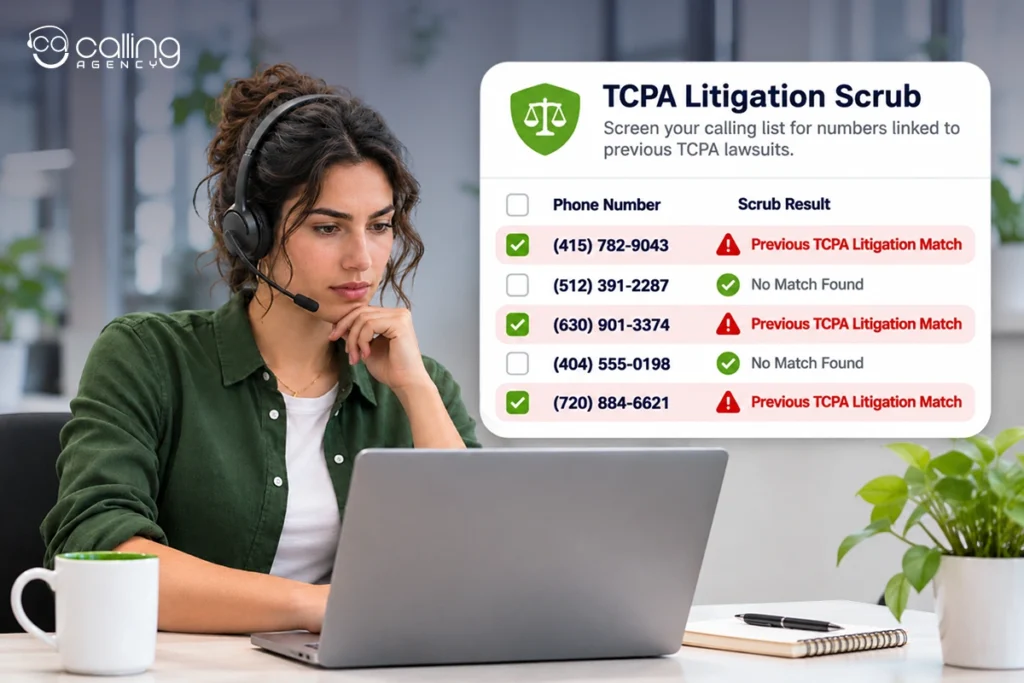
A TCPA litigator scrub checks your calling list for people who have sued companies over TCPA violations before. It helps you remove their numbers before calling. As a result, you can hardly face any lawsuits.
Let’s say a person has sued before, but now uses new numbers. That number may not appear in the vendor’s database. So, you may mistakenly call them and the scrub can’t protect you in this case.
The Telephone Consumer Protection Act (TCPA) says that companies must be certain to follow when making sales calls and automated calls. Only then can they avoid legal problems.
Now, we have to take TCPA lawsuits seriously. WebRecon reported 270 TCPA lawsuits in May 2026. It also found that 40% of the people in the consumer-protection cases it tracked had filed lawsuits before. Let’s now go deeper into this guide.
What Is TCPA Litigator Scrubbing?
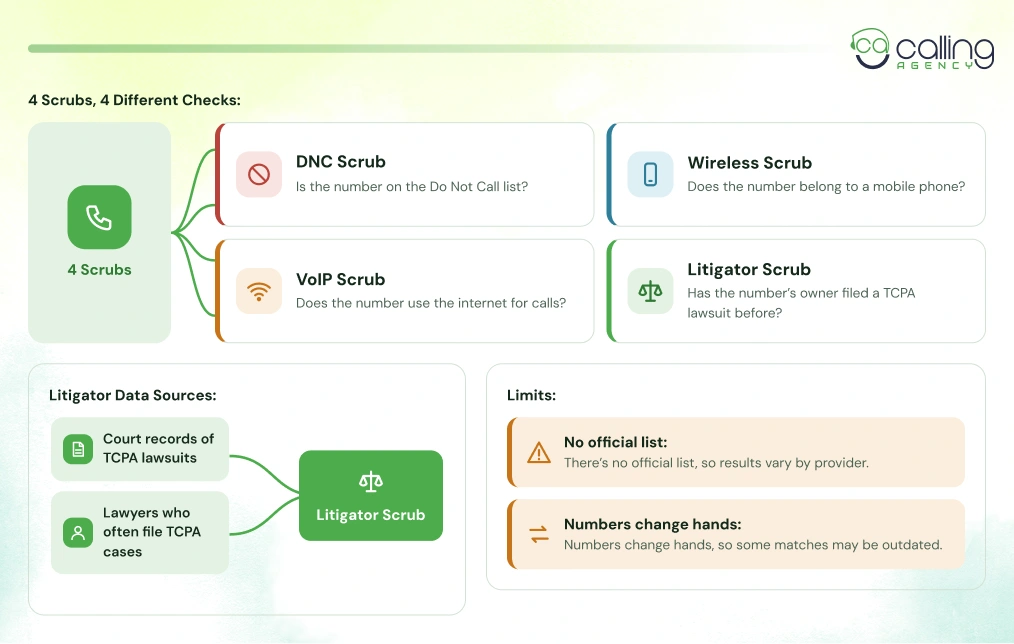
TCPA litigation scrubbing is mainly about checking a calling list against a private list of people who have filed TCPA lawsuits. It’s quite different from DNC scrubbing. Businesses that get cold calling lists should screen the numbers against a litigator database and remove any matches before calling.
Companies that use litigator scrub get information on the numbers that filed lawsuits from court records. Some companies also keep track of lawyers who often file TCPA lawsuits. So, they get information from that source also.
In each check, you will get something different, especially for list building for telemarketing. For example, in the DNC scrub, you can check if a phone number is on the Do Not Call list. In the wireless scrub, you can check if a phone number belongs to a mobile phone. Then, in the VoIP scrub, you can check if a phone number uses the internet for calls. Lastly, in the litigator scrub, you can see if a phone number belongs to someone who has filed a TCPA lawsuit before.
You won’t get an official government list of people who have filed TCPA lawsuits. As a private company, you have to make your own lists with the help of court records. That’s why different companies find different results.
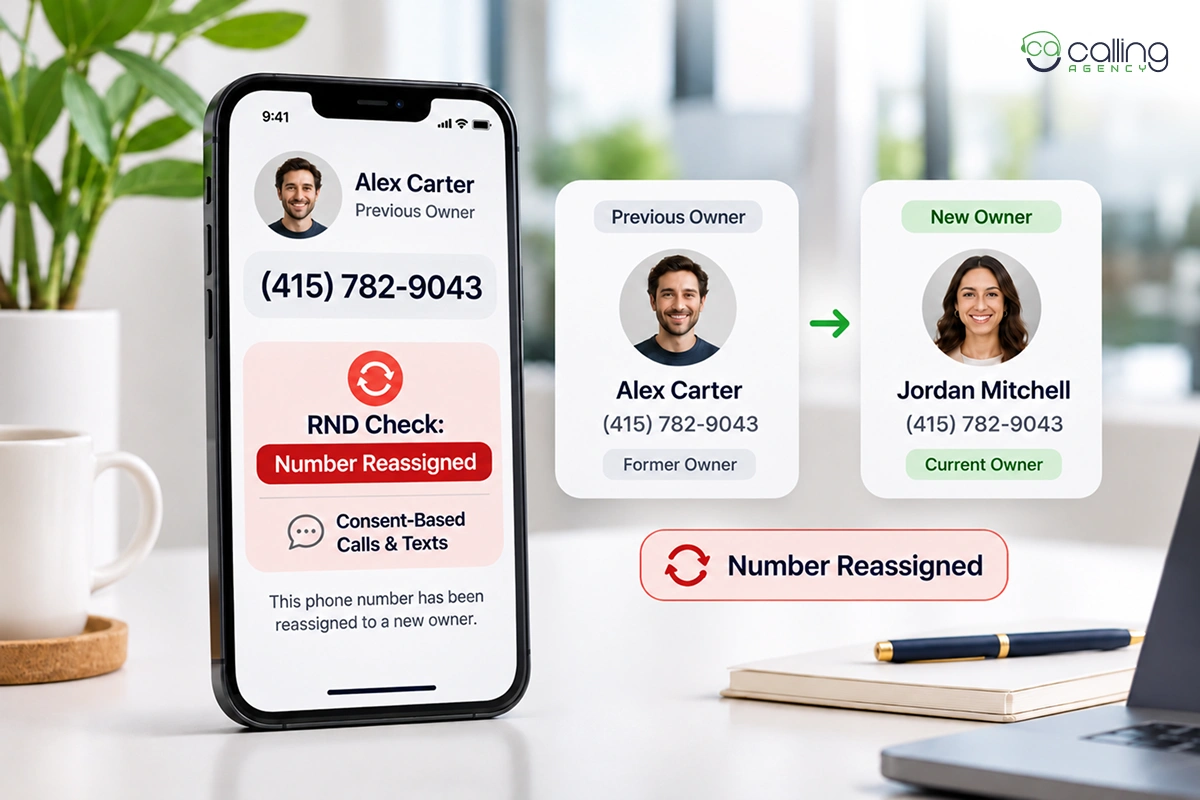
It can also happen that a person who filed a lawsuit may no longer own the phone number linked to their name. Maybe someone else is using that right now. So, here also you may face some confusion.
As per WebRecon’s May 2026 litigation report, about 1 in 3 TCPA plaintiffs in 2021 had filed lawsuits before. And its May 2026 report found that about 40 out of every 100 plaintiffs had filed lawsuits before.
Does a Litigator Scrub Protect You From TCPA Lawsuits?
No, a litigator scrub does not protect you from TCPA lawsuits. It can only help you to avoid calling those people who have filed TCPA lawsuits before.
It can happen that you broke a DNC rule by mistake. In that case, you can get protection of DNC safe harbor under 47 CFR § 64.1200(c)(2). But make sure you follow these five rules to put a tick on your safe harbor requirement.
| Safe harbor requirement | Does a litigator scrub cover it? |
| Written DNC procedures | No. A scrub does not create your written policy. |
| Staff training | No. You must train your callers and any agency working for you. |
| Internal DNC list | No. A litigator list does not replace your internal DNC list. |
| Updated National DNC Registry | No. You still need a fresh registry check and records. |
| Direct Registry access | No. A vendor’s litigator database cannot replace this purchase. |
You are using a litigator scrub; that doesn’t mean you can replace any of these steps. You can only get this protection if you call a number on the National DNC Registry by mistake.
Under 47 U.S.C. § 227(c)(5), a business may get another legal defense. That too is applicable if the business is taking actions to prevent illegal sales calls.
So, don’t rely on the litigator scrub alone. Treat it as a part of B2B outbound compliance. And show the authority that your business is actually following all steps properly.
How Serial Plaintiffs Build TCPA Cases
Serial plaintiffs build TCPA cases by registering their phone numbers on the National Do Not Call (DNC) Registry. Then they record every sales call they receive.
If a company makes more than one illegal sales call to a person within 12 months, that person can sue the company. The person can even claim up to $500 for each illegal call. And if the company makes the illegal call purposely, the person can claim up to $1,500 per call.
But before taking any legal action, some plaintiffs will collect evidence. They may register their number on the DNC list. Then they may record each call’s date, time and caller ID. Also, they will ask, “How did you get my number?” and give verbal notice to stop calling them further.
Do Courts Let Serial Plaintiffs Sue?
Courts let serial plaintiffs sue for making illegal sales calls. If the person files multiple TCPA lawsuits, it doesn’t mean the person can’t sue again. Courts will check whether the person has really suffered because of it. This is called standing, which means having the legal right to sue.
Stoops v. Wells Fargo (2016) report says that a woman bought at least 35 phones to attract calls and file lawsuits. The court decided that she can’t sue because she had not suffered any real harm.
Again, in the case of Horton v. MultiPlan (2021), the court said that if someone filed many lawsuits before, it won’t stop the person from suing further. The plaintiff’s past lawsuits can’t be a reason to dismiss the case.
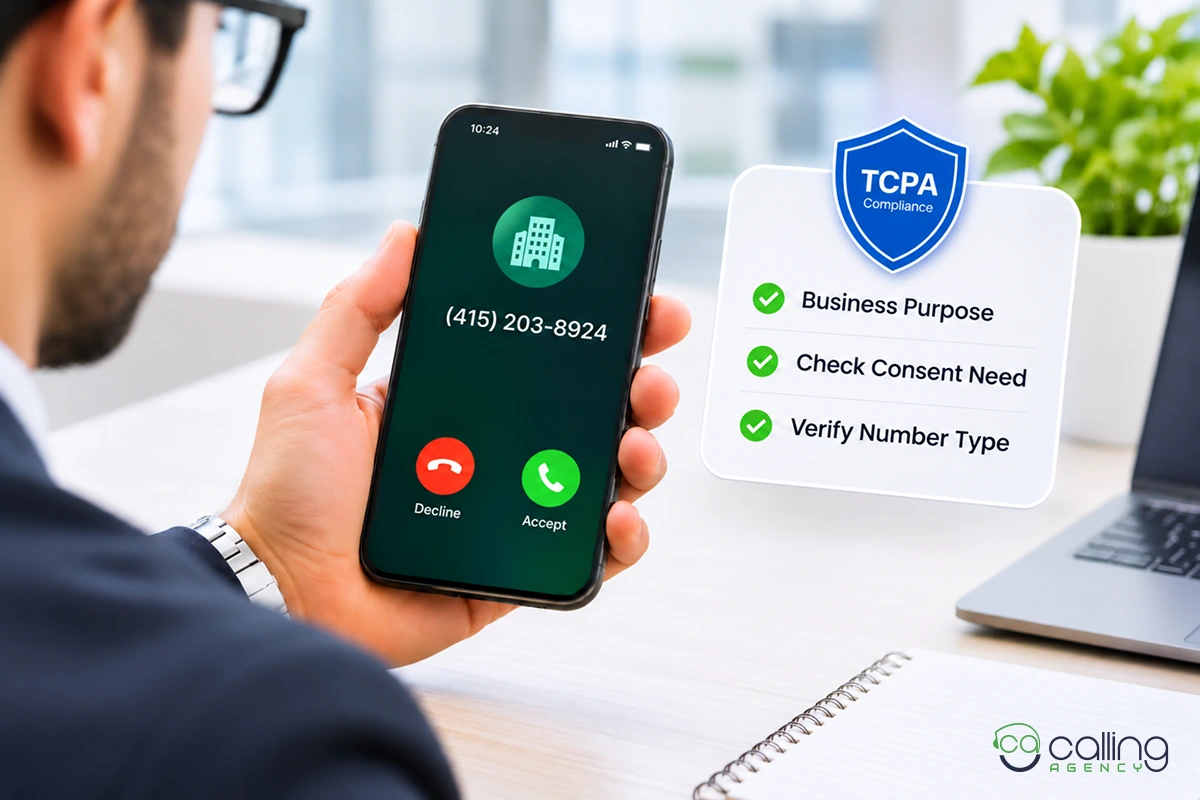
The use of a number also matters. Because DNC rules protect personal phone numbers, not business numbers. If a company says that their phone number is used mainly for business, they can argue that DNC rules do not apply to their number.
Even though a company uses a phone for business, it doesn’t mean that’s a business number. In Chennette v. Porch.com (2022), the court said that if a business uses a phone for both personal and business calls, that can be counted as a residential phone. Courts may also look at advertising, registration, usage and phone bills to verify if the phone is actually used for business.
Which TCPA Claims Can Reach a Cold Calling Team?
TCPA claims made for calling numbers on the National DNC Registry, ignoring stop requests, calling residential numbers outside permitted hours and making automated or recorded calls without proper consent can reach B2B cold calling teams. Even manual cold calling is legal, unless it violates DNC rules.
| Claim | Section | What it needs | Damages | Exposure for a hand-dialed B2B team |
| National DNC Registry | 47 U.S.C. § 227(c)(5), 47 CFR § 64.1200(c)(2) | More than one unlawful solicitation call within 12 months to a registered residential number | Up to $500 per violation or up to $1,500 if willful or knowing | High for personal and mixed-use residential cells |
| Internal DNC | 47 U.S.C. § 227(c)(5), 47 CFR § 64.1200(d) | Failure to maintain required DNC procedures or continued calls after a stop request | Up to $500 per violation or up to $1,500 if willful or knowing, where a private claim is available | Medium. Courts disagree about the private right to sue under this rule. |
| Calling hours | 47 CFR § 64.1200(c)(1), 47 U.S.C. § 227(c)(5) | Unlawful solicitation calls to a residential subscriber before 8 a.m. or after 9 p.m. local time | Up to $500 per violation or up to $1,500 if willful or knowing | Medium when reps call across time zones |
| Robocall | 47 U.S.C. § 227(b)(1)(A)(iii) | An autodialer or artificial or prerecorded voice used to make a covered call to a cell phone without the required consent | $500 per violation or up to $1,500 if willful or knowing | Low for genuine hand dialing without pre-recorded messages |
Even if you hire a calling agency and the agency makes illegal calls, your company can be liable for outsourced caller TCPA violations as per the FCC 13-54. But if you have an Established Business Relationship (EBR), your company may be allowed to call someone on the National DNC Registry.
Remember, EBR is only applicable if the person has bought something from your company within the last 18 months or contacted your company about a product or service within the last 3 months. But that doesn’t mean companies must not follow their own Do Not Call (DNC) rules. In fact, as per DNC rules, they must have written rules for handling stop requests. Besides, they must keep a list of people who do not want calls.
Companies cannot make sales calls to residential numbers before 8 a.m. or after 9 p.m. Because here, the receiver’s local time matters, not the caller’s time.
For manual and automated calls, you have to follow different rules. In manual calling, a representative enters the phone number and makes the call. While making these calls, you won’t have to face TCPA’s wireless auto-dialer restriction.
On the other hand, automated calls may require consent if the system uses a random or sequential number generator. And if it’s recorded sales messages, in that case, you will require prior written consent.
What a Litigator Scrub Misses
A litigator scrub may miss new plaintiffs, new phone numbers and recent lawsuits from its database. Because a litigator scrub shows who has filed TCPA lawsuits so far. If new plaintiffs appear or if an older plaintiff who sued before now uses a new number, a litigator scrub can’t show you those records. And if your company has already made calls to those numbers unknowingly, the litigator scrub can’t fix that too.
When you buy lead lists, don’t just buy one scrub. Because new lawsuits appear every day and people change phone numbers very often now. That’s why use multiple scrubs so that you can run each of them every time before starting a campaign.
The Process Gaps Serial Plaintiffs Test
Serial plaintiffs will check your DNC process, not just your calling list. Because sometimes we pass a litigator scrub, but still our company has to face legal claims. This usually happens when we ignore stop requests from a person or when we break DNC rules.
Courts say that people cannot sue for breaking the DNC rule. For example, in Fischman v. MediaStratX (2021), a North Carolina court allowed the lawsuit to continue. Moreover, in Powers v. One Technologies (2022), a Texas court also allowed a private lawsuit. However, other courts may make different decisions.
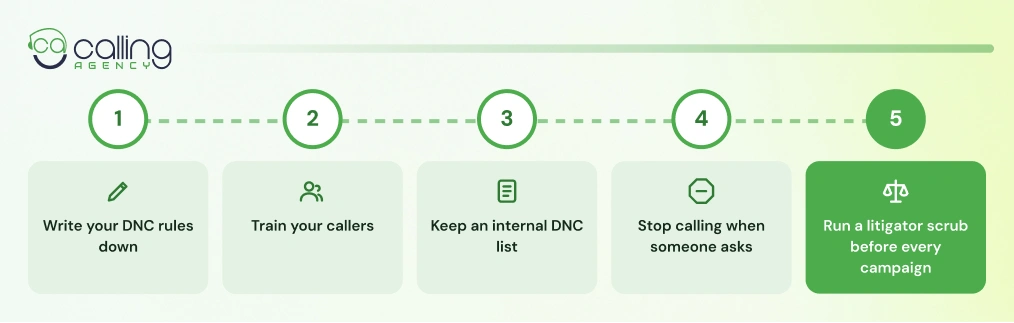
Instead of completely relying on a TCPA litigator, create written rules first. Then train your callers, keep a DNC list and stop calling as per request. Most importantly, run litigator scrubs whenever you start a new campaign.
Before hiring, make sure your agency is strict about DNC rules. Since violations might cost you money, you don’t want to take this risk in-house. That’s why our cold calling solution offers you assurance of the best cold calling, with expert callers who have served in this industry for a long time. They keep you stress-free and let you concentrate on your core business.
Conclusion
TCPA litigation scrubbing mainly helps businesses identify people who have filed TCPA lawsuits before. Businesses use it so that they can remove those numbers from their calling list. As a result, they can stay away from lawsuits.
However, this litigator won’t guarantee you 100% protection from lawsuits. Because new plaintiffs appear and older plaintiffs may change numbers. So, you may mistakenly call the person whom you shouldn’t call. That’s why it’s very important that you maintain your DNC checks and do proper recordkeeping to reduce TCPA risks.
Legal Disclaimer: This is for general informational purposes only, not for legal advice. TCPA rules may change and apply differently depending on your situation.
Frequently Asked Questions
Is a litigator scrub worth it?
Yes, it can help you avoid calling numbers linked to people who have filed TCPA lawsuits. But it can’t guarantee you won’t be sued, so keep following DNC rules and honor opt-out requests.
Is it legal to avoid calling known TCPA litigators?
Yes, it is legal to avoid calling known TCPA litigators. The TCPA won’t force you to call anyone. If you don’t want to have conversations with some known plaintiffs, you can simply remove their numbers. But that’s going to be a business choice only. Avoiding a known TCPA litigation does not mean the person has done anything wrong.
What should you do after a TCPA demand letter?
When you receive a TCPA demand letter, stop calling the number. Then add it to your DNC list. At the same time, save your lead lists and scrub results. Then ask a TCPA lawyer to review the letter before replying. Once you receive the demand letter, don’t delete or change records because that’s going to be your evidence to prove yourself.
Can you be sued under the TCPA for B2B calls?
Yes, you can be sued under the TCPA for B2B calls. This is because some business calls still break TCPA rules. When a person uses a personal phone for both work and personal calls, DNC rules protect that number. Also, companies need written permission before making automated sales calls, which some of them don’t have. That’s why being sued is evident in this case.