


No, cold calling is not dead. What died is untargeted mass dialing with a rigid script. For considered B2B purchases where you need to reach a senior decision-maker, research-based outbound calling still books meetings. The phone was never the problem. Poor execution was.
Key Takeaways
- Cold calling is not dead. The untargeted, script-heavy mass dialing died. Research-driven, targeted calling still secures B2B appointments.
- Buyers still answer. 69% have accepted a cold call from a new provider in the past year, and 82% say they accept meetings at least sometimes when sellers reach out. (RAIN Group).
- The value didn’t change; the role did. Buyers only spend 17% of buying time with suppliers (Gartner) and use 10+ channels to conduct research (McKinsey), so calls work best when combined with other touchpoints in a sequence.
- “Dead” usually means “done badly.” Bad cold calling is dead, says Jill Konrath.
- Precision beats volume. It works when targeting, timing, and conversation quality align, especially for operational B2B problems with a clear decision-maker.
Every few years, the headline returns: cold calling is dead. With all this talk of automation, AI, inbound marketing, and self-directed buyer journeys, it is easy to write off the phone as dead. To answer that question honestly needs data and not opinion, so this guide answers it with an analysis of buyer behavior, what the industry says, and outbound performance.
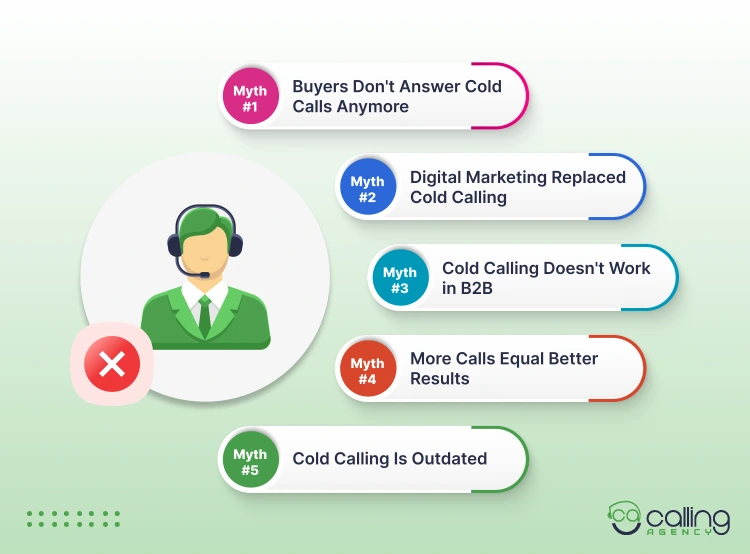
What the Data Says About Cold Calling in 2026
Without data, “cold calling is dead” is just an opinion. With data, it becomes a strategic question. Now buyers are in a multi-channel world and, on average, spend less time with sellers than before; that transitions cold calling from mass prospecting to precision engagement. It does not remove it.
A few numbers frame the picture:
- Buyers spend only about 17% of their buying time with potential suppliers (Gartner).
- B2B buyers use 10 or more channels before they decide (McKinsey).
- 69% of buyers have accepted a cold call from a new provider in the past year (RAIN Group), which is the direct counter to “nobody answers anymore.”
- Multi-channel outreach consistently outperforms calling on its own (McKinsey).
The takeaway is not that the phone stopped working. It is that calling now works best as one coordinated touch inside a wider sequence.
Why Buyers Research First and Talk Later
Today’s B2B buyers behave differently from those of 15 years ago. They explore websites, compare vendors, and read industry content before they speak to anyone. According to Gartner, B2B buyers spend only 17% of their total buying time meeting with suppliers, and that slice is split across every vendor they consider.
This does not mean buyers avoid sales conversations. It means they prefer to talk once they feel informed. Cold calling is rarely the first step in a B2B buyer’s journey. It works best to speed up evaluation once interest already exists. The shift is about timing, not elimination. A call placed when a buyer is weighing options lands differently than a generic pitch dropped cold in the sales process.
Is Digital Marketing Replacing Cold Calling?
When a large number of digital tactics are available, it can be easy to believe that calling died years ago. It didn’t. Platforms like LinkedIn and CRMs like HubSpot made inbound marketing powerful, but inbound is reactive: you wait for prospects to raise a hand. Cold calling is proactive. It allows you to directly target decision-makers and control pipeline generation.
Digital marketing has not replaced cold calling. Instead, modern revenue teams use both channels together to support business development and long-term business strategy. Digital campaigns help create awareness, while cold phone outbound allows sales teams to proactively engage decision-makers and generate opportunities that may never come through inbound channels alone.
A successful outreach strategy typically includes:
- Multi-channel call cadences that combine phone, email, and LinkedIn touchpoints.
- A personalized introduction call focused on the prospect’s business challenges.
- Continuous review of call recordings to identify objections, improve messaging, and refine the call script.
- Performance analysis across channels to improve email reply rates and overall engagement.
The highest-performing teams no longer judge success by call volume alone. Instead, they focus on outcomes that move deals forward. Key metrics include:
- Set rates that measure how effectively conversations turn into meetings.
- Show rate performance that tracks how many scheduled meetings actually occur.
- Email reply rates that indicate message relevance and buyer interest.
- Pipeline contribution from both digital marketing and outbound calling efforts.
McKinsey reports that B2B buyers now use 10 or more channels during a purchase. In high-performing teams, outbound calling is integrated with inbound rather than competing with it. Digital marketing builds awareness, and outbound calling accelerates engagement. Used together, they outperform either one alone. Cold calling has shifted from being the only outbound strategy to being one component in a broader revenue system.
Why Cold Calling Got a “Dead” Reputation
Sales strategist Jill Konrath put it best: “Cold calling is not dead. Bad cold calling is.”
Poor execution strategy makes cold calling have a bad reputation. Teams used unqualified lists and rigid scripts, and reps opened by telling the prospect about their own company rather than talking about the problem they could solve. A line like “Hi, I am calling to introduce our services and see if you would need this” triggers instant pushback because it has no context or relevance for the listener. It carries zero value.
So why do people say cold calling is dead? The short answer is that most buyers are responding to poor outreach experiences, not rejecting the channel itself. Low connect rate numbers, spam-labeled caller ID systems, and overused pitches have made many sales calls feel irrelevant.
At the same time, decision-makers now research vendors through social media, search engines, and peer recommendations before engaging with a sales professional. As mobile numbers become harder to access and buyers gain more control over who reaches them, cold calling succeeds only when it is targeted, personalized, and supported by data. The perception that cold calling is dead comes from outdated tactics, not from a lack of buyer willingness to have valuable conversations.
The biggest mistake, however, is pitching prematurely. In cold calling, you do not look to close. Your purpose is to get someone aligned and have a discussion. Prospects start to pull away when reps move too quickly for a commitment. RAIN Group found that 82% of buyers say they accept meetings at least sometimes when sellers reach out professionally, which tells you the phone is not being rejected. Poor execution is.
What Buyers Actually Mean When They Push Back
A common reason sales teams write off cold calling is misreading objections as rejection. Modern buyers do not refuse conversation outright. They push back on relevance, timing, risk, budget or fit. For the full playbook, see how to handle cold call objections.
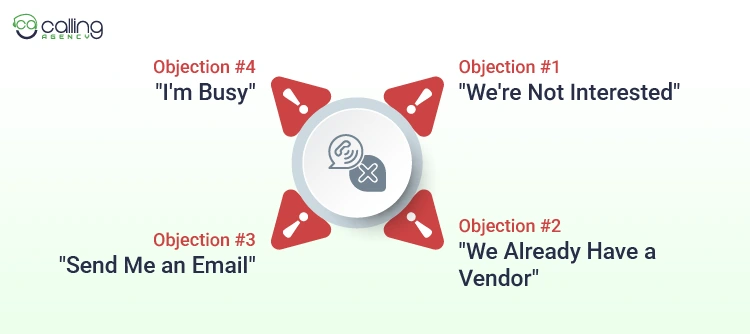
Sales reps with higher performance view objections as evidence of buyer interest rather than rejections. They are not more aggressive; they ask questions that help them understand the circumstances in which a prospect is looking to invest and whether they are truly qualified.
“We’re Not Interested.“ This does not mean that the prospect won’t buy, in many cases. This typically means that they don’t yet see a link between your solution and the context of their priorities.
Try:
“I understood, not a priority maybe as of yet. Are you solving [specific problem that this solves] in-house today, or is it simply not on the radar?”
It changes the narrative from a sales pitch to a discovery call.
“We Already Have a Vendor.” Familiarity and reduced perceived risk lead to the choice of existing vendors. The objection might be simply that they prefer stability over being totally satisfied with what you offer in terms of current results.
Try:
“That makes sense. When we talk with most teams, they already have a provider. Would it be valuable to hear how a couple of them built on what they had?”
This technique examines a possible void or gap without actually confronting the prospect’s existing selection.
“Send Me an Email.” Sometimes this is a genuine interest. Other times, it’s a polite way to finish the conversation. It is determined by a quick qualifying question, which is either true or false.
Try:
“Happy to. So I make it relevant, is your main focus right now cutting cost, improving efficiency, or lifting performance?”
If the prospect responds, then definitely there is real engagement.
“I’m Busy.” You can tell when they are bad time to call, or that you have reached a person not in charge.
Try:
“Completely understand. Before I let you go, can I ask who to talk to about this?”
One simple conversation can reveal the appropriate stakeholder.
| Objection | What it usually signals | Opener that works |
| “We’re not interested.” | No relevance seen yet, not a closed door | “Are you handling [problem] internally today, or is it just not on the radar?” |
| “We already have a vendor.” | Risk-avoidance, not satisfaction | “Most teams we talk to already have one. Want to hear how a few improved on what they had?” |
| “Send me an email.” | A polite exit | “Happy to. So I make it relevant, is your focus cost, efficiency, or performance?” |
| “I’m busy.” | Genuine, or you have the wrong person | “Completely understand. Who’s the right person to talk to about this?” |
Where Cold Calling Still Works (and Where It Doesn’t)
Cold calling still works in B2B industries with clear problems, one clear decision-maker, and real cost on the line. It works least in low-cost, consumer sales with no urgency behind them.
This question by sales leaders is also common because they do not want wasted calls. The truth is simple. Cold calling by itself is not good or bad. It has some success and other times no fortune at all.
It requires long and continuous expertise, like IT support, logistics, staffing, facility management, and B2B software. Individuals in these positions regularly need to look up vendor price and performance, meaning a call at the right times would feel useful, not irritating. A call around price or speed resonates, because it addresses an existing concern the buyer has.
| Where Cold Calling Works Best | Why It Works |
| IT Support & Managed Services | Buyers regularly assess service quality, uptime, and vendor performance. |
| Logistics & Transportation | Cost, reliability, and operational efficiency directly impact profitability. |
| Staffing & Recruiting | Hiring needs often create immediate demand and urgency. |
| Facility Management | Businesses frequently review vendors for cost savings and service improvements. |
| B2B SaaS | Decision-makers look for solutions that improve productivity and business outcomes. |
Cold calling works when:
- One person can decide, and you can reach them
- The problem costs real money
- Your service is a definite return
- A recent change created urgency
- The call shows real research
It struggles when:
- It is an inexpensive and lower-stakes product
- When we focus on B2C, these are consumers, not businesses
- There is no trigger or business signal to anchor the call
- The buyer is not really part of that decision
Cold calling does not work well in three cases. The product is cheap. The buyer is a regular person, not a business. Or there is no urgency to give the call a reason to happen. You can read more about these problems in why cold calling doesn’t work. For the strongest argument against cold calling in B2B, see why cold calling is “obsolete” in B2B sales.
Before You Call Cold Calling Dead: A Strategic Checklist
Most teams blame cold calling when the real problem is how they do it. Before you say the channel is dead, check who you call, what you say, when you call, and what happens after.
Many sales teams stop cold calling after a few bad results. They don’t ask why the calls failed. Most of the time, the problem isn’t the phone. It’s how the calls were planned and run. Bad lists, weak scripts, bad timing, or no follow-up plan can break any sales channel, not just calling.
The better question isn’t “Is cold calling dead?” It’s “Are we doing cold calling the right way?” Buyers today want calls that feel personal and useful. The teams that book the most meetings don’t rely on calls alone. They mix calls with email, LinkedIn, and research on the company first.
Use this checklist to check your approach:
| Question | Why It Matters |
| Are you calling the right people? | Calling the right people leads to better conversations. |
| Do you also use email and LinkedIn? | Using more than one channel gets more replies. |
| Are your reps good at handling pushback? | Good answers to objections create more chances to win. |
| Do you track real conversations, not just call counts? | Just making calls doesn’t bring in new deals. |
| Do you use data to pick who and when to call? | Smart targeting saves time and gets better results. |
| Is your goal to book the next step, not close the deal right away? | Most cold calls work by moving forward step by step, not rushing. |
The best cold calling programs all share one thing. They care more about quality than quantity. They call the right person, talk about a real problem, and aim to set up the next step, not force a sale.
If most of your answers are “no,” cold calling isn’t the problem. Your process needs work. Look at who you call and how each call is run before you give up on the channel. How you do it matters more than the channel itself.
Final Answer: Is Cold Calling Dead?
Random, aggressive, unresearched, and scripted cold calling is dead. Those have gone out of style with buyers for years now. Cold calling is highly effective when it is targeted, problem-centered, and timely. To know if it will pay off for your team, see whether cold calling is still worth it or not.
Cold calling is also not about volume in 2026. It is all about the precision. Contact the right prospect at the right time with insightful data, along with addressing objections gracefully. The phone is not outdated. Poor strategy is. The real question is not whether cold calling is dead. It is whether your execution has changed.
Frequently Asked Questions
Is cold calling dead in 2026?
No, targeted and research-based cold calling is still highly effective. According to the research of RAIN Group, 69% of buyers accepted cold calls from new providers in the last year. But irrelevant and untargeted dialing is dead.
Why do people say cold calling is dead?
The bad reputation comes from mishandled execution: terrible lists, scripted delivery, and selling before you understand the needs of the prospect. As Jill Konrath says, “Cold calling is not dead. Bad cold calling is.”
Is cold calling still effective in B2B?
Yes, particularly for high-consideration purchases where you need to get in front of a senior decision-maker. Buyers are responsive to sellers, with 82% saying they accept meetings at least sometimes when approached professionally (RAIN Group).
What industries does cold calling still work best for?
Operational B2B services tracking ROI: IT, facility management, logistics, staffing, and B2B SaaS. When the decision-maker is clear, and you have a reason to call based on a trigger event, it works.
Is cold calling worth it compared to email and LinkedIn?
They aren’t rivals. Because buyers use 10+ channels before deciding, Calls combined with email and LinkedIn perform much better than any individual channel (McKinsey). Cold calls speed up the engagement of digital touches.
What is the difference between cold calling and “bad calling”?
Cold calling is reaching out to a researched, qualified prospect with the purpose of starting a conversation. Bad calling is bland dialing with a simple, early pitch. The first still works. The latter is what people mean when they say cold calling is dead.