

A customer pays a wholesaler $18,000 by card. The wholesaler may pay hundreds of dollars in card fees on that one payment. That is the main difference between wholesale and retail.
In retail, a small rate difference may save only a few cents. In the wholesaling process, the same rate difference can save hundreds of dollars because the digital payments are much larger. So, don’t start the sales strategy call by saying, “I can lower your rate.”
Start by asking, “How much are you paying when customers pay large invoices by card?” Then check the merchant’s card fees, payment system and current payment process.
If there is a cheaper way to handle those mobile payments, you have a reason to talk about changing the processor. So, in wholesale trade, start with the large payment, not the rate.
Why the Retail Merchant Services Pitch Fails on a Wholesale Account
A retail merchant services pitch fails on a wholesale account because wholesale businesses handle much larger digital payments, so they care more about the total cost of each large transaction. Here are the numbers that a distributor runs.
| Ticket size | What a 0.15% improvement returns |
| $60 retail sale | $0.09 |
| $4,000 mid-size invoice | $6.00 |
| $40,000 wholesale invoice | $60.00 |
A distributor receiving a $40,000 card payment processor could pay more than $1,000 in interchange. At Visa’s published Commercial Non-Qualified rate of 2.95% + $0.10, the calculation is $1,180.10. So the distributor may think, “Why should I accept card payment solutions when the customer can pay by ACH or check?” That is the real problem an ISO needs to solve to get merchant services leads.
Don’t say, “We can lower your rate.” Instead, ask, “Are you paying more than necessary when customers pay large invoices by card?”
For example, Visa’s published rates show a difference between Commercial Card Not Present and Commercial Product 3. On an $18,000 transaction, the published interchange difference is $171.
The merchant account will not automatically save $171. First, the transaction must qualify for the lower category. And interchange is only one part of the total processing cost.
How Much Does Enhanced Data Actually Save on a Large B2B Invoice
Enhanced payment gateways can save hundreds of dollars on large B2B payment solutions by helping a transaction qualify for a lower interchange category. For example, on an $18,000 invoice, Visa’s Commercial Card Not Present rate produces $486.10 in published interchange. Meanwhile, Commercial Product 3 produces $315.10. That is a $171.00 difference.
Here is how the same $18,000 payment setup can fall into different published categories:
| Route | Network | Published rate | Interchange | Effective rate |
| Non-Qualified / Standard | Both | 2.95% + $0.10 | $531.10 | 2.95% |
| Commercial Card Not Present | Visa | 2.70% + $0.10 | $486.10 | 2.70% |
| Data Rate I | Mastercard | 2.70% + $0.10 | $486.10 | 2.70% |
| Data Rate II | Mastercard | 2.50% + $0.10 | $450.10 | 2.50% |
| Data Rate III | Mastercard | 1.90% + $0.10 | $342.10 | 1.90% |
| Commercial Product 3 | Visa | 1.75% + $0.10 | $315.10 | 1.75% |
| Commercial Payments Account, Large Ticket 1 | Mastercard | 1.20% | $216.00 | 1.20% |
| Large Purchase Advantage | Visa | 0.70% + $49.50 | $175.50 | 0.98% |
The table shows the sales strategy. The same $18,000 payment method can cost different amounts depending on which category it qualifies for.
For example:
- Non-Qualified = Product 3: $216.00 difference
- Commercial CNP = Product 3: $171.00 difference
- Non-Qualified = Large Purchase Advantage: $355.60 difference
These numbers show differences in published interchange. The merchant’s actual processor dual pricing also includes the processor’s pricing and other fees.
Mastercard still uses Data Rate I, II and III. Visa’s commercial card programs have changed. So, older Data Rate II/III terminology should not be used as if it were current.
For an ISO, the point-of-sale question should be, “Are your large card payments qualifying for the lowest interchange category they can?”
Remember, a large purchase advantage has a percentage plus a fixed fee. For an eligible Visa CNP transaction between $10,000.01 and $25,000, the rate is 0.70% + $49.50.
For an $18,000 payment:
$126.00 + $49.50 = $175.50
So the effective rate is about 0.98%, not 0.70%.
The fixed $49.50 matters more on smaller transactions. At about $10,000, the effective rate is around 1.19%. At $25,000, it is about 0.90%. This is why an ISO should look at the full calculation.
The other thing to check during the merchant services discovery process is a downgrade. A downgrade means a transaction did not meet the requirements for a cheaper category and was charged at a more expensive category. If the merchant is regularly paying a higher category, the ISO can investigate the processing method.
Visa Replaced Level 2 and Level 3 With One Program
Visa replaced its old Level 2 and Level 3 programs with CEDP/Product 3 for eligible commercial-card payments. Previously, businesses could qualify for lower growth rates by sending extra information with a commercial-card payment. Level 2 required basic details, but Level 3 required more detailed purchase orders and information.
Now, Visa uses the Commercial Enhanced Data Program (CEDP). So, to get merchant sales leads, the merchant must send the required transaction data correctly to qualify for Product 3.
For example, Visa’s Corporate and Purchasing schedule effective 18 April 2026 lists Product 3 at 1.75% + $0.10 for Corporate and Purchasing cards. The old general Level 2 and Level 3 rates are no longer listed. A Level 2 rate still exists for fuel transactions.
For an ISO, your point-of-sale systems question can be:
“Are your large commercial-card payments qualifying for Product 3 or are you paying a higher rate?”
The answer can be found by checking the merchant’s processing statement and transaction data.
Visa moved Level 3 to Product 3 in October 2025. But the general Level 2 incentive ended in April 2026. For large payments, also check Large Purchase Advantage, which is a separate Visa rate.
Mastercard Still Runs Data Rates and Small Business Cards Stop at Two
Mastercard still uses Data Rate I, II and III for large commercial cards, but small-business cards can only use Data Rate I and II. Mastercard’s Large Market Credit schedule covers corporate and purchasing cards too.
For large commercial cards, the rates are:
- Data Rate I: 2.70%
- Data Rate II: 2.50%
- Data Rate III: 1.90%
Small-business cards can get Data Rate I or II, but not Data Rate III.
For example, on an $18,000 payment, moving from 2.65% to 1.90% can save about $135 in published Mastercard interchange rates and fees.
Who Decides on Payment Processing at a Distributor
At a distributor, the controller or AR manager usually handles payment-processing solutions, but the CFO or owner may make the final decision.
| Role | What it owns | What it feels | What reaches it |
| Controller | Payment costs and accounting | Unexpected fees or higher costs | A cost question |
| AR manager | Invoices and payments | Payments that are hard to match to invoices | A payment question |
| CFO | Financial decisions and banking | High payment costs and cash-flow concerns | A business case |
| IT / ERP administrator | Payment systems and data | Integration problems or manual work | An integration question |
| Owner / CEO | Final business decisions | Overall cost and risk | A simple decision summary |
The owner may approve the processor, but the controller or AR manager usually handles the payment details. That’s why ask, “Who handles your customer payments?”
For wholesale leads, target:
- Controller
- AR manager
- CFO
- Finance director
Can a B2B Distributor Legally Surcharge
Yes, many B2B sales distributors can surcharge an extra fee for credit card payments, but the rules depend on the state and card network. As per Mastercard’s current surcharge rules, Visa requires 30 days’ notice before starting a surcharge. The extra fee can apply to credit card processing, not debit or prepaid card numbers.
Massachusetts does not allow this surcharge. Its General Laws Chapter 140D Section 28A law does not make an exception for B2B ecommerce. It only allows a clearly stated discount for customers who pay by cash or check.
After checking 12 payment-vendor guides, CallingAgency provided these lead lists of states with surcharge restrictions:
| State or area | Listed by |
| Connecticut | 5 of 5 |
| Massachusetts | 5 of 5 |
| Maine | 3 of 5 |
| Puerto Rico | Some |
| New York | Some |
| California | Some |
Because these lists are different, check the law for the merchant’s state before promising that surcharging is allowed. A surcharge means charging more for paying by card. A cash discount means charging less when customers pay another way.
So, before setting up a surcharge, check state law, Visa/Mastercard rules, processor, credit or debit card and other virtual cards. After clearing compliance, find B2B distributors that could use surcharging.
Where B2B and Wholesale Merchant Prospects Come From
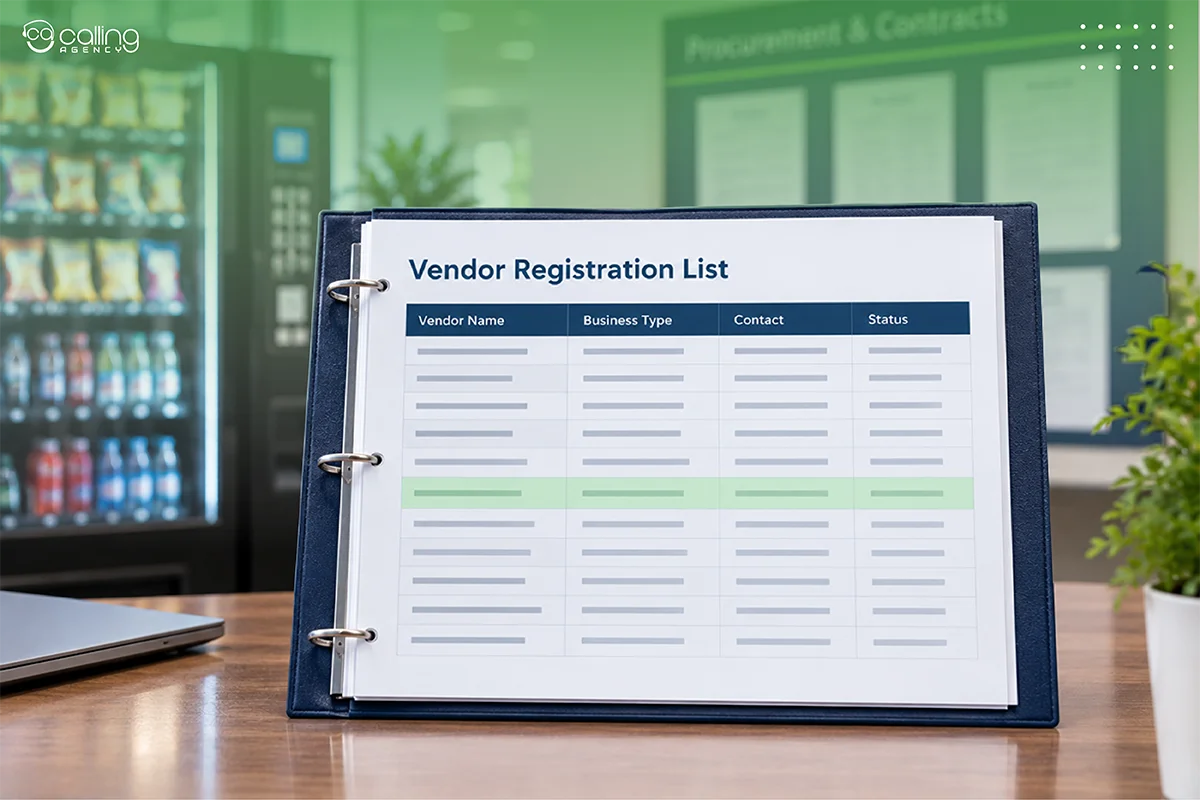
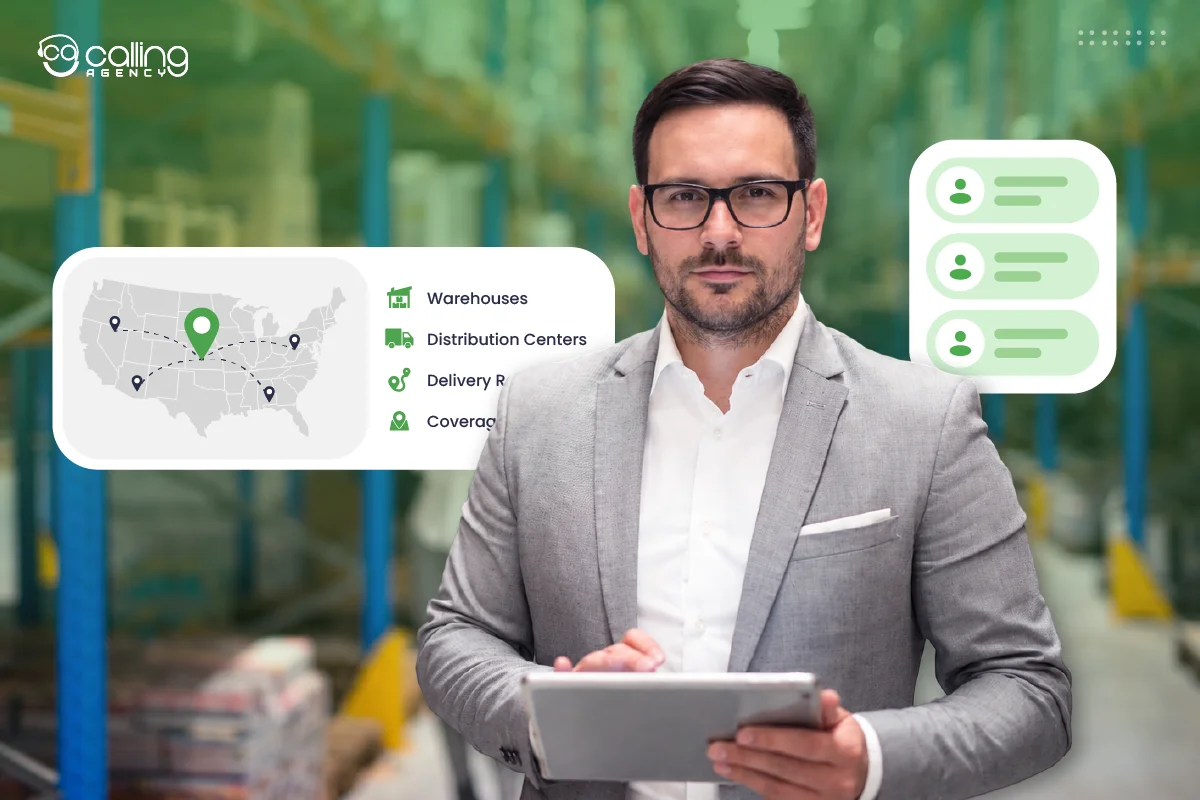
B2B and wholesale prospects usually come from business directories, industry lists and ERP records.
| Source | What you find | What to look for |
| Industrial park records | Company and location | Larger facilities |
| Trade directories | Companies in an industry | Target industries |
| ERP directories | Company and software | Companies with complex payment systems |
| Freight databases | Shipping activity | Businesses that ship often |
ERP records are useful because they show what software the company uses. This gives the rep an idea of how its payment system may work. Next, look for companies that have large invoices, repeat customers and regular card payments. This can help you to qualify merchant services leads.
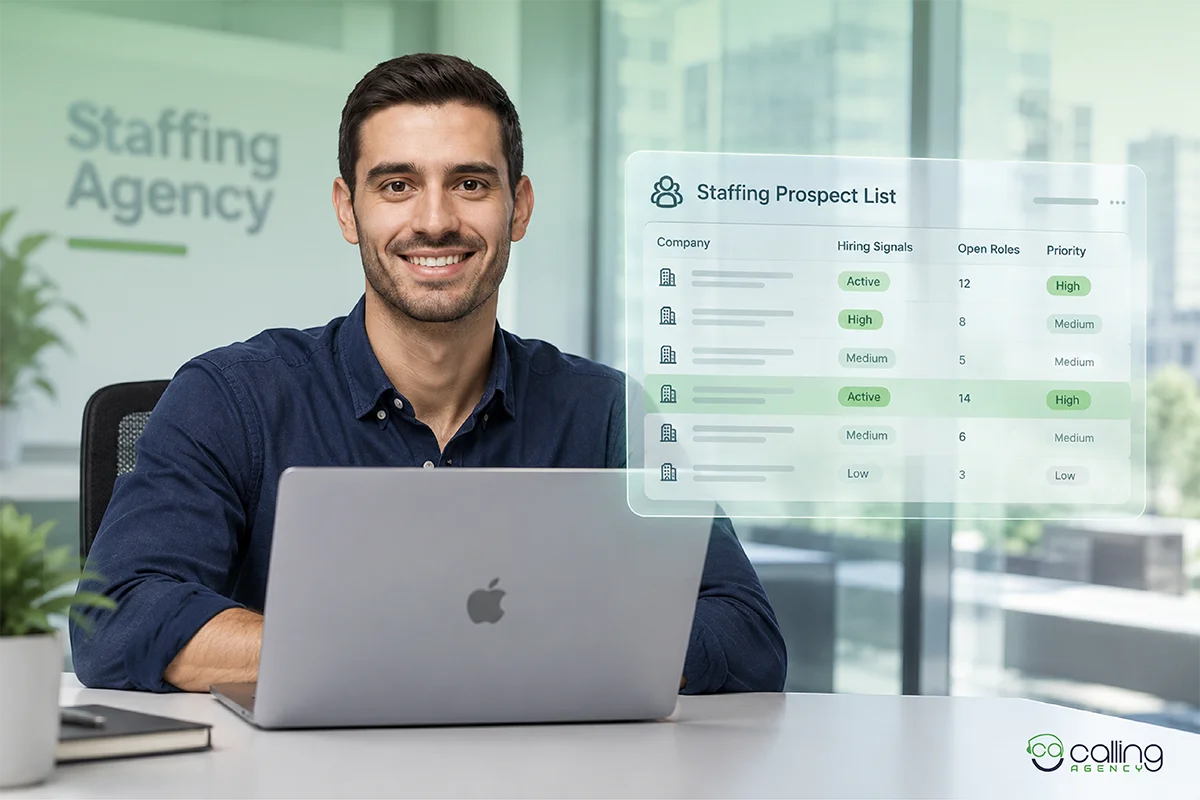
Good targets include wholesalers, manufacturers, industrial suppliers, medical suppliers, etc. For each prospect, collect the company name, industry, payment volume, payment system, decision-maker, phone number and email. Building a prospect list can help with this research and contact verification.
What to Collect Before You Run the Numbers
Before calculating savings, collect these four things:
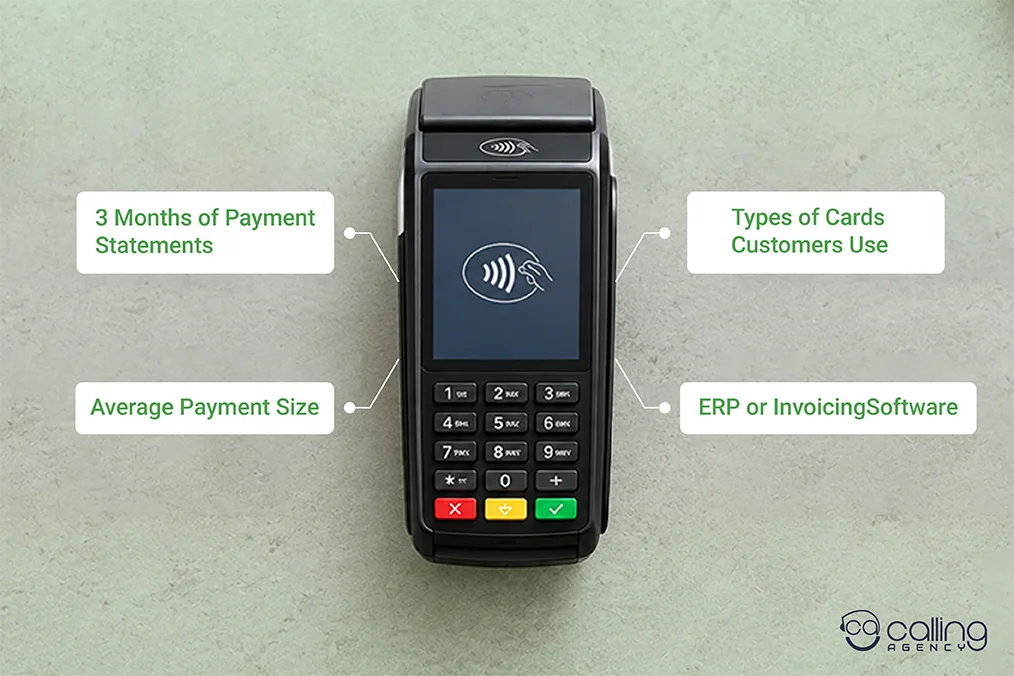
- 3 months of payment statements– It shows what they are paying now.
- Types of cards customers use– It can be business cards, corporate cards, purchasing cards or consumer cards.
- Average payment size– It shows how large their usual payments are.
- ERP or invoicing software– It shows what system they use to manage payments and invoices.
After you are done checking, ask these questions to the merchant:
- Do customers pay online or in person?
- Do you already send extra payment information with business card transactions?
If the merchant does not provide this information, maybe you are talking to the wrong person. If he manages online payment processing, he will have all the answers.
What Outbound Into Wholesale Merchants Actually Produces
Wholesale outbound usually produces fewer quick conversations because local reps often need to reach a controller, CFO or AR manager. A retail owner may answer the phone. Whereas, wholesale trade may need the rep to reach the controller, CFO or AR manager.
CallingAgency’s US Card Solutions campaign made 7,000 calls, 19,000 emails and 650+ LinkedIn messages in five months. It booked 373 sales-qualified appointments. That is about 71 touches for each appointment.
But this campaign targeted retail and hospitality, not wholesale. So, 71 touches should not be treated as a wholesale result.
Wholesale calls are different. The first call may only find the person who handles payments. After reaching that person, the rep can use merchant services sales scripts and ask for statements. CallingAgency works with both retail and wholesale merchant lists. But you will still need a separate wholesale campaign to find the actual appointment rate.
Conclusion
Selling merchant services to wholesale businesses is not only about offering a lower rate. First, you have to find out how the business takes payments, how much it pays in fees and who handles those payments. Then find the right business, talk to the right person, check their fees, find the problem and offer a better solution.
Large wholesale payments can make even a small fee difference expensive. That gives ISOs a clear reason to look beyond the usual retail sales pitch. In short, your sales goals should be to find a payment processor problem and show the merchant how you can solve it.
Frequently Asked Questions
What is the difference between Level 2 and Level 3 processing?
Level 2 processing gives basic payment methods and details and Level 3 processing gives more details about what was bought. Visa now uses CEDP/Product 3 instead of the old Level II/Level III names.
Do wholesale distributors accept credit cards?
Yes, wholesale distributors accept credit cards, but some avoid cards for large payments because the fees can be high. For example, a $40,000 card payment solution can cost over $1,000 in interchange as virtual card acceptance.
Is ACH cheaper than card acceptance for a distributor?
Usually, ACH costs less for large payments. It normally has a flat fee or a fee limit, but card fees can increase with the payment amount.
How long is the sales cycle on a B2B merchant services account?
The sales cycle on a B2B merchant services account can take longer because several people may need to approve the change. That’s why finance has to check the cost, IT has to check the system and then the owner or CFO makes the final decision.