


Qualifying leads is one of the most critical steps in merchant services sales. For this, you will need proper qualification. Or else, sales teams will only waste their time on unfit prospects. This will result in low conversion rates, and they will struggle to close deals. That’s why top-performing companies follow a structured qualification framework.
In this guide, you will learn exactly how to qualify merchant services leads step by step. Also, we will make you understand what makes a lead “qualified,” which questions to ask, and so on. And most importantly, we will show you how you can explore this merchant services lead generation.
What Is a Qualified Merchant Services Lead?
A qualified merchant services lead is a business contact that processes card payments, has an active merchant account, and fits your target profile — right industry, transaction volume, and decision-maker access.
Qualification filters out unresponsive prospects before outreach begins. Effective merchant services lead generation targets businesses with genuine switching intent — those paying high processing fees, locked in expiring contracts, or scaling into new payment infrastructure.
In simple terms, a qualified lead is ready, relevant, and reachable. And we can see two main types of qualified leads. These are:
- MQL (Marketing Qualified Lead): It shows interest but is not ready to buy
- SQL (Sales Qualified Lead): It is ready for a direct sales conversation
Understanding these qualified leads is a strategic need for funnel conversion.
How To Qualify Merchant Services Leads Step By Step?
To qualify merchant leads, you should follow a certain process. Here are the steps you can go with.
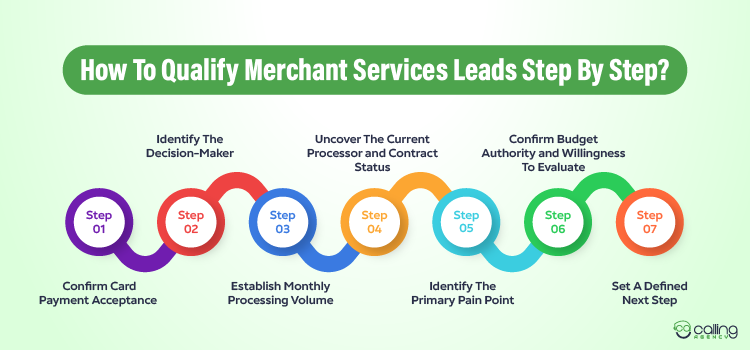
Step 1: Confirm Card Payment Acceptance
First, you have to confirm whether the business accepts card payments or not.
This is the most basic qualification step. Because merchant services only apply to businesses processing payments.
You may ask these types of questions. Such as:
- “Do you currently accept credit or debit cards?”
- “What percentage of your transactions are card-based?”
If they don’t accept cards yet, they may still be a future opportunity. You may see it especially for POS or setup solutions.
Step 2: Identify The Decision-Maker
Identifying decision-makers and influencers helps you to find if there is any need for your service or not . Those decision-makers can be business owners, CFOs, and operations managers. To them, you may ask:
- “Who currently handles your payment processing decisions?”
- “Are you the right person to discuss this?”
Just try reaching the right contact. This will save a lot of your time and improve close rates.
Step 3: Establish Monthly Processing Volume
How much transaction volume you have will determine how much your deal value and priority are going to be. The higher volume, the higher the revenue potential is going to be.
For this, you can ask:
- “What’s your average monthly card volume?”
- “How many transactions do you process monthly?”
The typical benchmarks include:
- Low volume: <$10K/month
- Mid volume: $10K to $100K/month
- High volume: $100K+/month
Focus more on mid to high-volume merchants. They give better returns.
Step 4: Uncover The Current Processor and Contract Status
You have to understand their current setup. Only then can you position your offer.
However, these are the questions you can ask:
- “Who is your current payment processor?”
- “Are you under contract?”
- “When does your contract expire?”
When you ask such questions, you can learn about many things. Like switching barriers, competitive positioning, and the timing for follow-up.
Step 5: Identify The Primary Pain Point
Pain drives action. Without pain, there is no urgency. That’s why it’s very important that you find out the common merchant pain points. These can be:
- High transaction fees
- Hidden charges
- Chargebacks
- Poor customer support
- Outdated POS systems
To find those pain points, you can ask:
- “What challenges are you facing with your current provider?”
- “Is there anything you’d like to improve in your payment system?”
Remember, the stronger the pain, the higher the chance of conversion.
Step 6: Confirm Budget Authority and Willingness To Evaluate
Even if a prospect is interested, they must be willing to explore solutions. That’s why you need to ask relevant questions. Such as:
- “Are you open to reviewing alternative payment solutions?”
- “Have you evaluated other providers recently?”
You can also assess the budget indirectly. Like you can discuss current fees, expected savings, and ROI.
Step 7: Set A Defined Next Step
Every qualified call should end with a clear next step. For example, you can schedule a demo. Or you can send a pricing proposal, or conduct a cost analysis.
For this, you can ask:
- “Would it make sense to schedule a quick demo?”
- “Can we review your current statement together?”
If you can’t bring it to the next step, your lead will eventually go cold.
What Are The Discovery Questions To Ask Every Merchant Services Prospect?
Discovery questions for merchant service can be of many types. These again can be categorized into different questions.
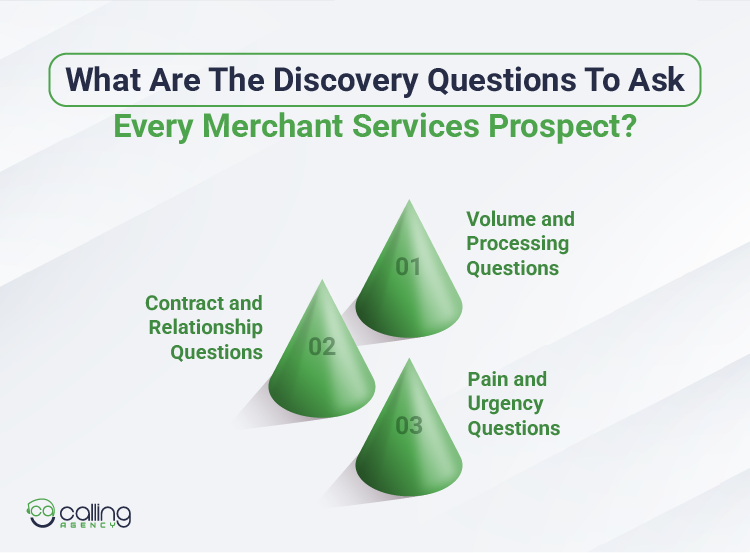
Volume and Processing Questions
These are some of the volume and processing questions you can ask:
- What is your monthly transaction volume?
- What is your average ticket size?
- Do you process online, in-store, or both?
Contract and Relationship Questions
For contact and relationship purpose, you can ask:
- Who is your current processor?
- Are you locked into a contract?
- How satisfied are you with your provider?
Pain and Urgency Questions
In case of pain and urgency, you can ask:
- What issues are you facing with your current setup?
- Are high fees a concern for your business?
- Are you looking to make a change soon?
With these questions, you can uncover fit, urgency, and opportunity size. As a result, you will see your merchant services leads going a long way.
How To Score and Prioritize Merchant Services Leads?
Every successful lead generation service providing agencies follows a key strategy. Not all leads are equal. You must see which are the best ones and prioritise them. You can use a scoring model for this. This includes:
- Fit (0-5): Industry, size, payment type
- Volume (0-5): Monthly processing value
- Pain (0-5): Level of dissatisfaction
- Intent (0-5): Willingness to switch
If it gets all the full marks, i.e. 5 out of 5 on every factor, the total score will be 20. However, the exact score will be put into different levels. Like:
- 15-20: High priority
- 10-14: Medium priority
- Below 10: Low priority
Always, focus your sales efforts on high-scoring leads. This brings higher leads further.
Which Industries Produce The Best Merchant Services Leads?
There are some industries that are more profitable and easier to convert. Some of these top industries include:
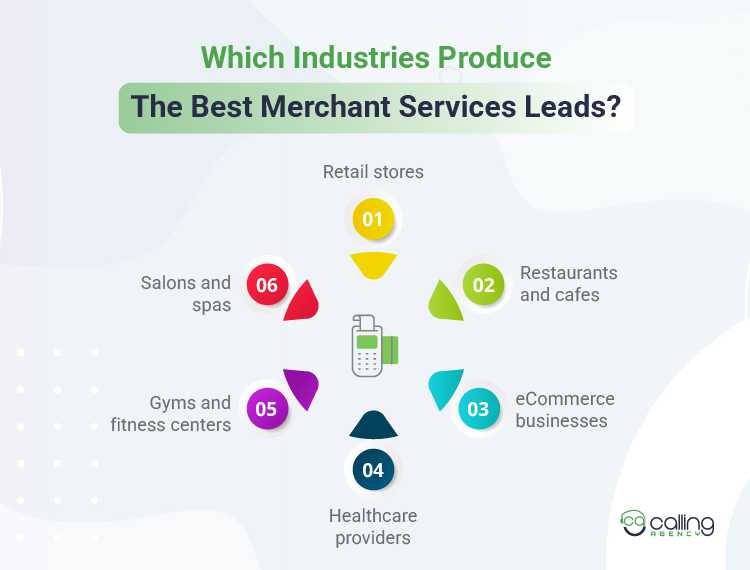
- Retail stores
- Restaurants and cafes
- eCommerce businesses
- Healthcare providers
- Gyms and fitness centers
- Salons and spas
All these industries you are seeing here, process frequent transactions. Also, they have recurring revenue. And they often face some fee-related challenges too.
What Are The Common Qualification Mistakes In Merchant Services Sales?
If you want to improve your results in mechanic services sales, you must avoid these common mistakes first. These are:
- Talking to non-decision-makers
- Ignoring transaction volume
- Skipping pain discovery
- Pitching too early without qualification
- Not setting a clear next step
- Treating all leads equally
Don’t think qualification is optional. It’s essential.
Conclusion
Qualifying merchant services leads is the foundation of successful sales. If you don’t have proper qualification, even your best outreach strategies will fail.
However, you have to follow a structured framework. Like you need to confirm the payment acceptance, then identify decision-makers, and understand volume. Lastly, you have to uncover the pain points and then set clear next steps. Trust me, this strategy will dramatically improve conversion rates.
Here, the key takeaway is simple. You need better qualifications. That will give you better deals. And better deals will give you higher revenue.
Consistent and high-quality leads are easier to qualify. You just need to combine this framework with a strong lead generation strategy. That’s it.
Frequently Asked Questions
What is a qualified merchant services lead?
A qualified merchant services lead is a business that accepts card payments. They also have sufficient transaction volume. And they are always open to evaluating new payment solutions.
How do you qualify payment processing leads?
To qualify leads you need to assess their payment setup first. Then see their decision-making authority, transaction volume, pain points, and how much ready they are to switch providers.
What questions should I ask merchant services prospects?
To merchant services prospects, you need to ask about their monthly volume, current processor, contract status, and challenges. Also, try to know how much they are willing to explore new solutions.
What is the most important factor in lead qualification?
The most important factor is identifying a strong pain point. It should be combined with sufficient transaction volume.
How do you prioritize merchant services leads?
To prioritize merchant services leads, you should use a scoring system. It should be based on fit, volume, and pain. Also, it must have an intent to focus on high-value opportunities.