

Buying more security leads does not always mean creating more sales opportunities. The type of lead you buy can affect how much competition you face, how much time your sales team spends following up and how much security guard leads actually cost.
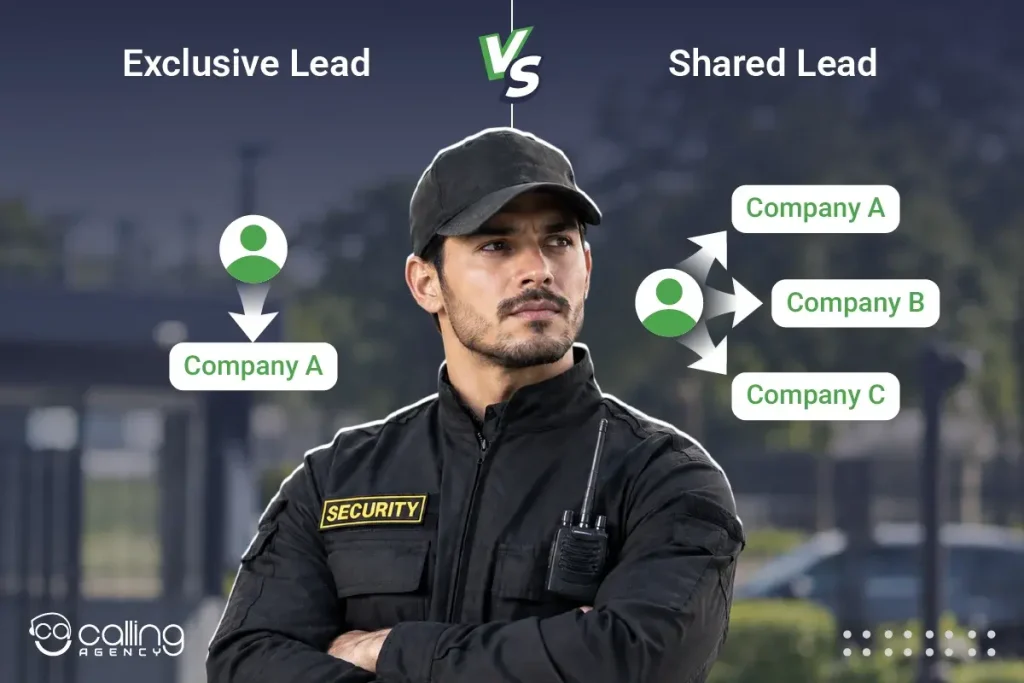
Exclusive and shared leads are two common models security companies consider. Exclusive leads go to one buyer, while shared leads are distributed among multiple companies.
For security companies selling commercial services or higher-value contracts, understanding the difference can help you choose a lead model that supports your sales process instead of adding more competition.
Exclusive Vs Shared Security Leads: Quick Comparison
The difference between exclusive and shared security leads comes down to competition, cost and control.
A lower lead price may look attractive, but security companies should consider what happens after receiving the opportunity.
| Factor | Exclusive Security Leads | Shared Security Leads |
| Lead distribution | One security company receives the opportunity | Multiple companies receive the same opportunity |
| Competition | No direct competition from the same lead source | Other providers may contact the same prospect |
| Cost | Higher upfront cost | Lower upfront cost |
| Follow-up pressure | More time to qualify and build a conversation | Faster response becomes more important |
| Best fit | Companies focused on quality opportunities | Companies focused on lead volume |
The best lead model depends on your sales process, contract value and how much competition your team can handle. Companies looking for more control over their pipeline often hire a dedicated security guard lead generation service provider to build a strong qualified lead pipeline.
What Are Exclusive Security Leads?
An exclusive security lead is an opportunity provided to one security company instead of multiple buyers. The company receiving the lead can focus on understanding the prospect’s needs without competing with other providers who received the same information.
For security companies, this difference matters because many security decisions are not made only on price. Commercial buyers may evaluate factors such as coverage area, response time, experience, compliance requirements and the provider’s ability to handle their specific site.
A quality exclusive security lead should give the sales team enough information to decide whether the opportunity is worth pursuing. This may include:
- Accurate contact information from custom list-building services
- A business or property that matches your service area
- A clear security need or interest
- Relevant details about the prospect’s requirements
- A contact who can influence or make the buying decision
Exclusivity helps reduce direct competition from the same lead source, but it does not automatically make every lead valuable.
Security companies should still evaluate how leads are generated, verified and qualified before choosing a provider.
What Are Shared Security Leads?
A shared security lead is an opportunity distributed to multiple security companies instead of one buyer. Because the same opportunity is provided to several providers, shared leads usually come with a lower upfront cost.
Shared leads may work well for companies that prioritize volume and have the resources to follow up quickly. They can be a fit when a security company has:
- A larger sales team handling multiple opportunities
- A fast response process
- Need to generate higher lead volume
- A sales model built around shorter buying cycles
However, shared leads also create additional competition. When multiple providers receive the same opportunity:
- The prospect may receive calls from several companies
- Sales teams have less time to make the first impression
- Conversations can shift toward comparing prices instead of value
- Representatives may spend more time competing than qualifying
For security companies selling commercial services, the challenge is not only receiving a contact. It is creating enough trust and differentiation to win the opportunity.
Why Security Companies Should Look Beyond Cost Per Lead?
A lower lead price does not always create a lower customer acquisition cost (CAC). Security companies should look beyond the amount paid for each lead and consider how much time, effort and competition are involved in turning that opportunity into a customer.
Shared leads may offer some advantages:
- Lower upfront cost
- More opportunities within the same budget
- A higher number of contacts for sales teams to work through
However, the lower price can come with additional challenges:
- More companies competing for the same prospect
- More follow-up attempts before reaching the buyer
- More time spent separating strong opportunities from poor fits
Exclusive leads usually require a higher upfront investment because one company carries the full lead generation cost.
However, they can provide more control over the sales process and allow teams to focus more on qualifying opportunities.
When comparing lead models, security companies should consider:
- Cost per qualified opportunity
- Cost per appointment
- Cost per signed contract
Understanding how lead generation is priced helps companies evaluate the value behind the number instead of choosing based only on the lowest lead cost.
What Does “Exclusive” Actually Mean When Buying Security Leads?
The word “exclusive” sounds simple, but different providers may use it in different ways. Before buying security leads, companies should understand exactly what type of exclusivity they are receiving.
Some common meanings include:
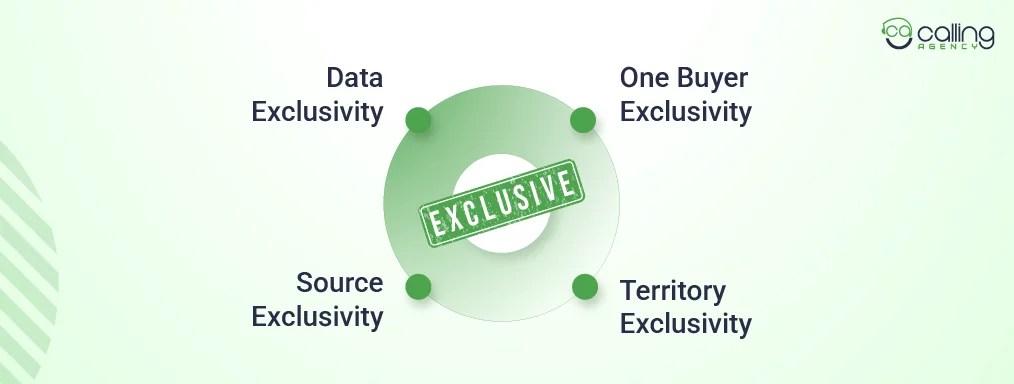
One Buyer Exclusivity
The lead is delivered to one security company only. Other buyers using the same provider do not receive the same opportunity.
Territory Exclusivity
The provider limits lead distribution based on location. A company may receive exclusive opportunities within a specific service area, market or territory.
Source Exclusivity
The provider generates the opportunity directly and controls how the lead enters the system. This can reduce the chance of the same contact being distributed through multiple channels.
Data Exclusivity
The contact information itself is protected from being resold to other buyers after delivery.
Before purchasing leads, security companies should ask what “exclusive” means in the provider’s process. A clear definition helps you understand the level of competition you may face and what you are actually paying for.
Questions to Ask Before Buying Exclusive Leads
Before purchasing exclusive security leads, companies should understand exactly what they are receiving. The word “exclusive” can mean different things depending on the provider, so asking the right questions helps avoid unexpected competition or poor-quality opportunities.
Ask the provider:
- How many companies receive each lead?
- Is the lead exclusive by account, territory or source?
- Are leads generated from real inquiries or collected from other sources?
- Are contacts verified before delivery?
- What information is included with each lead?
- What happens if a lead is invalid or does not match the agreed criteria?
- Is there a replacement or credit policy?
Clear answers help security companies understand the quality, ownership and competition level behind each opportunity before committing their budget.
How Should Security Companies Evaluate a Lead Provider?
Not every security lead provider delivers the same type of opportunity. Before choosing a provider, companies should understand where leads come from, who they represent and whether they match the type of security services they sell.
A provider should be able to answer questions like:
| Question | Why It Matters |
| Are leads commercial or residential? | Ensures the opportunity matches your service model |
| How many companies receive each lead? | Shows the level of competition you may face |
| Is the contact verified? | Reduces wasted sales time on inaccurate information |
| Is the decision-maker identified? | Helps your team reach the right person faster |
| What happens with bad leads? | Protects your budget and sets clear expectations |
For commercial security companies, lead quality often depends on more than having a phone number or email address. Reaching the right person at the right type of business can make a major difference in the sales process.
Strong providers focus on qualification, including verifying contacts, understanding buyer needs and delivering opportunities that match your sales criteria through a lead qualification service.
Are Exclusive Security Leads Worth the Higher Cost?
Exclusive security leads usually cost more because one company carries the full cost of generating the opportunity. Whether that higher price is worth it or not depends on how your sales team operates and what each opportunity is worth to your business.
Exclusive leads may make more sense when a security company:
- Sells higher-value contracts with longer sales cycles
- Has a smaller sales team that needs better opportunities
- Spends significant time researching and qualifying prospects
- Needs more control over the first conversation
Shared leads may work better when a company:
- Needs a higher volume of opportunities
- Has a team that can respond quickly
- Uses a sales process designed for frequent follow-up
- Sells services with shorter buying decisions
For many commercial security companies, the challenge is not simply finding more contacts. It is creating qualified conversations with businesses that have a real security need. In those cases, services focused on booked appointments instead of raw leads can provide a more structured sales process.
The best lead model depends on how much value your company can create from each opportunity.
Conclusion
Exclusive and shared security leads serve different purposes. The right choice depends on your sales process, contract value and how much competition your team can handle.
For companies focused on commercial security opportunities, lead quality and control can matter more than lead volume alone.
Frequently Asked Questions
What is the difference between exclusive and shared security leads?
Exclusive security leads are provided to one security company, which means the company does not compete with other buyers receiving the same opportunity from that provider. Shared security leads are distributed to multiple companies, which can reduce upfront cost but may increase competition during the sales process.
How many companies receive shared security leads?
The number of companies receiving a shared security lead depends on the provider’s distribution model. Some providers limit the number of buyers, while others may send the same opportunity to several companies. Before purchasing, ask how many businesses receive each lead.
Why do exclusive security leads cost more?
Exclusive security leads usually cost more because one company receives the opportunity and carries the full cost of generating it. Shared leads divide that cost among multiple buyers, which lowers the upfront price but can increase competition for the same prospect.
How much do security leads cost?
Security lead costs vary based on the type of opportunity, qualification level, exclusivity and provider. Commercial security leads may require more targeting and research than simple contact lists, so companies should compare the quality and potential value of each opportunity instead of focusing only on price.
What should I ask a security lead provider before buying leads?
Before buying security leads, ask how leads are generated, how many companies receive each opportunity, what information is included and how contacts are verified. You should also understand the provider’s replacement policy and criteria for qualified leads.