

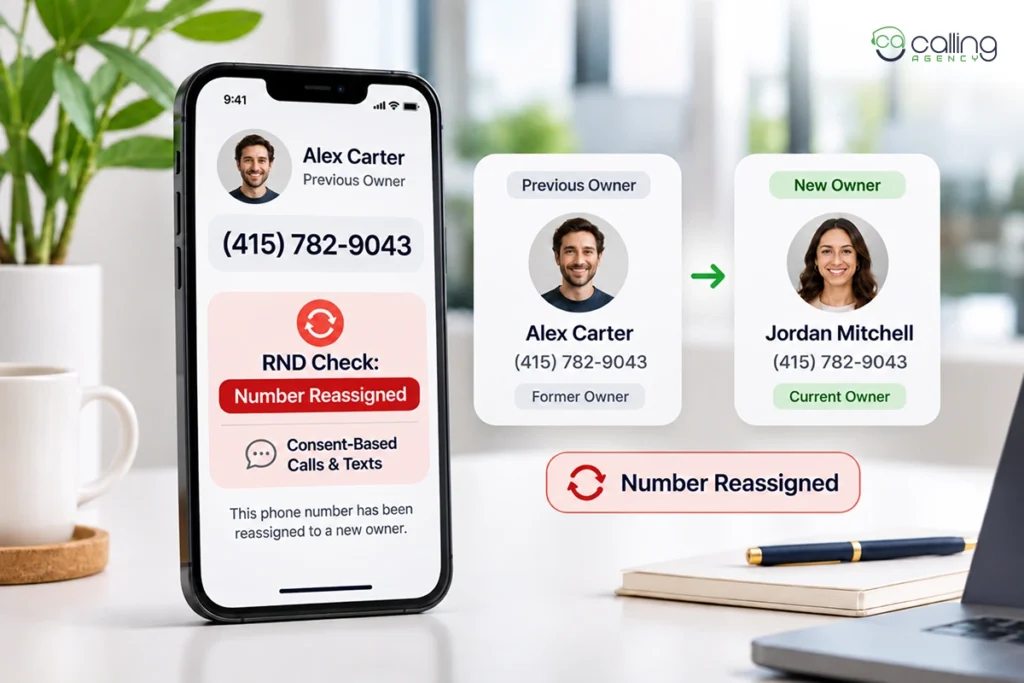
The Reassigned Numbers Database (RND) helps businesses check if a phone number has been given to a new person after the old owner stopped using it. Not all cold callers need to check the RND. It’s because RND’s legal protection applies to those calls and texts that are made with the person’s prior consent.
But still, cold callers need to follow cold calling rules. In the DNC Registry, they will get the numbers that don’t want to receive sales calls. On the other hand, in the RND, we can see whether a phone number has been given to someone new or not. So, both of them have different tasks.
As per Maine, businesses must check the RND before making sales calls. This guide will tell you what exactly the RND does and which TCPA rules cold callers must follow while checking RND.
What Is the Reassigned Numbers Database?
The Reassigned Numbers Database (RND) helps businesses check phone numbers that have been given to a new person. It is also known as the FCC database.
Let’s say someone is not using their phone number anymore. Now, someone else uses it. A business may call the number thinking the old user is still using it.
But in reality, a new person is using it. When you use RND, you will know if the user is the old one or the new one. Hence, you won’t have to call them without permission.
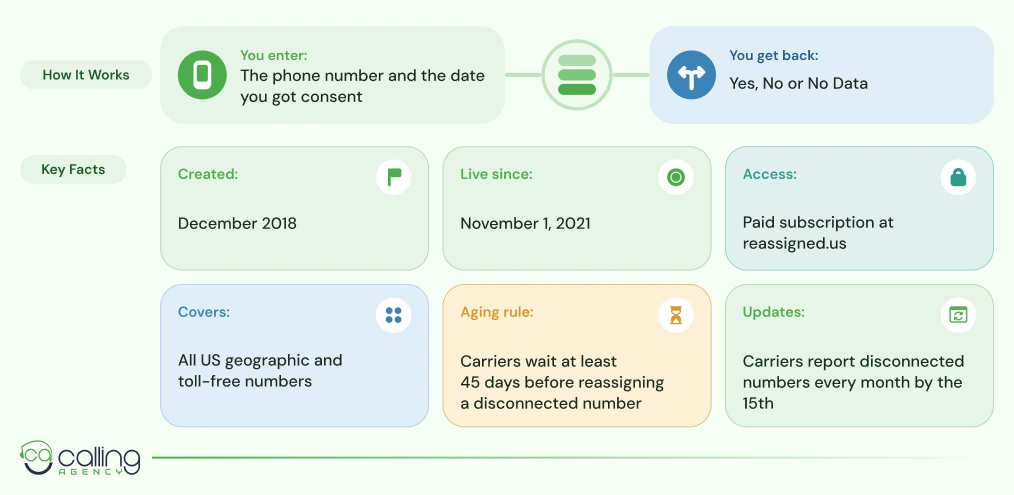
To check a number through RND, businesses enter two things. The phone number they want to call and the date they got permission to call that number. The database then gives three possible answers. Yes, No or No Data.
The FCC created the RND in December 2018. But it became available for use on November 1, 2021. However, if you want to use it, you will need a paid subscription from reassigned.us.
The database covers all US local and toll-free numbers. If a company uses it, they must report disconnected numbers to the RND every month by the 15th.
If a number is disconnected, phone companies must wait at least 45 days before assigning it to someone new. The RND also keeps records of numbers after they are given to new owners.
This means the database does not show only numbers that are currently disconnected. In fact, you will find more than 361 million phone numbers here.
Do Cold Callers Need the Reassigned Numbers Database?
No, most cold callers do not need the Reassigned Numbers Database (RND). The RND is meant for businesses that already have permission to call someone.
As per 47 CFR 64.1200(m), businesses may get legal protection if they use the RND correctly. But they can still call a number that was disconnected and given to someone else.
In cold calling, callers usually contact people who have not permitted to receive calls. So, they have no consent date to enter into the RND.
The RND does not protect these calls. It only helps protect certain calls that have prior consent. And it does not even check whether a number is on the Do Not Call (DNC) list or not.
Hand-Dialed B2B Calls
Hand-dialed B2B calls are those calls where a person manually dials a business number and speaks directly to the person. As per TCPA’s automated-call rules, to call such numbers, you won’t need any prior consent. 47 U.S.C. § 227(b)(1)(A)(iii) covers only certain automated calls to mobile phones, not all.
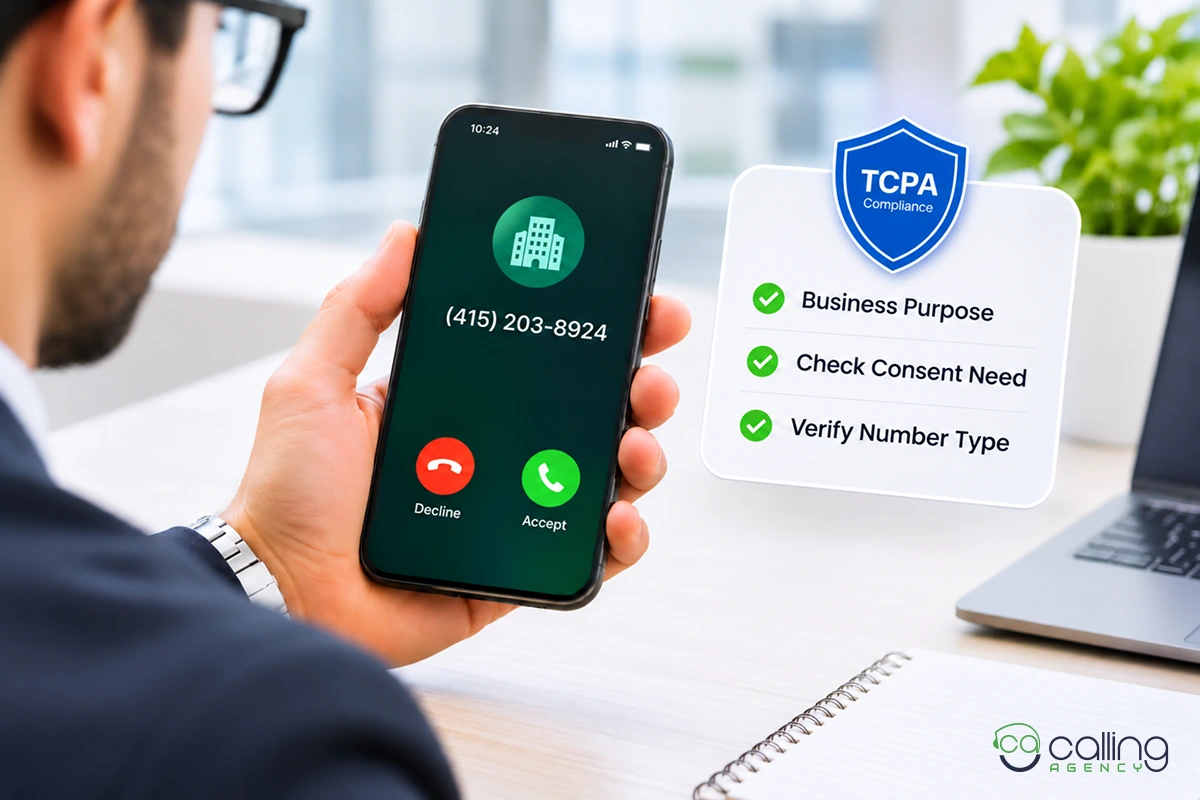
If your team manually dials numbers from a legally sourced cold-calling lead list, they don’t need to check RND. They can just check the types of numbers, DNC status, their calling method and that’s all.
Remember, always keep your DNC checks up to date. And your National Do Not Call Registry list should not be more than 31 days old. All these records are going to be proof that your team actually checked the list. So, be mindful of the records.
When the RND Does Matter for a Sales Team
The Reassigned Numbers Database (RND) matters for a sales team when they call or text people who previously permitted them to receive messages. As per Maine law, certain consumer sales calls also need an RND check.
Here, consent belongs to the person, not the phone number. For example, a person fills out a website form and agrees to receive marketing texts. Later, that person changes their phone number. The phone company gives the old number to someone else and your business sends a marketing text to that old number. But the new owner never gave your business permission to send messages. This is when you will need RND to identify the problem.
Remember, text messages also count as calls under the TCPA. And before you run these campaigns, check the RND, especially the automated follow-up calls, marketing texts and calls to old leads.
Under 47 CFR § 64.1200(a)(2), businesses need prior written consent before sending marketing calls and texts covered by TCPA rules to covered mobile numbers. Then the RND will check whether the phone number was disconnected after someone gave permission.
As per federal law, not every sales team needs to use the RND. If businesses follow the FCC’s RND checking rules, they may qualify for legal protection. That can only happen if they unknowingly contact a reassigned number. On the other hand, if the business makes ordinary hand-dialed cold calls, they won’t need RND to check numbers.
Maine Requires an RND Check for Consumer Sales Calls
Maine requires businesses to check the Reassigned Numbers Database (RND) before making certain sales calls to consumers who use residential phone numbers. This rule applies to both manual calls and automated calls.
Under 10 M.R.S. § 1499-B, the rule applies to businesses that sell goods or services to consumers. It also applies to businesses outside Maine if they call consumers in Maine. But most ordinary B2B calls fall outside this rule.
There are some times when you do not need to check the RND. These are during customer-requested calls, debt-related calls and existing business relationships. Remember, business relationships qualify if the consumer bought something from the business within the last 18 months or if the consumer contacted the business about a product or service within the last 3 months.
There are some additional things that businesses must maintain as per Maine. Such as training employees, keeping records of numbers they must not call and using an updated National Do Not Call Registry.
The Maine Attorney General says that if a business breaks the law, they have to face penalties. They may have to pay $10,000 for the first violation and $25,000 for each later violation.
How Does the RND Safe Harbor Work?
The RND safe harbor gives businesses legal protection if they unknowingly call or text a new owner of a phone number. This protection is only applicable when the business has followed all the FCC’s rules but mistakenly called someone whom they shouldn’t call.
A business will qualify for RND safe harbor if it had the prospect’s permission to call or text. Also, the business must have checked the RND before contacting the number and received an incorrect “No” response.
This means the database said the number was not disconnected, even though it had been disconnected and reassigned to someone else. If a business can explain ot to the prospect, obtain permission from the person and keep proof of the permission, only then can the person qualify for the safe harbor.
The RND safe harbor will protect your business if your database makes a mistake and says a phone number has not been reassigned, although it was reassigned.
If you want to qualify for the safe harbor, you must have the person’s consent first. Then check the number using the correct consent date and receive an incorrect “No” answer. Then keep proof of consent and each number check, since businesses can share liability for outsourced calling violations.
Here are some RND answers and their meanings:
| RND answer | What it means | What to do |
| Yes | The number was disconnected on or after your consent date. | Stop using the old consent. Get fresh permission before calling or texting. |
| No | No disconnection was reported after your consent date. | You can contact the number. If this answer was wrong, you may qualify for protection. |
| No data | The database cannot confirm the number’s status. | Treat it as unverified. Check consent before contacting the number. |
If you get a wrong “No” answer, it may give your business legal protection. But if you get a “No Data” answer, that won’t give you any legal protection.
When you are checking a phone number, enter two things into the RND first. The phone number and the date when you received permission to contact that person.
Don’t forget to check the updated records of disconnected numbers in the RND. Phone companies will send their updated information by the 15th of every month and the RND will update this information by 8 a.m. ET on the 17th.
Under 47 CFR § 52.15(f)(1)(ii), phone companies must wait before giving disconnected numbers to new customers. For residential numbers, they must take 45-90 days and for business numbers, they must take 45-365 days.
RND vs DNC Scrub vs Line-Type Lookup
RND, DNC scrub and line-type lookup are different ways to check phone numbers before calling. Here are some comparisons of these three databases.
| Check | What it finds | Who needs it |
| Line-type lookup | Landline, mobile or VoIP. | Teams checking phone numbers before calling. |
| DNC scrub | Residential and personal mobile numbers on Do Not Call lists. | Teams making sales calls covered by DNC rules. |
| RND check | Numbers disconnected after consent was given. | Teams making automated calls, prerecorded calls or marketing texts based on consent. |
Whenever you check phone numbers, follow certain steps. First, check the type of phone you will be calling. Then remove the numbers that you found on Do Not Call lists. After that, use the RND to check consent-based numbers.
The reason why you should check the type of phone first is because different phone numbers have different calling rules. For example, to make automated marketing calls to mobile numbers, you will need written permission.
How to Query the RND
To query the RND, you must have an account first. Here are the steps below that you can follow:
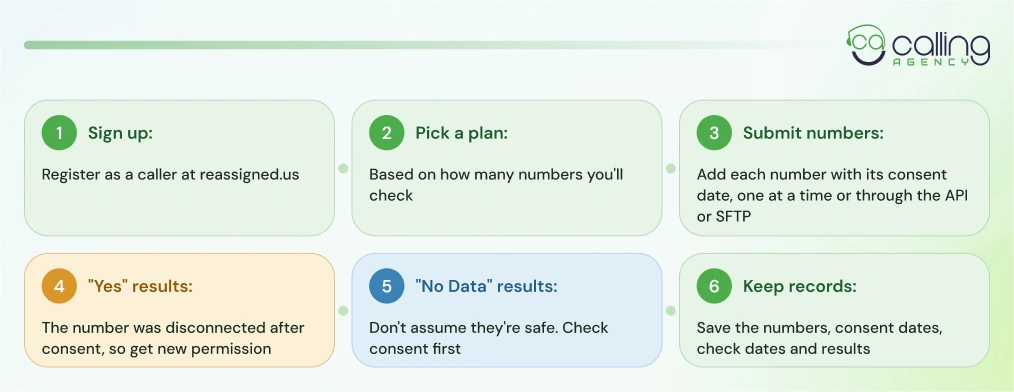
- First, visit reassigned.us and sign up as a caller.
- Then choose a plan based on how many phone numbers you want to check.
- Now, submit numbers by adding each phone number and its consent date. You can enter numbers one by one or use the API or SFTP to do so.
- Next, remove Yes results. These numbers were disconnected after the consent date. So, get new permission before calling or texting.
- Now, go to No data results. The database cannot confirm whether these numbers were disconnected. So, do not assume they are safe to contact. Check their consent first.
- Lastly, save all the records, including the phone numbers, consent dates, check dates and results. These are proof that you followed the rules to query the RND.
You can check up to 50 numbers at once on the website. And phone companies will send new records of disconnected numbers to the RND by the 15th of each month.
The FCC does not require businesses to check the database every month. But it’s better that you check regularly so that you can find numbers that were recently disconnected.
You can even hire cold callers to check numbers on your behalf. But they must be an Authorized Caller Agent and must get your written permission through a Letter of Authorization (LOA).
Conclusion
The RND’s job is to help businesses avoid calling or texting people who never permitted them. It can be useful when you will contact people who agreed to receive calls or texts in the past but may have changed their phone numbers.
However, the RND does not check everything alone. Sales teams must also use Do Not Call lists to check phone numbers. And businesses that are calling Maine consumers must also follow the state’s RND rules.
Frequently Asked Questions
Is the reassigned numbers database required?
No, federal law does not require every business to check the Reassigned Numbers Database (RND) before making calls. However, the FCC gives businesses legal protection (safe harbor). It is only applicable if they check the RND before calling or texting people who previously gave permission.
How much does the RND cost?
The RND offers 10 prepaid plans. Their price depends on how many phone numbers you want to check. In each plan, you will get four options. 1 month, 3 months, 6 months and 12 months. The cheapest plan costs $8. With this, you can check 1,000 phone numbers for one month.
How often should you check the RND?
You should check the RND every month if your business regularly calls or texts people who have given permission. Also, check the database before starting a new campaign. Generally, the FCC does not require businesses to check the RND every month. But if you check regularly, it will help your business avoid calling or texting new owners of old numbers.
Does the RND catch wrong numbers?
No, the RND does not catch wrong numbers. It only checks whether a phone number was disconnected after a person permitted receiving calls or texts. Moreover, it cannot tell you if someone entered the wrong phone number when filling out your website form.