

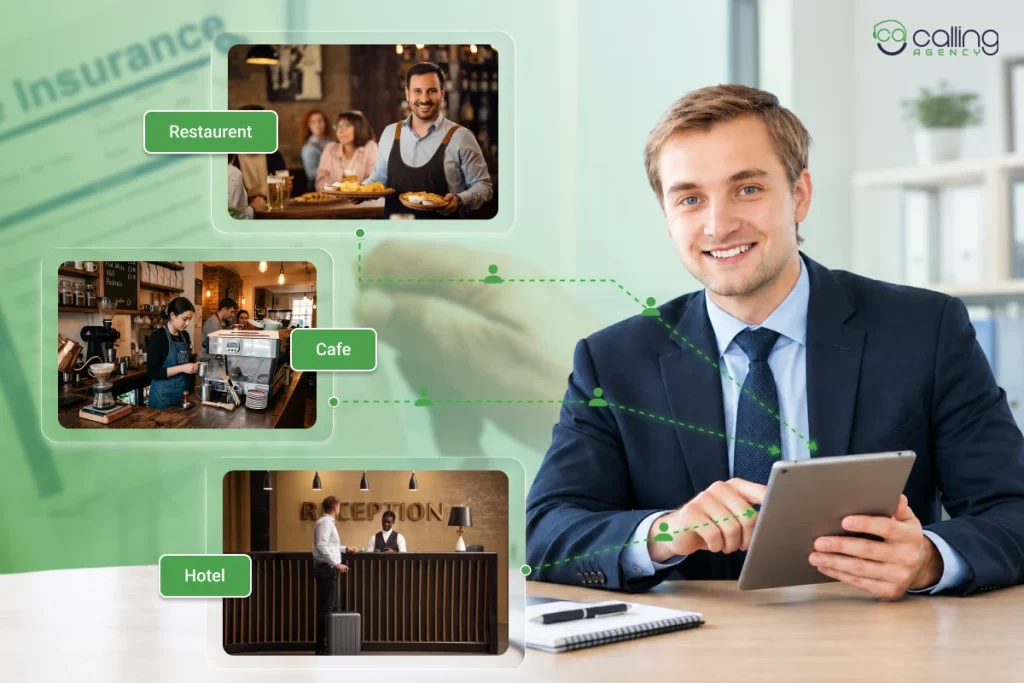
One of the best sources of restaurant and hospitality insurance leads is the state alcohol licensing calendar. The liquor license renewal date can be a strong buying signal for bars, restaurants, breweries, and other on-premise accounts.
Some states require proof of liquor liability coverage to renew the license. This gives you a public record and a fixed date to work from. For example, South Carolina requires many on-premise businesses to carry $1 million in liquor liability coverage, while Hawaii can deny renewal when proof of coverage is missing.
You’re not calling at random as an insurance SDR. You’re reaching out when the account has a real reason to review its coverage.
What Signals Tell You a Restaurant is About to Shop Its Insurance?
The strongest signal is a restaurant asking for 3-5 years of loss runs or detailed policy information before renewal. That usually means the owner is gathering what competing brokers need to quote the account. A few more signals also give a sign, for example:
Rising Costs Can Trigger a Coverage Review
Restaurants typically operate on just 3% to 5% pre-tax profit margins. So even a 10% to 15% increase in commercial insurance premiums can put noticeable pressure on profitability. Food and labor costs have also risen by roughly 35% over five years. It gives owners more reason to review fixed expenses, including insurance.
A sharp renewal increase is therefore a useful outbound trigger. So is an owner suddenly asking for updated revenue, payroll, or employee headcount outside the normal reporting cycle.
Claims Often Change the Conversation
A major claim can make a restaurant reconsider its current carrier or broker. FLIP’s 2026 Economic Trends report a 32.7% year-over-year increase in hospitality claims. It even comes with a relatively small number of costly incidents driving a large share of incurred losses.
Common claim categories include slip-and-fall accidents (23.1%). Delivery auto or trailer incidents (16.4%), weather-related property damage (14.2%), and kitchen fires and smoke damage (9.7%).
All of those are great triggers for an SDR. A recent claim, a premium spike, or a change in operations can tell you why the restaurant might be willing to talk before you ever make the call.
The Three Triggers That Matter
A compulsory insurance requirement is a stronger prospecting signal than a normal renewal date. If a business cannot renew its license without proving coverage, the insurance decision has a fixed deadline. A policy expiration date only tells you when the account may start shopping.
Such as, businesses selling alcohol for on-premises consumption after 5 p.m. generally need $1 million in liquor liability coverage during the license period. The state accepts an ACORD 25 as proof, with SCDOR listed as the certificate holder and the licensee as the insured.
The coverage does not have to be a standalone liquor policy. A general liability policy with a liquor liability endorsement can also satisfy the requirement.
This matters because the license creates a fixed date when the business must prove coverage.
5 Steps to Get Insurance Leads for Restaurants and Hospitality
Here is how we usually generate insurance leads for restaurants & hospitality:
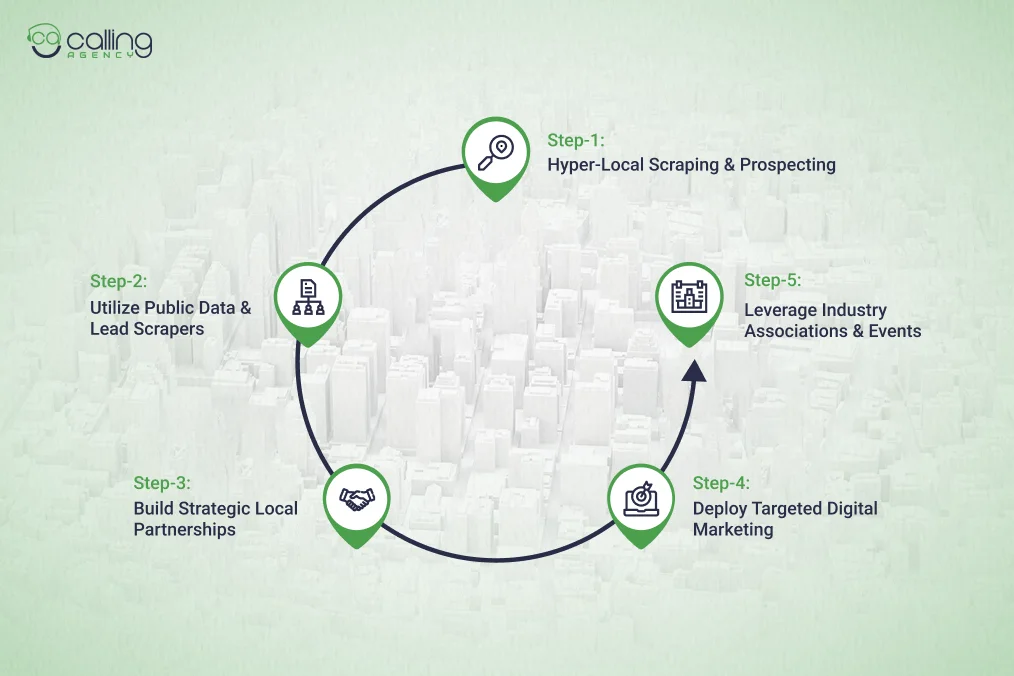
Step 1: Hyper-Local Scraping & Prospecting
You need to find restaurants and hospitality businesses with a real reason to review insurance.
Check state liquor license databases for new applications, renewals, and ownership transfers. Then use local health department records to spot new restaurant permits, openings, and location changes.
Enrich those leads through Google Maps, Yelp, TripAdvisor, company websites, and LinkedIn. Look for stronger buying signals such as:
- New openings or locations
- Liquor license applications
- Ownership changes
- Renovations or expansion
- New bar, catering, delivery, or event services
Then find the likely decision-maker, usually the owner or GM for independent restaurants and an operations director, CFO, or risk manager for larger hospitality groups.
An SDR can get insurance appointment setting right if the process is simple:
Find the business → identify the trigger → find the decision-maker → add the context to your CRM → start personalized outreach.
Step 2: Utilize Public Data & Lead Scrapers
Now, use public records and B2B databases to build a custom prospect list.
Check health department records for new permits and ownership changes, and monitor liquor license databases for applications, transfers and renewals. These events give SDRs a timely reason to reach out.
For larger-scale prospecting, use tools such as:
- D&B Hoovers
- ZoomInfo
- AI
Filter accounts using relevant NAICS categories, including 722 for Food Services and Drinking Places and 721 for Accommodation. Then narrow the list by location, company size, revenue, job title, and recent business activity.
Step 3: Build Strategic Local Partnerships
Some of the best restaurant insurance leads come from people who already work closely with restaurant owners.
Build referral relationships with commercial real estate brokers who handle restaurant leases. They often know about new openings and relocations before they become public.
Connect with food, beverage, and restaurant equipment distributors as well. Their sales reps regularly speak with owners and may hear about expansions, new locations, or operational changes.
Finally, develop relationships with hospitality-focused CPAs and attorneys. They often work with owners during acquisitions, restructuring, expansion, and other moments when insurance coverage may need another look.
Step 4: Deploy Targeted Digital Marketing
Run hyper-local Google and LinkedIn campaigns around high-intent searches such as “restaurant insurance quote,” “liquor liability insurance,” or “hotel workers’ comp.” Send each audience to a landing page that matches its specific insurance need, not a generic commercial insurance page.
Use your marketing tactics and create niche resources that give owners a reason to share their contact information, like:
A Restaurant Fire Safety Checklist, Liquor Liability Cost Guide, or Hotel Workers’ Comp Checklist can turn website traffic into exclusive commercial insurance leads.
You can also use Google Maps for account research. Build lists of active independent restaurants, then look for useful outreach triggers such as a new location, expanded hours, alcohol service, catering, or event hosting. Use those details to personalize your outreach rather than assuming a business has insurance problems based on reviews.
Connect marketing activity back to the CRM. Someone who downloads a guide, requests a quote, or repeatedly visits a coverage page should receive faster follow-up.
Step 5: Leverage Industry Associations & Events
Industry associations put SDRs directly in front of restaurant and hospitality decision-makers. So, join state and local restaurant or hospitality associations. Then use their meetings, vendor directories and sponsorships to reach insurance decision-makers.
All those networking events to build relationships with owners and operators. You don’t need to pitch immediately; just learn which insurance concerns come up most often.
Also attend food, beverage, hotel, and hospitality trade shows. Walk the floor, speak with exhibitors and operators, and look for triggers such as new locations, equipment investments, franchise expansion, alcohol service, or staffing growth.
Before each event, build a target account list from publicly available attendee or exhibitor information. After the event, prioritize people you actually spoke with and reference that conversation in your follow-up.
SDR workflow: Find relevant events → research attendees → start conversations → capture business triggers → add contacts to CRM → follow up within 24–48 hours.
Working the Accounts When the License Trigger is Not Available
Not every state requires proof of coverage for liquor license renewal. In that case, change the order.
Work new license applications first because new businesses have an opening deadline and may not have an incumbent agent. Work ownership transfers second, since new ownership can reset the insurance relationship. Use policy expiration dates third as the softer trigger.
If you do not write liquor liability, target restaurants without bar programs, caterers, and hotel food-service operations instead.
Stick to one trigger for producers with limited time or budget. New license applications are usually the simplest list to source and work manually.
You can also get ahead of the trigger through liquor-license attorneys, POS vendors, restaurant accountants, and food distributors. They often know about openings or ownership changes before the broader market does.
Timing the Approach to the Renewal Calendar
The liquor license renewal date and policy expiration date are two different prospecting triggers. Do not treat them as one. Start working the ABC renewal 90–120 days out and the policy expiration date, 60–90 days out. These are working windows, not fixed industry rules.
Use the license deadline for the first conversation.
Then use the random date to move toward quoting. Even when the dates are months apart, that gives you two relevant reasons to contact the same account.
On the first call, ask for the current declarations page and loss runs. That way, when the account reaches the quoting window, you are not waiting on paperwork.
The basic sequence is:
License deadline → first contact → collect documents → X-date → quote.
How Do Hospitality Segments Diverge on Trigger?
Hospitality does not run on one prospecting clock. Bars, restaurants, and hotels respond to different triggers.
- Bars: Work around the liquor license renewal.
- Full-service restaurants: Work around the policy expiration or X-date.
- Hotels: Lead generation with a broker-of-record conversation rather than jumping straight to a quote.
A certificate of insurance (COI) creates another trigger. Unlike an annual renewal, a COI request can happen anytime a landlord, venue, lender, or other third party asks for proof of coverage.
The segment decides the trigger, and the trigger decides when you call and what you say.
| Segment | Primary trigger | Who creates the trigger | Coverage hook | Lead time |
| Full-service restaurants | Policy expiration date | The carrier | Package review, property and liability | 60–90 days |
| Bars and taverns | Alcohol license renewal | The state or county | Liquor liability limit and mitigation status | 90–120 days |
| Hotels and lodging | Broker of record conversation | The owner or asset manager | Program placement, not a single policy | Varies, relationship-led |
Where Restaurant Insurance Leads Come From, and What Each Channel Costs You?
Restaurant insurance leads generally come from 3 places-
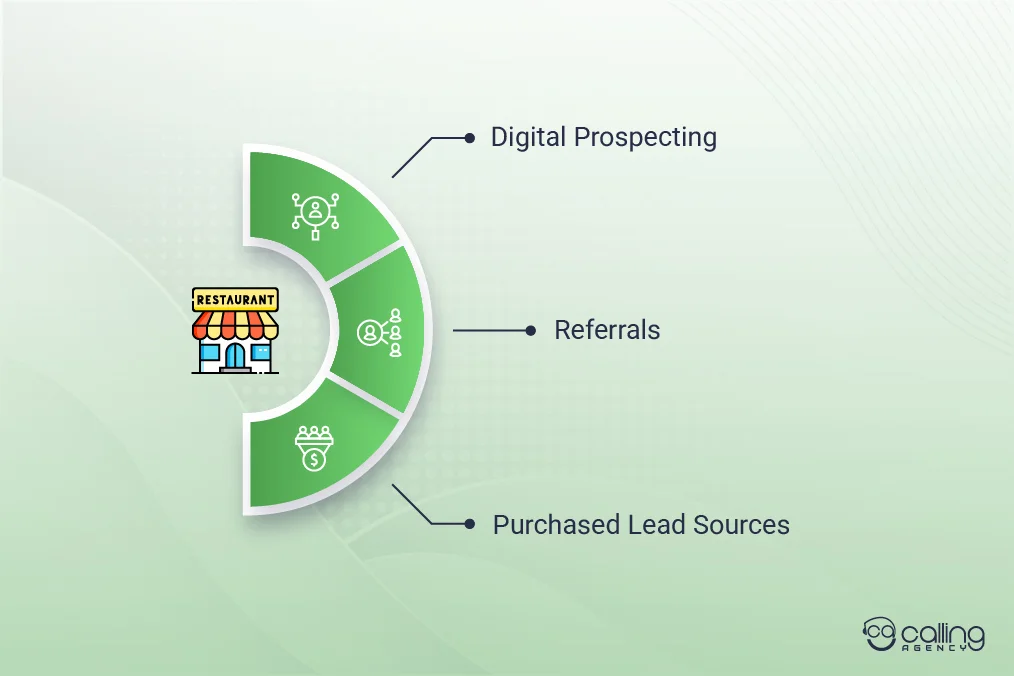
- Digital Prospecting
- Referrals
- Purchased Lead Sources from lead generation services.
Some cost little beyond your SDR’s time, while paid leads can run $200 or more depending on qualified leads, exclusivity, and buying intent. But that’s not the only channel, restaurant insurance leads come from other channels too, and cost depends on that, like:
| Lead Generation Source | How It Works | Typical Cost Per Lead |
| Referrals & Local Partnerships | Get introductions from existing clients, restaurant suppliers, real estate brokers, and other local partners. | $0–$50 |
| Organic Search (SEO) & Content | Reach restaurant owners searching for commercial liability, workers’ compensation, or other insurance industry needs. | $5–$20 |
| Paid Search (Google Ads/PPC) | Target commercial insurance searches with paid Google ads. | $20–$100+ |
| Social Media Prospecting & Ads | Use LinkedIn or Facebook for organic outreach and paid campaigns targeting restaurant owners and managers. | $15–$40+ |
| Shared Web Leads | Buy inquiries that may be sent to several insurance agents at the same time. | $10–$45 |
| Exclusive Web Leads | Receive a web inquiry that is routed only to your agency. | $45–$120+ |
| Live Transfers / Inbound Calls | Get a warm transfer from a restaurant owner who is already speaking with a lead provider. | $80–$200+ |
Is Cold Calling a Restaurant Legal When the Business Line Is a Mobile?
Yes, manually dialed B2B calls to a restaurant’s mobile number are generally allowed under federal law. But issues arise when artificial or prerecorded voices are involved.
Under the TCPA, restrictions on autodialed or prerecorded calls to wireless numbers are different from rules covering ordinary business landlines. So a B2B restaurant list should not be treated as one type of phone data.
For insurance prospecting, separate the numbers before calling:
- Business landline: generally treated differently under the wireless provisions.
- Owner’s mobile: wireless calling requirements can apply.
- Autodialed or prerecorded telemarketing: may require a higher level of consent.
So, do not qualify a number only as a “business contact.” Check whether it is a landline or mobile and make sure the dialing method matches the applicable requirement.
3 Provisions That Apply to Business Calling
The same rule includes three provisions about how calls are placed. One of them protects businesses by name.
- An ATDS may not engage two or more lines of a multi-line business at the same time.
- An unanswered telemarketing call may not be disconnected before 15 seconds or four rings.
- No more than 3 percent of live-answered telemarketing calls may be abandoned, measured over 30 days per campaign. A call is abandoned if no live representative connects within 2 seconds of the greeting.
Conclusion
Restaurant and hospitality insurance leads work best when you have a reason to call, not just a list of businesses. Use license activity, renewal dates, ownership changes, referrals, and digital signals to find the right accounts at the right time. Then qualify the decision-maker, personalize the outreach, and keep every call compliant.