


Key Takeaways
- Use cold calling scripts as a flexible framework and don’t read them word for word. It will keep your messaging natural.
- Focus on the reason for your call. According to Gong research, it increases success rates by 2.1x.
- Customize the scripts depending on the situation, such as introductions, follow-ups, gatekeepers, objections, and industry-specific requirements.
- Keep your cold calling opening under 30 seconds. Try to end every script with a clear call to action.
- Properly rehearse scripts multiple times. It will help you to make the scripts more conversational.
Cold calling is one of the fastest techniques to engage with prospects, book meetings, and generate qualified sales leads. But the important thing is implementing the right scripts in the right situations. When you go for a strategic approach, it will help you begin conversations, handle objections, and turn prospects into sales-qualified opportunities.
In this article, we will discuss:
- 50+ proven cold call scripts for different situations
- Scripts for follow-ups, referrals, gatekeepers, and decision-makers
- Ways to manage common objections confidently
- Tips for personalizing your sales calls
- Best practices to improve cold-calling results
What Are the 5 Parts of a Cold Call Script?
Every good cold call script follows the same five-part structure opening, purpose of your call, value statement, discovery question, and a specific call to action. Understand this framework first, and then all 50 scripts below are naturally easy to modify for your unique product, market, and prospect.
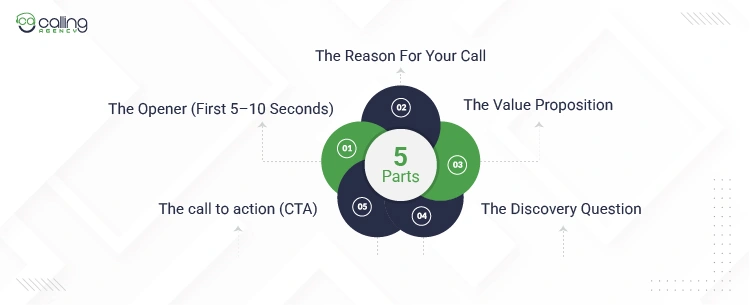
1. The Opener (First 5–10 Seconds)
State your name and company, then add an interesting human-sounding pattern interrupt.
From an analysis of 90,380 cold calls conducted by Gong Labs, showing: A warm opening is to open a call with, “How have you been? survey averaged a 10.01% success rate, 6.6x above the baseline (compared to widely taught “Did I catch you at a bad time?”). Success dropped to 0.9% (Gong, 2024). Your sole responsibility here is to survive the next 20 seconds.
“Hi Jordan, this is [Your Name] with [Your Company]. How have you been?”
Expert perspective serves simply as what Chris Orlob, the fellow behind Gong’s widely quoted take on cold calls, calls a “pattern interrupt,” an unexpected-sounding opener that sounds human enough to discard the prospect’s rote mental loop of sales call, polite decline, and hang up, and buy you some real attention for a few seconds.
2. The Reason For Your Call
Get straight to the point of why you’re calling this prospect. That’s why Gong discovered that literally saying “I’m calling to summarize” increased your success rates by 2.1x because it answers the one thing a buyer wants to know, and keeps you in control of the call.
“I am calling because we truly help [their type of company] with [specific problem].”
3. The Value Proposition
Hook your solution to a real problem the prospect has. Get specific, not a feature dump, and be credible. Collaborative language comes to the rescue: reps using “our” and “we” book 55% and 35% more meetings (Gong, 2024).
“I thought it would be worth a 10 min chat, and we’ve saved teams like yours to reduce [pain point] by [specific result].”
4. The Discovery Question
Respond to the conversation with only one open-ended question before you pass it back and listen. Successful cold calls average approximately 5 to 6 minutes compared to just under 3 minutes for unsuccessful cold calls (Gong, 2024), and you certainly won’t be the one stopping them from talking; the prospect will need extra time.
“How are you dealing with [specific challenge] right now?”
5. The call to action (CTA)
Keep one next easily doable and frictionless step. The goal is not to close a deal but to get one tentatively booked, so keep it small.
“Would a 15-minute march through it over a quick call on Thursday at 2 work?”
The anatomy at a glance
| Part | Goal | Approx. time |
| Opener | Earn attention with a pattern interrupt | 5–10 sec |
| Reason for call | Answer “why are you calling me?” | 5–10 sec |
| Value proposition | Tie your offer to their pain point | 15–20 sec |
| Discovery question | Start a two-way conversation | varies |
| Call to action | Book one clear next step | 5–10 sec |
Each script you will use in this guide is just a slightly different version of this skeleton. Approaching for your cold calling service, just take the text and edit and customize each part specifically for that prospect.
How to Use These Cold Call Scripts
Consider all scripts below flexible guidelines, and not a word-for-word read. Reps who win on the phone internalize the structure, then deliver it in their voice.
Here are the five habits to practice for getting the best out of them:
- They’re useful as frameworks, not teleprompters. You sound like a robot if you’re reading things word-for-word and tend not to get prospects. Master the five elements, then speak out each one like it’s just coming to you.
- Practice aloud before you have your first call. Practice each script out loud a few times until it flows. Some sales teams recommend reading a new script out loud at least 10 times before dialing.
- Adapt in real time. Incorporate pauses, hear back, and adapt. Let your cold-calling be a two-sided conversation and not any round of monologue.
- Personalize before you dial. Fill every bracket with real research (the prospect’s name, company, and a trigger event that has happened recently, as well as a specific pain point).
- Log every outcome and refine. Keep a record of which openers consistently work, the common objections you encounter, and what genuinely results in meetings being booked and then revise your scripts monthly to ensure they remain fresh.
50 Cold Call Scripts to Close More Leads & Sales
The right cold call script will help you set up more meetings and land more sales.
However, all success is also built on the back of research, timing, and execution. In your cold calling strategy, properly organize every discussion happening between the sales rep and prospective client through a well-structured script.
We have compiled 50 tested cold call scripts for most sales scenarios and industries. Consider them as flexible frameworks, rather than copy-and-paste templates adapt them to your product, audience, and sales process.
| Script type | Best for | Scripts in this guide |
| Introductions & openers | First contact with a new prospect | #1, #2, #22 |
| Follow-ups & reconnecting | Warm leads, prior interest | #3, #10, #12, #27 |
| Decision-makers & gatekeepers | Reaching the authority | #4, #5 |
| Voicemail | No answer | #6 |
| Referrals | Warm introductions | #8, #9 |
| Objection handling | Pushback and hesitation | #26 |
| Promotional / discount | Offers and urgency | #14, #21, #29 |
| Closing | Sealing the deal | #34 |
| Industry-specific | Vertical calls (real estate, insurance, solar, etc.) | #35–#50 |
1. Introduction: Cold Call Scripts
It is those first 30 seconds of a cold call and most of the decision about whether or not this conversation goes anywhere. A solid introduction opens by immediately telling you who the caller is, the purpose of this call, and why the prospect should stick around to hear on in just seconds.
Introduction Script Checklist –
- Introduce yourself and your company.
- Check to make sure you are speaking to the correct person
- Keep the opening brief.
- Sound natural and conversational.
- Respect the prospect’s time.
- The topic of the call.
- Personalize the message whenever possible.
Basic Introduction Script
“Hi, is this [Prospect’s Name]? Hey, this is [Your Name] from [Your Company]. I’ll keep this brief. We help [customer avatar / demographic and their specific problem or outcome they want to achieve] like you. I was wondering if it might make sense for us to hop on a quick call to discuss how we may be able to help? Do you have a minute?”
Time-Respectful Introduction Script
“Listen, I know you have a lot on your schedule, so let me not take up too much of your time! We only engage clients who are [the particular challenge or result]. So, you know, I thought it would be good to cast a net out there.”Can we speak for a moment?”
Cold Calling Tip
Gong analysis based on 90,380 cold calls reveals that asking this type of question Would you be open to a chat at this time? reduced meeting booking rates significantly. Instead, you go for a straight-up opener or even a pattern-interrupt-as-a-conversation-starter like “Hey, how you been? And only after that, get to the reason why you called.
2. First-Time Inquiry to a Completely New Prospect
When you initially approach a prospect, the odds are that you still arrive with some vague understanding of their challenges. This is not a sales pitch but an introduction to start a conversation and find mutual opportunities.
First-Time Prospect Script
“Hi, is this [Prospect’s Name]? I am reaching out to [Company Name] to get them on their tracking system and see if there is anything I can assist with this outcome benefit. I promise to keep this short. “Got a minute to take?”
Personalized First-Time Prospect Script
“Hi [Prospect Name], this is [Your Name] with [Your Company].
We help companies, including others like [Prospect’s Company] who need to [specific process your company facilitates]. As it relates to this item, or simply based on my knowledge of your business, I thought that, at the very least, reaching out may be well worth a shot if this is something you are already working on.
Not sure if you have a couple of minutes to retain it chat?
3. Follow Up on a Previous Inquiry
It takes a couple of calls for most prospects after the first conversation, so follow-up calls are part and parcel of sales.
With this knowledge at your fingertips, you have the ability to speak with the prospect, already keeping their challenges, goals, and objections in mind. Apply that context to maintain the dialogue and move them further along in the process to take that next step.
Best For
- Prospects who showed interest but did not close
- Things that we were not in agreement with from past conversations
- Leads who engaged with any of your content/resources
- Post-meeting or post-demo follow-ups
Follow-Up Script
Hi [Prospect’s Name], this is [Your Name] from [Company Name]. We’ve talked about [product/service] lately, and I just wanted to follow up if you were still pondering any additional thoughts or questions from our last conversation. Editing, assisting the blog’s author to sign in on where its position truly serves useful. Is now a good time to talk?”
Resource Download Follow-Up Script
“Hi [Prospect’s Name], I’m [Your Name] with [Your Company].
I noticed you just picked up our [ebook, guide, or resource] on [topic]. I would like to know how useful it was (and I could have answered any question that might have stirred at least). In particular, how we have delivered phenomenal results in solving [some other problem] for others.”
4. Cold Calling Scripts for the Decision-Maker
A sales cycle can be a lot shorter with a decision-maker interview. Your message should be simple, short, and meet the specific needs of executives and department leaders who care more about business outcomes. Narrow in on the value that you will be contributing and strip away any excess.
Best For
- CEOs, founders, and business owners
- Directors, VPs, and department heads
- Budget holders and final decision-makers
- Enterprise sales outreach
Decision-Maker Script
Hello, is [Decision Maker’s Name] on the phone?
This is [Your Name] from [Your Company]. We know how to achieve a particular result or serve a precise challenge for organizations like yours. So given your role running [department, team or initiative], I wanted to reach out in case it would make sense to chat and see if we can be of assistance in any way.
Decision-Maker Script with Social Proof
“Hi [Decision Maker’s Name], this is [Your Name] from [Your Company]
We work with other companies like yours to insert impact/effect. Just three months ago, we helped [Client Company] achieve a 30% increase in sales with our [product or service].
Based on what we know about your business, there are probably some opportunities to connect. And maybe talk to you for two minutes?”
5. Call a Gatekeeper to Try and Reach a Decision-Maker
Gatekeepers prevent decision-makers from being burdened by demands on their time. Instead of selling the gatekeeper, lead with relevance(why it matters) and value. Share purpose with as much respect, openness, and specificity as possible.
Best For
- Executive assistants
- Receptionists
- Office managers
- Administrative staff
Basic Gatekeeper Script
“Hi, this is [insert your name] from [insert your company].
I am hoping that you can put me on the right track. I’m following up with (Decision Maker Name or Decision Maker Job Title) on a call about (brief reason for the call).
How do you contact them most easily?”
Credibility-Based Gatekeeper Script
“Hey, this is [Your Name] from [Your Company].
Check out the highlights of our work with clients like [Client A] & [Client B], which led to a 40% cut in customer acquisition costs and a 50% improvement in qualified leads.
So, based on that, we may be able to achieve those kinds of results for [Prospect’s Company]. Realistically, what is the best way to get hold of [Decision Maker’s Name]?”
Gatekeeper Success Tip
Keep conversations short. Talk to the gatekeepers and do not spill your entire sales pitch. Keep it simple, state what you can do for a business and seek a warm introduction instead of a close.
6. Voicemail Script
A voicemail that is short and to the point nurtures interest by enticing a callback. Limit your message to one minute, center on a single benefit and always include your contact information.
“This is [Your Name], from [Your Company].
We specialize in [what you do], and we work with businesses like yours to [do something specific]. I read a recent case study of your client as [similar client] and we were able to help them increase sales by 35% recently. I think we may be able to do something similar for your team.
I wanted to run a couple of ideas past you and hear what you are currently trying to achieve. Do call me at [Phone Number]. Again, that’s [Phone Number].
Happy to continue, and I look forward to speaking with you.”
Alternative Voicemail Script
“Hi [Prospect’s Name], this is [Your Name] calling from [Your Company]
Through our [solution], we help firms to save time spent on [specific task] and focus on more productive tasks. Thousands of businesses, including [Client Name], have increased productivity by more than 40%, allowing their teams to concentrate on growth and revenue-generating activities.
I would love to talk about how we can help out your company accomplish the same thing. At your convenience, please feel free to call me at [Phone Number]. Thank you, and I hope to connect soon.”
Tips for the Voicemail: Be brief, state one benefit, and repeat your number so the prospects can easily return it.
7. Scripts for Prospects Who Have Purchased from Competitors
Shift your focus to differentiating factors when dealing with prospects who already use a competitor solution. Avoid criticizing their current provider. Always focus on the extra benefit, results, or efficiencies that your service can provide.
Competitor Replacement Script
“Hi [Prospect’s Name], this is [Your Name] from [Your Company].
I see that you are using [Competitor’s Product/Service] right now. And a lot of our clients have too. They switched because they saw [benefit/result that our solution provided].
I’d like to understand your current setup better and give a couple of ideas on how we could potentially generate some quick wins. Would you be interested in having a quick chat?”
8. Referral From a Satisfied Customer or Business Partner
Because trust exists even before the first call, referrals are one of the most powerful sources of new business. Request referrals from satisfied customers and reward them with a referral program if your product or service pleases them.
First, verify with the customer:
Referral Request Script
Hi [Customer’s Name], this is [Your Name]. How are you doing with [product/service]? Are you happy with it till now?
If the customer responds positively:
“That’s great to hear. Thanks for your support, and we would like to help more businesses like yours. We have our referral service, where anyone you refer gets 10% off when they say your name, and after three successful referrals, a free month is on us, whatever level you’re at. Do you know anyone in your circle who might need our service?”
Referral Tip
The ideal time to ask for referrals is immediately after a customer relays an objective result, testimonial, or success story.
9. Referral Follow-Up Scripts
It shows that a referral lead usually converts more easily, because this introduction comes from people they already trust. Call out the referrer’s name early and talk about how you’ve helped them achieve results.
Referral Follow-Up Script
“Hi [Prospect’s Name], my name is [Your Name], and I am from [Your Company].
If you have to get better at persuading people, be quick. Explain how you know me. I was referring to the e-book Fix Your Writing Here, so it works too. We have partnered with them in the past and were able to [achieve a specific result].
I’m eager to hear about your goals, and I would like to explore whether we could get you similar results. Do you have enough time to talk for a few minutes?”
If the prospect shows interest:
“Great. [Referrer’s Name] saw some great results from our solution and thought it could be a fit for your business too. You may share what worked for them and if it also makes sense in your case!
10. Follow-Up After an Email or Meeting
In fact, most sales opportunities need a few touchpoints before a prospect is ready to take action. This keeps the conversation alive from an email, demo or meeting and leads to questions or objections.
Post-Meeting Follow-Up Script
“Hey [Prospect’s Name], this is from [Your Company] in conjunction with [Your Name].
Following up here about our recent [email, meeting, or demo] on [topic]. I just wanted to follow up with you if you reviewed the information we talked about. Would love to know your advice and respond to any questions that you might have.”
If they have gone through the materials, discuss next steps. If not, inquire about what else they would need in order to make a decision on the opportunity.
11. Introducing a Brand-New Product
By announcing a new product, you have an opportunity to reconnect with prospects and demonstrate the results they can expect using your latest solution. The trick is to link the advantages of the product with your prospect’s company goals instead of focusing solely on functions.
New Product Introduction Script
“Hi, [Prospect Name], this is[Your Name] from [Your Company] and please pass through the link. Your company is growing, so I took a shot that you could benefit from our new product, [Product Name], which we just launched. It is specially designed to help businesses such as [insert business type] solve [name problem] or achieve [goal]. If we put this in the context of your organization (as far as I know it), I think it could have a significant impact. Are you interested in a quick chat”
When the prospect is involved and wants additional details:
“Absolutely. Get started with [Product Name], which integrates with your existing systems and helps you [specific benefit]. It also offers valuable information that makes it easy to improve performance and efficiency. How does that stack up to what you are using now?”
12. Reconnecting With a Prospect Who Previously Showed Interest
There are a good number of prospects interested, but who are not buying now. Following up later can restart the conversation and discover new opportunities.
Re-Engagement Script
Hi, [Prospect’s Name], I am [Your Name] from [Your Company]. Last time we talked, you said you needed [product, service, or benefit]. I wanted to follow up and see if this is still a focus for you guys, and if any new questions have arisen since we last spoke.
If they remain interested:
“That’s great to hear. I would like to hear about what your goals are right now and talk about those next steps.
If they hesitate:
“I completely understand. Is there any reason, nonspecific, why you are not moving ahead, or can I cause you to want anything to move you forward?”
13. Who Is Already Using Your Services
A strong customer relationship is a long-term revenue generator. By having regular check-ins, you not only improve retention but also find gaps early and increase trust.
Customer Check-In Script
Hi [Customer’s Name], this is [Your Name] from [Your Company].
I was checking in to see how things were with [product or service]. Yes, you have achieved the results that you wanted and everything is working as expected?
If they are satisfied:
“I’m glad to hear that. Though if you’d like to try more features or improve results, feel free to ask.
If they have concerns:
“Thank you for sharing that. I would like to understand the problem better and collaborate with you for a solution.
14. Promotional Cold Calling Scripts
A salesperson’s life involves promotional pitches. Mentioning discounts or limited-time offers is a great way to generate leads.
Free Trial for an Upgraded Service:
“Hi [Prospect’s Name], this is [Your Name] from [Your Company]. I wanted to let you know that we’re currently offering a free trial of our upgraded [Product/Service]. It comes with improved features, like [mention key upgrades], that can make a real difference in [specific benefit]. I’d love to offer you a [timeframe] trial to see how it works for your business. Would you be open to giving it a try?”
If they say yes:
“Fantastic! I can set you up with access right away and send over some information to help you get started. What’s the best email for that?”
If they’re unsure:
“Of course! I’d be happy to provide more information about the upgrade and its benefits. Can I send you a quick overview, or would you prefer a brief call to go over it?”
Success story promotion:
“Hi [Prospect’s Name], this is [Your Name] from [Your Company]. I was thinking about how we recently helped [mention a success story, e.g., ‘Company X’] overcome their challenge with [specific problem, e.g., ‘inventory management’]. By using our [product/service], they’ve seen a [mention the impact, e.g., ‘40% reduction in overstock and related costs’]. I believe we could achieve similar results for your business. Would you be interested in a brief discussion to explore potential outcomes for your team?”
15. Thank You Calls to New Customers
Success doesn’t always mean selling. Appreciating and welcoming new customers is also part of the sales cycle.
“Hi [Customer’s Name], this is [Your Name] from [Your Company]. I just wanted to personally thank you for choosing us for your [product/service] needs. We’re excited to have you on board, and I hope you’re already seeing value in our [product/service].”
After they respond, offer support:
“If you ever have any questions or need support, please don’t hesitate to reach out; we’re here to make sure you have the best experience possible. Once again, thank you for your trust in us, and we look forward to a great partnership!”
16. Personalized Scripts
Personalized scripts depend on your situation and your prospect’s. With experience, you’ll create your own that exactly match your client. Some scenarios include greeting the prospect on a success or the new year, or offering a customized pricing model when budget is a concern.
Greeting a Prospect on Their Recent Success:
“Hi [Prospect’s Name], this is [Your Name] from [Your Company]. I just wanted to reach out and congratulate you on [specific achievement, e.g., ‘the recent launch of your new product line’]. It’s quite impressive how you’ve managed to achieve such great results, and I think there’s a lot we could discuss about how our [product/service] can support your continued success. Do you have time this week for a quick call?”
Greeting a Prospect for the New Year:
“Happy New Year, [Prospect’s Name]! This is [Your Name] from [Your Company]. I hope your year is off to a fantastic start. I’m reaching out because we’ve got some exciting new features in [product/service], which I believe could really improve your [specific area, e.g., ‘customer engagement efforts’] this year. Can we set aside some time to discuss your goals for this year and see how we might help you achieve them?”
Budget Issue:
“Hi [Customer’s Name], this is [Your Name] from [Your Company]. I really appreciate you taking the time to explore our [product/service]. I understand that budgeting is a key concern for you right now, and we want to make sure you’re able to benefit from what we offer without overstretching financially.”
Wait for the prospect to respond:
“We have a couple of flexible pricing options that might fit better with your current budget constraints. We can also discuss a phased implementation, starting with the most critical features you need and gradually expanding as your budget allows. How does that sound? Can we go over these options in a bit more detail to find a suitable plan for you?”
17. Pain Point Scripts
If you can address your prospect’s pain points and show how your product solves them, that’s your jackpot. When you tell prospects you already understand their problem and can offer a solution, the chances of a quick decision rise.
“Hi [Prospect’s Name], this is [Your Name] from [Your Company]. I’ve been speaking with a lot of businesses like yours lately, and a common challenge I hear is struggling to generate consistent leads [specific pain point]. I’m reaching out because our [product/service] is specifically designed to help solve this problem by providing high-quality lead generation and nurturing tools that can increase your pipeline by up to 40% [specific benefit].”
Your prospect will likely want to know more:
“I’d love to understand more about how you’re currently managing this and see if we could help. Would now be a good time to discuss?”
Or try a different approach:
“Hi [Prospect’s Name], my name is [Your Name] with [Your Company]. I understand that growing customer satisfaction can be a real challenge, especially when teams are stretched thin and processes are manual [mention pain point]. We’ve helped businesses like yours automate customer follow-ups and support ticketing, freeing up their time and improving the customer experience significantly. Do you currently have any strategies in place to overcome this challenge, or would you be open to exploring some new ideas?”
18. Share Data Insights Directly Related to Your Prospect’s Problems
Using data or statistics in your script attracts attention and builds trust. Research your prospect’s pain points and find relevant numbers.
“Hi [Prospect’s Name], this is [Your Name] from [Your Company]. I noticed your industry is facing challenges with [specific problem, e.g., ‘customer retention’]. Our data shows that improved CRM strategies can improve retention rates by up to 15% in just a few months. We’ve successfully implemented this with companies such as [Example Company]. Could we schedule a quick call to discuss how these insights could benefit your business, too?”
Or:
“Hi [Prospect’s Name], this is [Your Name] from [Your Company]. I see that many firms in [prospect’s industry, e.g., ‘the logistics sector’] are working to improve operational efficiencies. Our recent analysis indicates that automation tools can cut processing times by up to 30%. We’ve implemented these solutions for [Example Company], resulting in substantial cost savings. Would it be possible to discuss in a brief call how we can achieve similar results for your operations?”
19. Who Is Facing Financial Challenges
Another scenario is dealing with a customer facing financial challenges. If you have software for budgeting or a financial service, offer it and explain how it helps them overcome those challenges.
“Hi [Prospect’s Name], this is [Your Name] from [Your Company]. I understand that, like many in the [industry, e.g., ‘retail industry’], you might be experiencing some financial pressures. We’ve been working closely with similar businesses to help with costs and improve revenue streams. For example, our [product/service, e.g., ‘budgeting software’] has helped clients reduce operational costs by up to 20% within the first year. Would you be open to a brief conversation about how we could help you achieve these kinds of results?”
20. Scripts for Time-Constrained Prospects
Some prospects avoid the call by saying they don’t have time; others genuinely don’t. Either way, stick to your script and personalize it:
“Hi [Prospect’s Name], this is [Your Name] from [Your Company].”
The prospect may respond:
“I don’t have time to talk.”
Then appreciate their time and reassure them:
“I know your time is precious, so I’ll keep this brief. We’ve developed a [product/service, e.g., ‘cloud-based scheduling tool’] that’s designed to save you time and effort every day. It’s quick to set up and even quicker to see the benefits. Can we take just 5 minutes this week for me to show you how it works? I promise it’ll be worth your time.”
Or:
“Hi [Prospect’s Name], this is [Your Name] from [Your Company]. I’ll get straight to the point. I see you manage a busy team and thought our [product/service, e.g., ‘task automation software’] could really help streamline your workflows. It’s simple to use and starts saving time right away. Could we set up a quick demo, maybe just 10 minutes, at a time that suits you?”
21. Discount Offer
Customers love discounts, especially B2C customers. Update them regularly about offers so they stay connected with your business.
“Hi [Prospect’s Name], this is [Your Name] from [Your Company]. I wanted to let you know that we’re offering a special promotion on our new [Product/Service]. For a limited time, you can get 20% off your first three months if you sign up by [deadline]. It’s a great opportunity to [highlight benefits]. Would you be interested in learning more?”
If they express interest:
“Great! I’d love to walk you through how [Product/Service] works and how it can benefit your business. When would be a good time for a quick call?”
If they’re hesitant:
“I understand. It’s a big decision. Since this promotion is for a limited time, would it be alright if I follow up with you later this week to answer any questions you might have?”
22. First 30 Seconds Scripts
The first 30 seconds are critical for attracting prospects, especially busy people. These few seconds decide whether the customer converts. Here are four scenarios.
Quick Value Proposition:
“Hi [Prospect’s Name], this is [Your Name] from [Your Company]. In just 30 seconds, let me tell you why I called: we’ve developed a [product/service] that’s helped businesses like yours see [specific benefit, e.g., a 20% increase in sales efficiency]. I believe it could really help with how you manage your sales data. Do you have a moment later today to dive deeper into how this could specifically benefit your team?”
Intriguing Question:
“Hi [Prospect’s Name], this is [Your Name] from [Your Company]. I’m curious: have you ever wondered if there’s a better way to [address a common issue in their industry, e.g., ‘track customer engagement across all your digital platforms’]? Our tool integrates all your data into one platform, showing you actionable, easy-to-understand insights. Can we schedule a quick call to discuss this?”
The Challenge Approach:
“Hi [Prospect’s Name], this is [Your Name] from [Your Company]. Quick question: are you struggling with [specific challenge, e.g., ‘high customer churn rates’]? We’ve recently helped similar businesses cut churn by up to 25% with our [product/service]. I’d love to see if I can help you achieve the same. What’s a good time to discuss this further?”
The Impact Statement:
“Hi [Prospect’s Name], this is [Your Name] calling from [Your Company]. I’ll get straight to the point: our [product/service, e.g., ‘automated inventory system’] has helped businesses in your sector increase operational efficiency by 30%. I think you might see similar benefits. Could we set up a 10-minute call to explore this potential impact on your operations?”
23. Direct Sales Promotion
Direct sales promotional scripts work best when providing B2B lead generation services, where you reach decision-makers who don’t have much time. Highlight your benefits directly.
“Hi [Prospect’s Name], this is [Your Name] from [Your Company]. I wanted to touch base quickly because we’ve just launched an upgraded version of our [product/service], and I think it could be extremely beneficial for you. Our latest update includes [mention new features], which can [mention the direct benefit]. Many of our clients have already seen significant improvements, and I’d love to show you some case studies. What’s the best time for us to have a brief chat?”
Another script for customers or small businesses:
“Hi [Prospect’s Name], this is [Your Name] from [Your Company]. I’m excited to let you know about a special promotion we’re running this month; it’s something you won’t want to miss! We’re offering [specific discount or bonus] on our [product/service], which has been a game-changer for many of our clients. This offer is only available until [end date], so I’d love to get you all the details. Could we schedule a quick call to discuss this?”
24. Ask Open-Ended Questions
Sometimes you can ask questions about the prospect’s challenges or experience. Give your introduction and pitch first, then go for open-ended questions.
Sales Call Scenario:
“Can you describe some of the challenges you’re currently facing with your current system? What improvements would you like to see in the solution we’re discussing?”
Consulting Engagement:
“What are the main objectives you aim to achieve with this project? Can you walk me through your ideal timeline and outcomes for this initiative?”
Customer Feedback:
“How has your experience with our service/product been so far? What are some things that could make it even more valuable to you?”
Business Development Meeting:
“What are the key growth areas for your business in the coming year? How do you see potential partners contributing to these goals?”
Market Research:
“Can you describe a typical day you used [product/service]? What features do you rely on the most, and what is missing that could help you?”
25. Request Opportunity to Discuss Further
When you want to request a collaboration and discuss it further, pitch like this:
“Hello [Prospect’s Name or Client’s Name], this is [Your Name] from [Your Company]. I’ve been reviewing our last conversation and considering combining our solutions with your goals, especially around [mention specific areas of interest or challenges they face]. There are a few areas where we could explore potential improvements or new strategies to deliver more value to your business. Can we set up a 20-minute call next week to dive deeper into this? I have some ideas and examples that I think could be very beneficial for you.”
26. Objection Handling Scripts
As a cold caller, you’ll face many objections and may get demotivated. But this can be your trick to success if you handle the objections cleverly. Note the objections you commonly get, then customize your script.
Objection 1: “We already work with another vendor.”
“I understand the importance of loyalty, and it’s great to hear you have a trusted vendor. Sometimes, a fresh perspective can reveal new opportunities or efficiencies. Could we schedule a brief meeting to discuss how we might offer additional value without any commitment from your side?”
Objection 2: “Your product/service is too expensive.”
“I appreciate your concern about costs. Many of our clients initially thought so, too, but they found the ROI justified the investment because of [mention specific benefits]. Let’s explore how the numbers could work for you. Can we review this in more detail?”
Objection 3: “We don’t have the budget right now.”
“I understand budget constraints can be challenging. Perhaps we could look at some flexible payment options or consider starting smaller? Let’s find a solution that fits within your budget without compromising your needs.”
Objection 4: “We’re not looking to make changes right now.”
“Completely understandable. You want to ensure stability. What about scheduling a call for a later date? This way, we can touch base when you are ready to explore new options. How does that sound?”
Objection 5: “I don’t have time to talk.”
“I completely understand how busy things can get. Could we perhaps schedule a brief 10-minute call when it’s more convenient for you? I promise to keep it concise; we just need a few minutes to cover the essentials that could have a significant impact on [mention a specific benefit relevant to their business]. What works best for you, early mornings or perhaps the end of your day?”
27. Remind Customers About Upcoming Renewals or Subscriptions
Keep your clients updated about renewals or subscriptions to maintain a good relationship.
“Hello [Customer’s Name], this is [Your Name] from [Your Company]. I hope you’re doing well! I’m reaching out to remind you that your annual software license [subscription/service] is due for renewal soon. We want to ensure you continue to enjoy the benefits without any interruption. We’ve made some exciting updates to our [service/product] this year, including [mention any new features]. Let’s schedule a quick call to discuss your ongoing needs and any questions you might have about the new features or the renewal process. What time would be convenient for you?”
28. Scripts for the Beginning of the Year
Share your new-year goals with clients and explain how new features can help them. Even if they don’t buy, share the information so they can reach out when they need the service.
New Year Goals and Opportunities:
“Hi [Prospect’s Name], this is [Your Name] from [Your Company]. Happy New Year! I’m reaching out to discuss how we can support your goals this year. We’ve launched some new features in our [product/service, e.g., ‘project management software’] that can significantly improve your team’s productivity. Do you have a few minutes next week to explore how these can align with this year’s objectives?”
Reviewing Past Achievements and Setting Future Goals:
“Hi [Client’s Name], this is [Your Name] from [Your Company]. First off, Happy New Year! I wanted to touch base and reflect on all the great work we accomplished together last year and discuss how we can build on that momentum. We have some exciting updates to [product/service] that I believe could really make a difference for you. When would be a good time to chat about your plans for this year and see how we can best support them?”
29. To Promote Seasonal Offers or Year-End Sales
Most companies offer seasonal discounts. Pitch your customers with seasonal promotional offers.
Urgent Seasonal Promotion:
“Hi [Prospect’s Name], this is [Your Name] from [Your Company]. I wanted to quickly let you know about our exclusive year-end offer that’s only available for a limited time. We’re offering 30% off on all our premium services until the end of December [deadline]. This is a perfect opportunity for you to upgrade your systems at a reduced cost. Can I schedule a few minutes to discuss how this could benefit your business before the offer expires?”
End-of-Year Clearance:
“Hi [Prospect’s Name], this is [Your Name] calling from [Your Company]. As we approach the end of the year, we’re clearing out our inventory and offering significant discounts on [specific products/services]. It’s a great chance to stock up or upgrade at a lower price. Would you like more information on what’s available and how it could fit into your plans for next year?”
30. Specific Day of the Week or Time of Day Based on Your Research
Sometimes, days convert better. For example, late mornings around 11 a.m. can be a good time to call when customers are less busy. Make a calendar for when to call prospects.
Mid-Week Check-In:
“Hi [Prospect’s Name], this is [Your Name] from [Your Company]. I hope your week is going well. I hope I caught you at a good time; I wanted to briefly discuss how our [product/service, e.g., ‘data analytics platform’] can help streamline your current processes. We’ve found that many in your industry see significant improvements using our solutions. Do you have a moment to chat about this today?”
End-of-Week Summary:
“Hi [Prospect’s Name], this is [Your Name] at [Your Company]. I’m calling because Friday mornings are often a great time to plan for the upcoming week. I wanted to take just a few minutes to introduce you to our [product/service, e.g., ‘project management tools’], which can help you and your team start next week off more organized and productive. Could we schedule a brief call later today?”
31. Give Prospects Options: The “Choose Your Path” Script
Give the client options so they can decide, describing each option’s benefits and drawbacks. Don’t force a fixed service.
“Hi [Prospect’s Name], this is [Your Name] from [Your Company]. Based on our previous conversations, I understand that [summarize their goals or pain points]. To help you move forward, I’ve outlined a couple of pathways you could take with our solutions.
Option 1: Start with our basic package, which covers all the essentials you need to see immediate improvements. This is great if you’re looking for a cost-effective solution with quick implementation.
Option 2: Opt for the premium package, which includes additional features like [list features] designed for scaling businesses seeking to maximize efficiency and long-term growth.”
Give the prospect time to decide. Don’t rush; help them choose:
“Each option has its benefits, so it really depends on what your priorities are right now. I’m here to help you assess which option might work best based on what you’ve told me about your business needs. Can we set up a time to discuss this further, or would you like some more information sent over to help you decide?”
32. Offering Additional Products or Services to Existing Customers
When launching a new product, update your existing clients through cold calls. Since they already use your service, it won’t take much to convince them again.
Complementary Product Offer:
“Hi [Customer’s Name], this is [Your Name] from [Your Company]. Thanks again for your ongoing trust in our marketing suite. I’m reaching out to let you know about a new feature we’ve added that integrates seamlessly with what you’re currently using. It’s designed to improve your online visibility. Given how you’re utilizing our services, I think this could be a great fit. Can we schedule a quick call to discuss how this can specifically benefit your business?”
Upgrade or Expansion Service Offer:
“Hello [Customer’s Name], this is [Your Name] from [Your Company]. I hope you’re finding great value in our [current product/service]. I wanted to introduce you to our [upgrade or additional service, e.g., ‘premium support plan’], which offers [explain benefits, e.g., ‘priority support, faster response times, and dedicated account management’]. This service has been a game changer for many of our clients. Would you be interested in learning more about how this could work for you?”
33. Customer Success Story Scripts
Never miss the chance to highlight a client success story to a new prospect. It works like a lifter to gain trust. Find new prospects’ pain points that you’ve already solved for past clients, then adjust the story to fit.
Highlighting a Customer Success Story:
“Hi [Prospect’s Name], this is [Your Name] from [Your Company]. I wanted to share a quick story about one of our clients in the [industry, e.g., ‘hospitality’] sector. They were struggling to increase their website traffic and improve their Google rankings. After partnering with us for SEO services, they saw a 50% increase in organic traffic within six months. I’d love to explore how we could replicate this success for your business. Are you available for a call this week?”
Using a Success Story to Address Specific Pain Points:
“Good [morning/afternoon], [Prospect’s Name], this is [Your Name] from [Your Company]. I recently worked with a company that was overwhelmed with managing its lead generation and nurturing processes manually. We implemented our marketing automation tools, which not only simplified their workflows but also increased their lead conversion rates by over 40%. I believe there’s a great opportunity for us to help you achieve similar outcomes. Can we set up a time for a brief call?”
34. Closing Scripts
You’ve convinced the prospect to take your service. Now, how do you close the deal? For scripts focused purely on booking the meeting, see our telemarketing scripts for appointment setting. Keep these points in mind:
- Let the prospect know they can contact you with any further questions.
- Be constructive if the prospect doesn’t make a purchase.
- Suggest additional resources or services that might interest them.
- Be polite and show gratitude.
- Never show irritation, even if the client took a long time to decide.
Closing After Presenting a Proposal:
“Based on what we discussed today, I believe our [product/service] aligns well with your needs, especially around [mention specific needs, e.g., ‘improving customer engagement’]. What would be the next steps on your end to get this rolling? Would you like me to send over the contract so we can get started right away?”
Closing for a Follow-Up Meeting:
“It sounds like there’s a good fit between what you need and what we offer. Can we schedule a follow-up meeting next week to discuss this in more detail? I can prepare some specific examples of how we’ve solved similar challenges for other clients.”
Closing When the Prospect Is Hesitant:
“I understand that making a decision might require some more time. How about I check back with you in [suggest a timeframe, e.g., ‘two weeks’]? Meanwhile, I’ll send you some additional information and case studies that can help you evaluate how our [product/service] can meet your needs. Does that sound good?”
Closing With an Incentive:
“I can see how this could really benefit your team. If you sign up by [set a date, e.g., ‘the end of this week’], we can offer a 10% discount on your first year’s subscription. What do you say? Shall we get you set up?”
Closing After a Trial Offer:
“I’m thrilled to hear you had a positive experience with our [product/service] during the trial period. Are you ready to continue reaping the benefits by moving to a full subscription? We can handle the transition smoothly, so there’s no interruption to your service.”
Cold Calling Scripts Based on Industry
Cold-calling scripts and sales pitches change based on the industry. While you can use a generic script for all industries, customizing it works far better. For example, pitching a real estate lead means talking about homes or space, which differs from a cleaning service. Here are cold-calling script templates for various industries.
35. Account-Based Marketing Outreach
When reaching prospects through account-based marketing, address them by name and show you’re familiar with the company’s recent activities. Then clearly link your service to their specific needs.
“Hello [Prospect’s Name], this is [Your Name] from [Your Company]. I’ve been keeping an eye on [Prospect’s Company], and I’m really impressed with your growth, especially your work in [mention specific market or product line]. At [Your Company], we offer [describe your service] that has really helped businesses like yours [list specific benefits, e.g., work more efficiently, cut costs]. I’d love to talk about how we can help your team, especially with things like [mention a specific department or initiative]. Could we have a quick call to talk about this?”
36. Financial Services Cold Call
If you are working for any financial service like financial advisor lead generation, insurance, or loan officer outreach, your script should be customized to those needs. Industry-based cold calling requires in-depth research on the prospect; a generic script will not work.
Cold Calling Script for Insurance:
“Hello [Prospect’s Name], this is [Your Name] from [Your Company]. We specialize in providing insurance solutions that fit your lifestyle and needs. I understand that finding the right coverage can be daunting, but it’s crucial for peace of mind. I’d love to discuss your current insurance coverage and see if there are any gaps we could help fill. Would you be available for a quick call this week to explore your options?”
Script for Financial Advisor (Investment Management Services):
“Hi [Prospect’s Name], this is [Your Name] at [Your Company]. We help people maximize their investment potential. It’s a great time to look at how your investments are performing and explore ways to improve your portfolio’s growth. I’ve helped many clients achieve better returns with our investment strategies. Would you be interested in learning more in a quick call?”
Script for Businesses:
“Hi [Prospect’s Name], this is [Your Name] from [Your Company]. We help businesses manage their money better. I’ve seen that a lot of companies in your field are struggling with managing their cash effectively right now. We’ve helped others improve their cash flow and make smarter money decisions. I’d love to chat for a few minutes about how we can help [Prospect’s Company] do the same. Are you free this week for a quick call?”
37. Solar Services Cold Call Scripts
Many cold callers find solar outbound calling challenging, since most homeowners don’t want to talk about solar. The trick is a good solar cold-calling script and more practice. Here are two common scenarios.
Offering Solar Service:
“Hello [Prospect’s Name], this is [Your Name] from [Your Company]. We specialize in cost-effective solar solutions that can reduce your monthly energy bills significantly. Many homeowners in [Prospect’s Area] have already made the switch and are enjoying lower utility costs and various government incentives. I’d love to discuss how solar could be a beneficial investment for your home and how you can take advantage of current rebates. Do you have a few minutes this week to explore your options?”
When the Prospect Lacks Knowledge About Solar Energy:
“Hi [Prospect’s Name], this is [Your Name] from [Your Company]. I’m reaching out because many people aren’t fully aware of the benefits and simplicity of switching to solar energy. Have you ever considered solar power for your home, or wondered how it all works?”
The homeowner responds, and you continue:
“Our solar solutions help reduce your energy bills, increase your property value, and contribute to a healthier environment. I’d love to explain how easy it is to get started. Would you have a few minutes this week to discuss this further?”
38. Real Estate Lead Generation
In real estate cold calling services, generating high-quality leads requires in-depth research. Your prospect could be a first-time buyer or someone needing office space. Make a list and pitch them with specific scripts for cold calling for real estate investors.
New Listing Alert:
“Hi [Prospect’s Name], this is [Your Name] from [Your Real Estate Agency]. I’m reaching out because we just listed a beautiful property near your area at [Property Address], and it has some unique features I think you’ll love. Would you be interested in taking a tour or learning more about this opportunity?”
Prospective Buyer:
“Hello [Prospect’s Name], this is [Your Name] from [Your Real Estate Agency]. I’ve come across several properties that align well with the preferences you mentioned. I’d love to arrange a time for you to view these homes. They’re moving fast in this market. Are you available this weekend for a tour?”
Investment Opportunities:
“Hi [Prospect’s Name], this is [Your Name] at [Your Real Estate Agency]. I noticed you’re interested in real estate investments. I have several properties in [Location] that offer excellent return prospects, from rental income to long-term equity growth. Would you like to discuss these opportunities in more detail?”
39. Cold Calling Scripts for Construction Company
Construction lead generation is not easy. You may need to reach the project sales manager or let leads know about your ongoing projects. The cold calling script for your construction company depends on your situation and the leads you contact.
Inquiring About Specific Ongoing or Future Projects:
“Hi [Prospect’s Name], this is [Your Name] from [Your Construction Company]. I’ve been following developments in commercial real estate and noticed your company is involved in some exciting projects. I’m reaching out to see if there might be opportunities for collaboration. We specialize in high-rise construction and have a strong track record in [mention a relevant project]. Could we schedule a brief call to discuss any potential needs for your upcoming projects?”
Introducing New Services or Capabilities:
“Hello [Prospect’s Name], this is [Your Name] from [Your Construction Company]. We’ve recently expanded our services to include sustainable building solutions and are excited to offer this to clients looking to improve their projects with green technology. We’ve successfully implemented these solutions in several recent projects, leading to improved energy efficiency and reduced operational costs. I’d love to discuss how these capabilities can be integrated into your future projects. Is there a good time for us to talk this week?”
40. Cold Calling Scripts for Absentee Owners
In real estate, absentee owners are warm leads that can help you seal the deal, yet most realtors avoid them. That’s a mistake.
First-Time Call to an Absentee Owner:
“Hello [Owner’s Name], this is [Your Name] from [Your Company]. I’m reaching out because I noticed you own a property at [Property Address], and I understand managing a property from afar can pose unique challenges. I specialize in helping absentee owners keep their properties profitable and well-maintained without the stress of daily management.”
Wait for the owner’s response, then add to your cold calling script for absentee owners how selling or renting benefits them:
“Could we discuss how this might be of service to you? I’m sure we can help ease the management burden.”
Property Management Services Script:
“Hi [Owner’s Name], this is [Your Name] with [Your Company]. We provide comprehensive property management services that cover everything from tenant screening and lease management to maintenance and emergency repairs. Many absentee owners find our services invaluable for peace of mind and maximizing rental income. When would be a good time to go over some of the details and see what fits your needs?”
41. Scripts for Cleaning Business
With a proper cold-calling strategy, you can keep your funnel full of potential commercial cleaning leads. The trick is personalizing the script by hitting the cleaning lead’s pain point, so do deep research.
“Hello [Prospect’s Name], this is [Your Name] from [Your Cleaning Company]. We specialize in high-quality, reliable cleaning services to help [businesses/homes] maintain a clean and healthy environment. I noticed that you’re located in [Location/Area], and I thought our services might be a great fit. We offer [mention specific services, such as deep cleaning, eco-friendly options, or flexible scheduling], and our team follows stringent safety protocols. Could I schedule a brief meeting to discuss how we can help keep your [office/home] spotless, or perhaps start with a trial cleaning at a discounted rate?”
42. Cold Calling Scripts for Banking Professionals
When you cold call in the banking industry, you have a big chance to win more clients. Know the financial or banking needs of your prospect, or keep details on existing clients, so you know when to approach them. Your calling script for banking professionals can sound like this:
Introduction to New Clients:
“Good [morning/afternoon], [Client’s Name], this is [Your Name] from [Your Bank]. I’m part of the customer relations team, reaching out today to welcome you to our banking family. We’re committed to providing personalized banking solutions for each client’s needs, from high-yield savings accounts to comprehensive investment advice. I’d love to schedule a brief call to discuss your financial goals and how we can help you achieve them. What time works best for you this week?”
Script for Offering a Credit Card:
“Hello [Client’s Name], this is [Your Name] at [Your Bank]. I’m reaching out because we have some exciting news about our new credit card, which offers exceptional benefits like [list two or three benefits, e.g., ‘3% cash back on groceries, zero foreign transaction fees, and airport lounge access’]. Given your current banking activities, this card could be a perfect addition to your financial toolkit. Would you be available for a quick call to explore how it can fit into your lifestyle?”
43. Cold Calling Scripts for Accounting Firms
For your accounting firm, your target audience is mainly those struggling with financial constraints. Here is a general cold calling script for accounting firms.
Addressing Common Financial Challenges:
“Good [morning/afternoon], [Prospect’s Name], this is [Your Name] at [Your Firm’s Name]. I’m reaching out because many businesses in [Prospect’s Industry] struggle with [common financial challenges, e.g., cash flow management]. Our firm has extensive experience in this area, offering customized solutions that help with financial processes and improve profitability. I’d love to share some insights on how we’ve helped similar businesses. Is there a time this week for a quick call?”
44. Healthcare Service Introduction
When introducing a healthcare service, mention all your services precisely.
“Hello [Prospect’s Name], this is [Your Name] from [Your Healthcare Organization]. We provide comprehensive healthcare services to support individuals like you with home healthcare [specific needs, e.g., ‘chronic condition management’]. We offer personalized treatment plans, 24/7 nursing support, and physical therapy, all to improve your well-being. I’d love to discuss how we can help you or your loved ones manage health needs more effectively. Do you have a few minutes this week to explore our services?”
45. Insurance Policy Review
Focus on the insurance appointment setting, nurturing the lead and convincing them to take the service. This is tough because most people don’t want insurance.
“Hello [Client’s Name], this is [Your Name] from [Your Insurance Company]. I’m reaching out because it’s a great time to review your current insurance policies. As your life evolves, so do your coverage needs, and we want to ensure your policies are up to date. We can look over your existing coverage, discuss any recent changes in your life, and make sure you’re taking advantage of any new discounts. Would you have time this week for a quick review? It’s a simple process that can provide peace of mind and potential savings.”
46. IT Service Offering
Explaining technical support to non-technical leads is tricky. Keep your script in simple IT terms everyone understands.
“Hello [Prospect’s Name], this is [Your Name] from [Your IT Company]. We specialize in IT solutions to improve business efficiency and security. I’ve noticed that many companies in your industry face challenges with data security. We offer cybersecurity improvements that have helped businesses like yours significantly reduce risks and improve reliability. Could we set up a brief meeting to discuss how we can help you address these challenges? I believe there are several areas where you could see immediate improvements.”
47. Software as a Service (SaaS) Pitch
For your SaaS business, mention the basic problems your software solves and describe its key features simply, so the customer is convinced.
“Hello [Prospect’s Name], this is [Your Name] from [Your Company]. We’ve got a great tool, [specific type of SaaS, e.g., CRM software], that helps you handle [key function, e.g., all your customer information and communication]. I’ve seen many businesses in your field struggling with [specific pain point, e.g., keeping track of customer chats and emails]. Our software makes that much easier with features like [mention a few, e.g., automatic reminders, easy tracking, and quick reports]. How about I show you how it works with a quick demo? What’s a good time for you this week?”
48. E-commerce Product Sales Call
To reach a wider audience and get more sales, a cold call works if you pitch properly. Here’s a personalized script.
“Hello [Prospect’s Name], this is [Your Name] from [Your Company]. We sell eco-friendly kitchen products that might be just what you’re looking for. I saw on your website that you care about sustainability and ease of use, and I think our [specific product] could be a great fit.”
Wait for the prospect to respond, then give your pitch:
“Our [product name] is made from 100% recycled materials and built to last. It’s easy to use and looks great, and our customers really love it. Can we set up a quick chat or video call? I’d love to show you how it could fit into your store and appeal to your customers.”
49. Logistics & Supply Chain Solutions
If you cold call for logistics, your aim is to sell your logistics or supply chain service. Highlight how it saves money or time.
“Hello [Prospect’s Name], this is [Your Name] from [Your Company]. We help businesses with their logistics and supply chains to work more efficiently and save money. Keeping everything running smoothly can be tricky, especially with how fast things move these days.”
The client responds, and you continue:
“We provide services like real-time inventory tracking, automated order processing, and advanced freight management. These tools have helped a lot of our clients speed up operations and cut costs. Could we have a quick call this week? I’d like to hear about the challenges you’re facing and discuss how our solutions might help.”
50. B2B Cold Calling Scripts
B2B cold calling needs to be more professional and takes a much different approach than B2C. You can not talk too much or sound ignorant on your B2B call, and you can find more in our full set of B2B cold calling scripts.
Check this proven B2B appointment-setting cold calling script:
“Hello [Prospect’s Name], this is [Your Name] from [Your Marketing Company]. How have you been?”
The client: “I’m good. How can I help you?”
“We specialize in helping businesses like yours in the retail sector strengthen their brand presence and connect more effectively with their target audience. Our team has successfully improved the online presence of our clients, resulting in increased engagement and sales conversions. I’d love to share some insights and case studies relevant to [Prospect’s Company]. Could we schedule a quick call this week to discuss your current marketing strategies and how we might help optimize them?”
How Do You Make Good Cold-Calling Scripts?
Your cold calling scripts should have these five core components. Those components are introductions, reasons to call, value propositions, discovery questions, and a clear call to action. The best scripts are not ordinary sales pitches but rather personalized (often these are short, custom voicemail messages) and based on prospect research.
Cold Calling Script Framework
| Step | Purpose |
| Introduction | Capture attention and build rapport |
| Reason for Calling | Explain why you’re reaching out |
| Value Proposition | Show how you solve a problem |
| Discovery Questions | Uncover needs and pain points |
| Call to Action | Secure the next step |
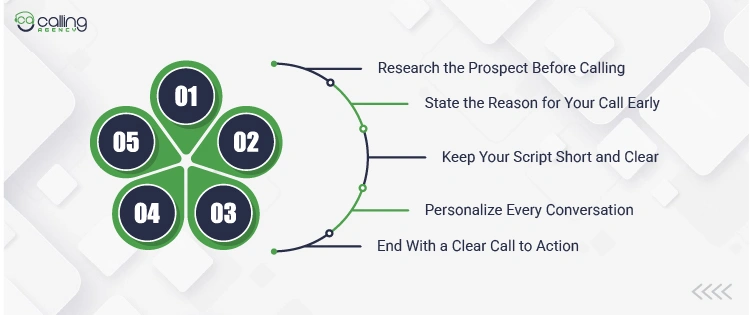
1. Research the Prospect Before Calling
Some of the most successful cold calls start with research. Before the dial, know the prospect’s title, company name, industry, and recent business trends. This allows you to line up your message and address challenges specific to them.
Useful information includes:
- Company size and growth stage
- Industry trends and challenges
- Recent funding or expansion
- Leadership changes
- Current tools or service providers
The more relevant your outreach is, the higher the chances of engagement by the prospect.
2. State the Reason for Your Call Early
The first and foremost cold-calling best practice is to state the reason you are calling. When prospects have an instant understanding of why the call is taking place, they are far more likely to remain on the line.
Example:
“Hi [Name], I am calling you because we help businesses like yours cut CAC and improve lead quality.”
3. Keep Your Script Short and Clear
Prospects are busy and skip the long introductions and unnecessary information. Include the who, what, and why you called. Your goal should be to explain this within the first 30 seconds.
Focus on:
- Clear language
- Relevant benefits
- Short sentences
- Natural conversation flow
4. Personalize Every Conversation
One of the most important things that current cold-calling success depends on is personalization. If relevant, provide information about the prospect’s company, upcoming milestones, company goals, and industry challenges. A personalized script resembles a business talk as opposed to a sales message.
5. End With a Clear Call to Action
Every cold call must have a next move. No matter if you are asking to set up a meeting, demo, or follow-up call, make it easy and straightforward.
Common Cold Calling Script Mistakes
- Line reading
- Talking too much
- Leading with a product pitch
- Skipping prospect research
- Failing to personalize
- Using a weak call to action
Great cold calling scripts knit together research, personalization, a clear value proposition, and an impeccable call to action. Follow a proven framework, keep the message short and actionable, and adapt every conversation to meet the specific needs of your prospect, never lose sight of his pointers. That is what makes your cold call a qualified sales opportunity.
How Should You Adjust Your Cold Calling Script for Different Buyers?
There is no generic cold call script. Now the right method depends on who is picking up the phone. So while every script should be structured the same intro, reason for calling, value proposition, discovery questions, and call to action, the tone and messaging of that structure should differ depending upon what role your prospect is within their company.
Cold Calling Tone Guide
| Prospect Type | What They Care About | Best Approach |
| C-Level Executive | Revenue, ROI, business growth | Be direct, concise, and results-focused |
| Manager or Team Lead | Team performance and efficiency | Ask questions and focus on solving problems |
| Gatekeeper | Professionalism and clarity | Explain your purpose and ask for guidance |
| Individual Buyer | Personal benefits and simplicity | Use everyday language and avoid complex terminology |
So, for example, an executive often favors a brief pitch with numbers to quickly describe business impact. Managers tend to prefer consulting on operational challenges. Gatekeepers want honesty and professionalism, and individual buyers want simple explanations around one clear solution.
Final Thoughts
Cold calling is a contest of patience, practice, and a little script writing. With no script, you will never be able to pitch your prospect correctly, as you are bound to forget key points. Prospects have many different pain points; consequently, personalize your script around them. We took care of you by showing you over 50 cold calling script examples for different situations and sectors. You will use the same document or change some points.
Frequently Asked Questions
What is a cold call script?
A cold call script is a pre-written script that allows your sales rep to talk with a potential customer they have not spoken to before. It will take you from the opener to a value proposition, discovery questions, objection responses, and an obvious next step, all while leaving space to sound like a human.
How do you write a cold call script?
Find the relevant info about your prospect and write out a simple flow. It contains small openings, reasons for calls, a value hook using their pain point, discovery questions, & clear CTA. Stay short and practice until it flows conversationally.
What should you say at the start of a cold call?
If you want a more focused opening, say who you are and which company you represent, then quickly tie the reason behind your call to the situation of the prospect. According to Gong, explicitly telling them why you are calling increases the success rate by 2.1x because it keeps the conversation on track and under your control.
Should you read a cold call script word for word?
No. Your script is a guide, not a teleprompter. People read that word-for-word; it sounds robotic, and prospects drop off quickly. Understand the framework, then deliver it naturally and be conversational.
How long should a cold call script be?
The opener should last less than 30 seconds, and the entire call takes anywhere from 3 to 6 minutes. According to Gong, the cold calls with the highest success rates are about 5–6 minutes long on average, so get to the value right away, then let your prospect speak.
What is the best cold call script for my industry?
The only thing that you will use as a base is a situational script, and you will adjust it according to your vertical. The article contains insider scripts by industry such as real estate, insurance, financial services, solar, construction, banking, accounting, healthcare, IT, SaaS, e-commerce, and logistics.