


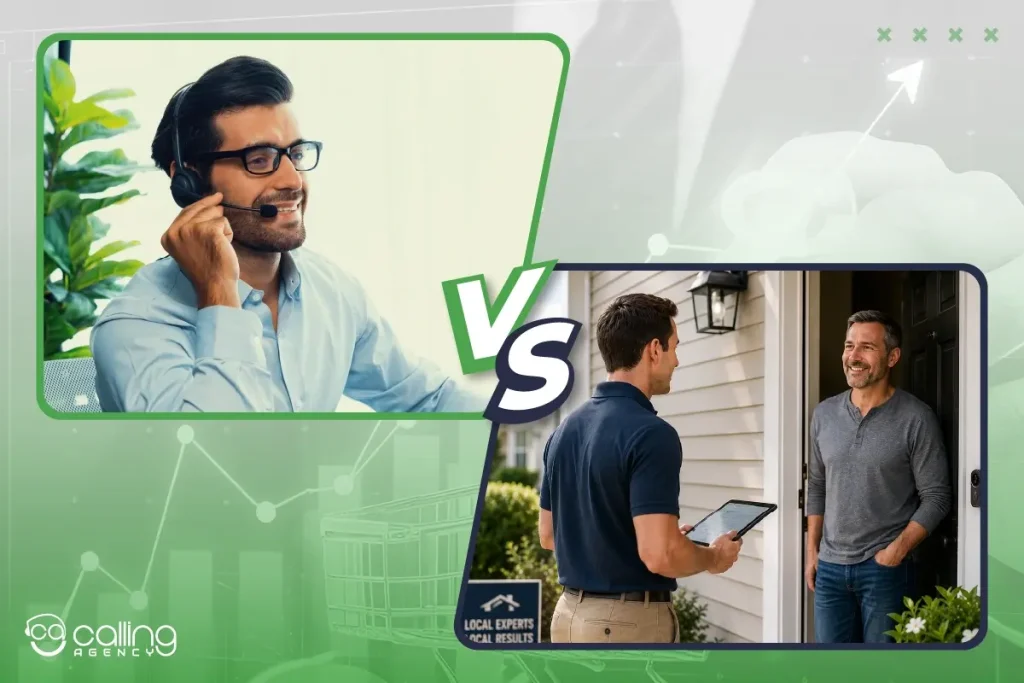
Some SDRs give a guarantee of generating leads, appointments, and sales by cold calling. On the other hand, some teams swear they can generate better results in door-to-door knocking. They both are right because both of the prospecting methods work, but in a different way.
Which methods can you pick? It completely depends on your industry, budget, sales goal, and team size. For example, if you are working in the B2B industry or reaching out to real estate investors, cold calling fits better here. You can go to an investor’s door and offer to invest in your business. Yes, it’s possible but awkward, and success hopes for almost nothing.
In this blog, we will learn what cold calling is, door knocking in the industry fit, when to use which one, and more useful aspects that you need to know before picking one prospecting method between cold calling and door knocking.
What Is Cold Calling?
Cold calling is a sales technique where a sales representative contacts a potential customer through phone calls, who has no prior interaction or knowledge of the caller’s business or product. Cold calling is commonly used in B2B sales, appointment setting, lead generation, real estate, insurance, local service, etc.
Key success factors:
- targeted lists
- Scripts
- timing
- follow-up
Cold calling is faster & easier to scale because you can directly purchase lead lists, refine scripts, and replicate teams quickly.
What Is Door Knocking?
Door knocking is an old prospecting method that is still effective. It is also called door-to-door prospecting. When a sales representative visits potential customers in person without a scheduled appointment or prior interaction, then it’s called door-knocking prospecting. The main goal of door knocking is to start a face-to-face conversation to offer your product or service, qualify the interest of prospects, and book a follow-up appointment.
It is commonly used in real estate, roofing, solar, pest control, home security, and other local services. This prospecting method works best for community-based sales where prospects are located in a specific neighborhood or service area.
A successful door-knocking prospecting depends on several things. Such as choosing the right area, the right timing, and respectfully approaching. Remember to keep the conversation short, clear, and helpful.
Cold Calling vs Door Knocking: Side-by-Side Comparison
Let’s take a look at the difference table of cold calling vs door knocking below, including key places, legal compliance, cost, scalability, and more.
| Factor | Cold Calling | Door Knocking | What It Means |
| Speed of Outreach | Faster; high-volume daily calls. | Slower; restricted by physical travel. | Cold calling offers quicker market reach. |
| Cost per Contact | Lower; zero travel expenses. | Higher, driven by fuel, travel, and labor. | Cold calling scales more cost-efficiently. |
| Trust-Building | Dependent on tone, script, and skill. | Stronger; driven by face-to-face interaction. | Door knocking builds faster personal trust. |
| Scalability | High; expanded via software and lists. | Low; limited by physical territory boundaries. | Cold calling better supports volume growth. |
| Rejection Style | Quick hang-ups or ignored calls. | Face-to-face, more directly confronting. | Door knocking is more emotionally demanding. |
| Compliance | Bound by FTC/FCC DNC lists, TCPA, and hours. | Bound by local permits, “no soliciting” signs. | Regulation dictates regional feasibility. |
| Best-Fit Industries | B2B, SaaS, Insurance, Finance. | Solar, Roofing, Pest Control, Local Services. | Calling targets roles; knocking targets regions. |
| Tracking/Reporting | Seamless via CRM and call recordings. | Harder; requires mobile field apps. | Cold calling provides clearer data visibility. |
| Remote vs. In-Person | Fully remote inside sales. | In-person field operations. | Determines your physical team structure. |
| Volume vs. Connection | Volume-focused; prioritizes reach. | Connection-focused; prioritizes presence. | Matches broad reach vs. high-touch depth. |
| Team Structure | Inside sales, SDRs, remote teams. | Field reps comfortable with travel. | Shapes hiring and organizational needs. |
| Market Scope | Wide; targets states or industries. | Local, dense neighborhoods/routes. | Fits national/regional vs. Hyper-local focus. |
| Skills Required | Verbal objection handling, script control. | Body language, local awareness, presence. | Training must align with the specific channel. |
| Compliance Impact | Restricts who you can call (consent laws). | Restricts where you can walk (local permits). | Legal rules can completely halt operations. |
Advantages and Disadvantages
Every prospecting channel has some advantages and disadvantages. Cold calling and door knocking are also not exceptions. Let’s see what the pros and cons of cold calling are, and then we will talk about door-to-door prospecting.
Cold Calling
Cold calling has a high rejection rate, even though most of the big companies around the world hire cold calling services to reduce lead generation and appointment setting costs. That means it has a lot of advantages as well.
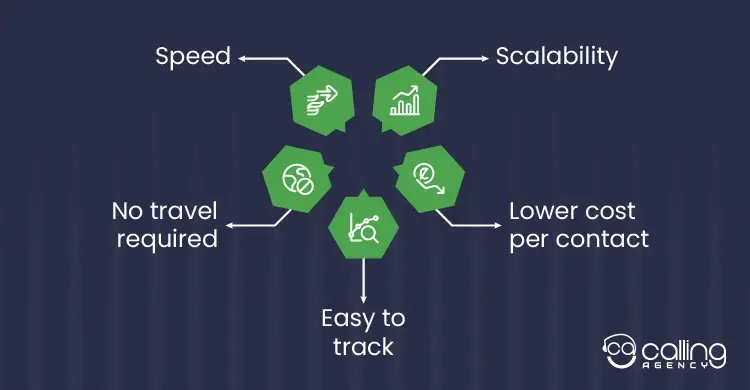
Advantages:
- Speed: Cold calling is faster to contact prospects through phone calls
- Scalability: A single rep can reach a lot of prospects easily, unlike door-knocking
- Lower cost per contact: As you don’t need to travel to reach prospects, the cost per lead becomes lower.
- Easy to track: Can be tracked easily, recorded, and updated in CRM
- No travel required: No travel to reach decision-makers, no fuel costs, no physical tiredness.
Disadvantages:
- Lower trust: an unexpected call can interrupt a decision maker’s workflow, so it can create lower trust issues.
- High rejection: Cold calling has a lower success ratio, like 1% to 3%, and high rejection.
- Compliance risk: Cold callers must adhere to the strict regulations of telemarketing.
- Harder to build rapport: As you are cold, without a proper reason for calling, a value proposition, it’s always difficult to build rapport in cold calling.
Door Knocking
Door knocking sounds more traditional, but it still works for building trust faster, and there are some service areas where it fits better than cold calling.
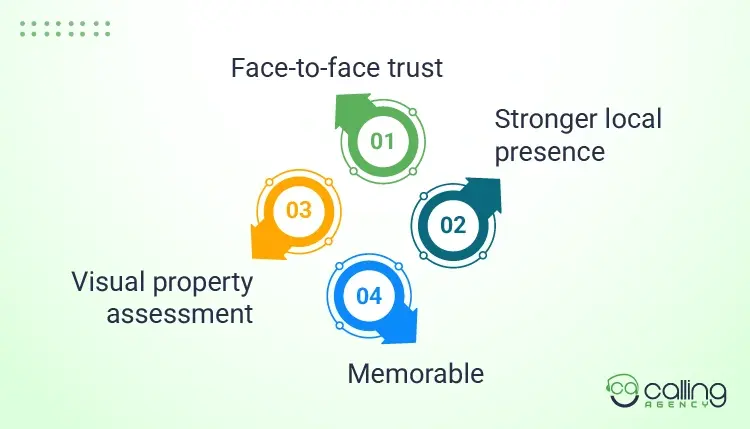
Advantages:
- Face-to-face trust: Face-to-face communication builds trust better than cold calling.
- Stronger local presence: Your visits and footprints create a stronger local presence among the community members with a positive vibe.
- Visual property assessment: Door knocking allows reps to understand neighborhoods and properties firsthand, identifying maintenance or renovation cues that could help future pitches.
- Memorable: Physical interaction makes a lasting impression on a prospect’s mind more than any other prospecting method.
Disadvantages:
- Weather dependency: In bad weather, your prospecting will be interrupted, and you need to wait for good weather.
- Travel cost: Travel cost, vehicle cost, and maintenance of those vehicles add extra cost to your prospecting.
- Fewer daily contacts: In door knocking, one rep can reach a limited number of prospects, unlike cold calling.
- Physical demands:
- Solicitation restrictions: You must navigate the local ordinance and community guidelines because you don’t have an appointment with your prospect.
Cost Comparison: Cold Calling vs Door Knocking
Cold calling is usually cheaper than door knocking because it has lower travel and field costs. A caller or SDR can work remotely, use a CRM, dialer, data provider, and phone system, and contact many prospects in one day.
- Labor & Volume: Cold calling features lower labor costs per contact. A digital sales development representative (SDR) makes 100 to 250 daily phone attempts. Door knocking limits field reps to 20 to 50 daily visits due to physical travel, making their hourly labor much more expensive per interaction.
- Travel & Field Expenses: Cold calling has virtually zero travel costs. Door knocking requires significant ongoing capital for vehicle mileage, fuel, route-planning time, and the financial risk of weather delays.
- Tech Stack: Cold calling incurs higher software fees ($250 to $700+/month/user) for dialers and data. Door knocking uses cheaper field apps and print materials ($100 to $270/month/user).
Cold calling wins on Cost Per Contact through sheer volume. However, door knocking often wins on Cost Per Appointment for high-ticket local products, because face-to-face interactions yield drastically higher trust and conversion rates.
Cold Calling vs Door Knocking by Industry
Let’s see how you can choose your prospecting method according to the industry. Cold calling may fit better in some industries, and door knocking can be much more effective in some industries. And for some specific services, combining both can be more effective.
Best Fit Areas for Cold Calling
Cold calling is best for complex B2B sales, long sales cycles, and high-ticket solutions where you can clearly explain the return on investment (ROI).
- Selling tools like CRM, accounting, cybersecurity software, etc., cold calling is a good fit.
- Cold has been more effective for wealth management, B2B insurance, and investment opportunities.
- Bulk office supplies, courier services, or corporate catering offers are more common in cold calling.
- Pitching services like SEO, lead generation, or social media management to local business owners has gained more popularity in cold calling than door-knocking.
Cold calling is mostly used for B2B lead generation and setting appointments for services that are larger in numbers and have involvement of multiple decision-makers.
Best Fit Areas for Door Knocking
Door knocking is a very effective prospecting method for B2C and local B2B sales. Because you can build trust through in-person interaction, adding physical display value also allows for a physical inspection of the property.
- Door knocking works best for roofing, siding, gutter cleaning, and pest control.
- When you are working on solar panel viability, energy savings, and available government rebates, door-knocking is a good prospecting channel.
- Offering neighborhood-wide security upgrades, cameras, and alarms.
- Pitching to homeowners who have expired listings or are located in high-demand, transitioning neighborhoods.
- Door knocking helps you with in-person observation for HVAC repair/replacement, and landscaping services that often rely on visible job-site visibility.
Which One Should You Choose?
If you want speed, scale, B2B sales, and lower cost per contact, choose cold calling. If you want local trust, neighborhood selling, and property-based offers, door knocking is better in this case.
You can use both when the sales process needs volume plus face-to-face trust. The best decision will be if you choose a prospecting model based on your business model, offer type, territory size, team size, and budget.
Conclusion
Whether you choose door knocking, cold calling, or a hybrid model, the most important thing is to implement the prospecting process properly. If you are going with cold calling, make sure you have expert cold callers and a customizable and personalized script. Also, objection handling ability, a value proposition during the call, and follow-up notes for next step outreach. On the other hand, if you are going with door knocking, make sure your sales rep reaches the prospect at the right time. Be careful about having a smooth voice during the conversation, a standard outfit, and being well-spoken.
FAQs
Is cold calling better than door knocking?
Neither is universally better. Cold calling is good for faster outreach and high-volume, and door knocking is good for building more trust with physical presence.
Is door-knocking still effective in 2026?
Yes, door knocking is still effective because people are overwhelmed by digital ads and spam, where face-to-face interactions build trust and memory.
Which is cheaper, cold calling or door knocking?
Cold calling is much cheaper because it has no travel or vehicle costs; your agents can make calls at a cheaper dialing rate, sitting in your office.
Can cold calling and door knocking work together?
Yes, when you combine cold calling and door knocking together, making a hybrid model, it works much better than relying on a single channel for prospecting.