



Developing a daily cold calling routine involves developing an easy system whereby you make calls to prospects on a daily basis at a specific time without the need to be motivated. It begins by making up your lead list beforehand, with a simple script, and establishing a minimum of calls such as 30-50/day.
With perseverance, cold calling is a sure thing in your sales program and particularly when a business requires cold calling service to create leads and appointments. Repetition, results tracking, and improvement based on the actual conversation is the key.
Rather than working haphazardly, you are working to a discipline-building schedule that instills confidence. This habit enhances conversation, conversation to sales and a continuous flow of sales opportunities.
Why Building a Daily Cold Calling Habit Matters?
Developing an effective cold calling routine is important as it will provide a consistent stream of leads, enhance sales abilities through practice, and help to avoid overreliance on unreliable marketing avenues. Regularity in outreach directly boosts conversations, opportunities and closed deals.
Regularity creates a trusting pipeline
Cold calling is founded on quantity and consistency. You make calls daily, and you form routine conversations in contrast to occasional peaks.
To explain this, a call of 50 people a day, with a call rate of 10 percent will result in 5 real conversations a day. More than a month it is 100 or more quality interactions. This predictability will allow you to forecast revenue, and avoid dry times.
Repetition Improves Conversion Skills
Everyday calling refines your pitch, dealing with objections, and confidence. You begin to see trends: objections that most people will use, best introductory lines and ideal responses by the customer. With 2-3 weeks of regular calling, the quality of the conversation will be upgraded naturally, and the conversion rates will increase, although the offer will remain unaltered.
Reduces Fear and Procrastination
The reason why cold calling is a challenge is mainly because of inconsistency. It becomes habitual when you do it daily and not a part of a task that you avoid. Decision fatigue can be eliminated by establishing a time (e.g., 10-12 AM per day). After some time, you become less scared as your brain will consider calling a routine.
Data-Driven Improvement
Daily habit creates measurable data. You can track:
- Calls made
- Connections
- Meetings booked
- Deals closed
This allows you to improve specific areas. For example, low connections = improve timing; low conversions = improve script.
Practical Execution Plan
- Fix a daily call block (minimum 1–2 hours)
- Use a simple script, not a rigid one
- Track metrics in a sheet
- Review results weekly and adjust
A daily cold calling habit turns sales from guesswork into a controlled, scalable process.
The Psychology Behind Habit Formation for Cold Calling
The psychology of habit formation of cold calling is of the same nature: repeat a simple clearly defined action in a similar situation and make it automatic. A consistent cold calling service strategy helps reduce hesitation, improve follow-up, and create stronger calling habits over time. Cold calling becomes not a challenge but a habit when you cut down the decision-making process, add a reward, and make a follow-up.
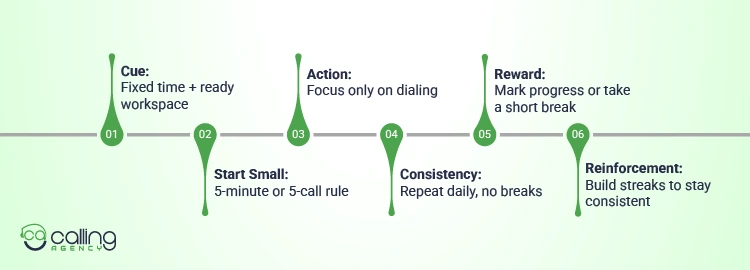
Cue–Routine–Reward Loop
Every habit follows a loop:
- Cue: fixed trigger (e.g., 10:00 AM, open dialer)
- Routine: start calling immediately
- Reward: small win (tick mark, short break, coffee)
Use the same cue daily. Do not wait for motivation. The brain learns to associate the time and environment with calling, reducing friction.
Lower the Activation Energy
High effort kills consistency. Make starting extremely easy:
- Prepare lead list the night before
- Keep script visible on screen
- Use a “first 5 calls” rule (just start, don’t overthink)
Once you begin, momentum takes over. Starting is the hardest psychological barrier.
Dopamine Through Micro-Wins
Your brain needs quick rewards. Track visible progress:
- Calls completed
- Conversations held
- Meetings booked
Even small wins release dopamine, reinforcing the behavior. Use a simple tracker or checklist you can see while calling.
Identity-Based Habit
Shift from “I have to call” to “I am someone who calls daily.” This identity reduces internal resistance. Set a non-negotiable minimum (e.g., 30 calls/day). Missing a day breaks identity; consistency protects it.
Manage Rejection Emotionally
Rejection is the main psychological blocker. Reframe it:
- Expect 80–90% rejection
- Measure success by activity, not outcomes
This removes emotional pressure from each call and keeps you consistent.
Step-by-Step System to Build a Daily Cold Calling Habit
The practice of cold calling on a daily basis is developed through establishing a clear schedule, minimizing the effort to make the setup, starting with small goals, and measuring the results on a daily basis. Using a simple system, calling becomes habitual and automatic.
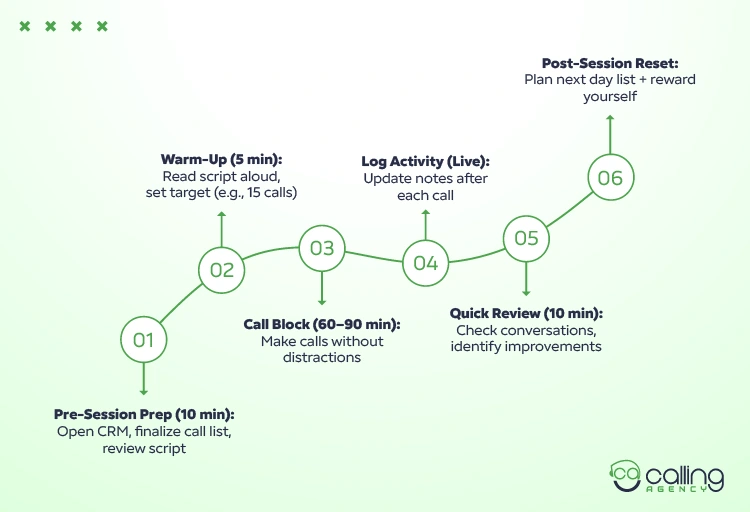
Step 1: Fix a Non-Negotiable Time Block
Choose a specific time every day (e.g., 10:00–12:00). Do not change it. This is what triggers you. Avoid multitasking. Calls all the time–no e-mail, no research.
Step 2: Make Your List Beforehand.
Do not get ready leads in calling time. Prepare your call list in the evening before or early morning. Have at least 2-3 days of leads available. This eliminates friction and it can get you started immediately.
Step 3: Use a Simple, Flexible Script
Write a short script:
- Opening line
- Value statement
- One question
Do not memorize word-for-word. Use it as a guide. The goal is natural conversation, not robotic delivery.
Step 4: Start with a Minimum Daily Target
Set a baseline (e.g., 30–50 calls/day). This is your non-negotiable number. Even on bad days, complete this target. On good days, you can exceed it.
Step 5: Use the “First 5 Calls Rule”
Starting is the hardest part. Commit to making just 5 calls without thinking. This breaks resistance. Once you begin, it becomes easier to continue.
Step 6: Track Key Metrics Daily
Use a simple sheet to track:
- Calls made
- Connections
- Meetings booked
This gives you clarity. For example, if 50 calls = 5 conversations = 1 meeting, you understand your numbers and can improve.
Step 7: Handle Rejection with a System
Expect rejection. Do not take it personally. Focus on activity, not outcome. Use quick resets:
- Short pause after tough calls
- Deep breath
- Move to next number immediately
Step 8: Add Small Rewards
After completing your daily target, reward yourself (break, coffee, short walk). This reinforces the habit and keeps motivation high.
Step 9: Weekly Review and Improvement
At the end of each week, review your data:
- Best calling time
- Common objections
- Conversion rate
Adjust your script and timing based on real results.
Step 10: Protect Consistency
Never skip two days in a row. Missing one day is okay, but two breaks the habit. Consistency matters more than perfection.
This system works because it removes guesswork. You follow the same steps daily, track results, and improve over time.
Advanced Habit-Building Strategies (What Top Performers Do)
Best performers create habits through system design, rather than motivation. These eliminate friction, manage the triggers, and monitor behavior in daily life to make cold calling a daily automatic and measurable behavior.
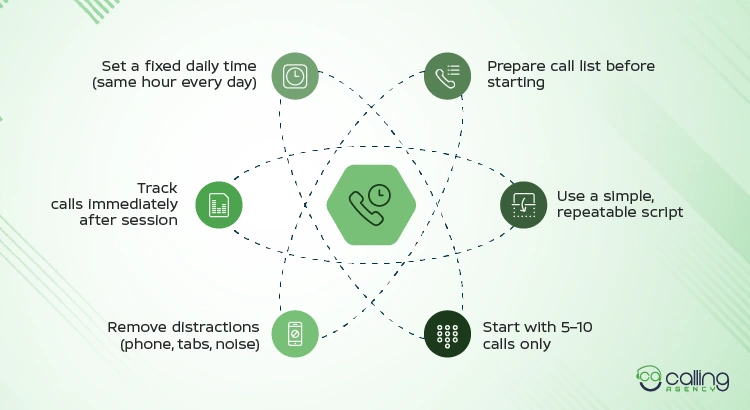
Identity-Based Habit Building
Top performers don’t just “do cold calling.” They see themselves as consistent callers. This identity shift changes behavior.
Instead of saying “I need to call,” they think “I am someone who calls daily.”
Practical step: Write a simple rule: I make calls every weekday at 9 AM. Follow it regardless of mood.
Environment Design for Zero Resistance
Specifically, a targeted cold calling framework will help you to progress the whole approach process in a more efficient way. Everything is prepared in advance.
- CRM open
- Call list ready
- Script visible
This removes decision fatigue. When the environment is ready, starting requires less effort than delaying.
Time Blocking with Non-Negotiable Slots
Top performers fix a daily calling window and protect it. No meetings, no distractions.
They treat it like a deadline, not a flexible task.
Practical step: Block 60–90 minutes daily only for calls. Same time every day.
The 5-Minute Rule to Beat Resistance
Even top performers feel resistance. They don’t wait for it to disappear.
They commit to just 5 minutes of calling.
Once started, momentum takes over. Most sessions continue beyond the initial commitment.
Habit Stacking for Consistency
They attach cold calling to an existing habit.
Example: After morning coffee → start calls immediately.
This uses an already strong habit as a trigger, making consistency easier.
Data Tracking and Feedback Loops
Top performers track activity daily:
- Number of calls
- Conversations
- Conversions
Tracking creates awareness and improvement. It also acts as a reward system when progress is visible.
Reward System That Reinforces Action
They create small, immediate rewards after completing sessions.
- Short break
- Coffee
- Marking a streak
This conditions the brain to associate cold calling with positive outcomes.
Gradual Scaling Strategy
They don’t start with high volume. They scale slowly:
- Week 1: 10 calls/day
- Week 2: 20 calls/day
This prevents burnout and builds long-term consistency.
Common Mistakes That Kill Your Cold Calling Habit
Habit Cold calling is not effective mostly because of inconsistency, overcomplicating it, and emotional burnout. You cease to appear day by day when your system is vague or incomprehensible. Making a couple of essential corrections can get your habit in place and consistent.
None No Predetermined Time and Form
Calling at random times kills consistency. You postpone or miss without a definite slot per day.
Fix: Establish an inviolable time block (i.e., 10-12 AM), and guard it every day.
Overthinking Scripts
Attempting to sound flawless makes you drag. You are hesitant to call, and you lose your steam.
Fix: Use a simple 3-part script (opening, value, question). Develop, not perfect.
Preparation In Calling Time.
Researching interrupts and calls cut the flow and volume.
Fix: Have your lead list ready in advance of the session. Calling time = simply dialing.
Setting Unrealistic Targets
Burnout and inconsistency may occur in high targets (100+ calls).
Fix: Establish a minimum threshold (30-50 calls). Be consistent then scale.
Taking Rejection Personally
Emotional responses are energy consuming and cause avoiding calling.
Fix: Expect rejection. Create measures of success based on calls made, not results.
No Tracking System
Progress cannot be observed without data and motivation will decrease.
Remedy: Monitor calls, links, and meetings every day. Victories that are small will see you through.
Skipping Days Frequently
Taking a few days off kills the momentum and re-establishes the habit.
Fix: Never miss twice. Resume the following day after a missed day.
Daily Cold Calling Routine (Ready-to-Use Template)
An effective daily cold calling regimen will enable you to remain steady, cut down on hesitation and enhance performances. Be in control of your whole day by following this practical and step-by-step table.
| Time Block | Activity | What to Do (Practical Steps) | Output Goal |
| 30 mins | Pre-Call Preparation | Build a targeted call list, research prospects (company, role, pain points), define your daily goal, and review your call script | Clear call plan + 5–10 qualified leads ready |
| 2–3 hours | Power Calling Block | Make calls in batches (25–30), use a simple opener, focus on conversations not perfection, handle objections briefly, move fast | 50–80 calls, 8–15 conversations |
| 15–20 mins | Break & Reset | Step away from desk, hydrate, stretch, review what worked, reset mindset | Energy restored + quick insights |
| 1 hour | Follow-Up Calls | Call warm leads, reconnect with interested prospects, send follow-up emails/messages immediately after calls | 3–8 follow-ups, 2–5 qualified opportunities |
| 20 mins | Daily Review & Tracking | Track metrics (calls, connects, meetings), note objections, improve script, plan next day list | Clear performance data + improvement plan |
Pro Tip (Execution)
- Call at the same time daily to build habit
- Track everything—what gets measured improves
- Focus on consistency, not perfection
This routine gives you a complete, repeatable system to B2B sales generate leads and close more deals daily.
Conclusion
The daily cold calling habit is effective when you are consistent, but not intense. Have a set time, pre-plan and do at least your minimum calls per day. Wait not to be motivated–do your system. Monitor your numbers to know what is working and get better over time. Accept and move on fast saying no. Daily small behavior generates long-term outcomes. All you need to do is remain consistent and your confidence, skill and conversions will automatically increase. Be simple, practice it, and safeguard your habit. With time, cold calling becomes a habit, it is forecastable and it offers dependable new business opportunities.
FAQs
What is a daily cold calling habit?
It is a routine of sales calls daily at an appointed time. You have a basic routine, monitor performance and remain steady. The habit will enable you to develop a consistent pipeline and enhance your sales abilities.
How many calls should I make daily?
Begin with a realistic call volume of 30 to 50 calls per day. This is the minimum you should aim at. When you are at ease, you can add the numbers according to your ability and performance without being overwhelmed.
What is the best time for cold calling?
Afternoon (2 PM-4 PM) and late morning (10 AM-12 PM) can be discussed as appropriate. Experiment with various times and monitor connection rate. Select the time you get the best results and follow it on a daily basis.
Do I need a script for cold calling?
Yes, but make it simple. Use a brief format with an introduction, mission statement, and a question. Do not memorize it. Talk in a natural way and adapt according to the discussion in order to sound more human and confident.
How do I handle rejection in cold calling?
Count on refusal as a component of the change. The majority will reply by saying no. Do not come personally. Concentrate on making calls. Take every rejection as a matter of course and rush to the next call.
What should I track daily?
Monitor outgoing calls, connections and meetings booked. These figures demonstrate your performance vividly. They assist in determining what is going on and what requires improvement in order to change your strategy in a good way.
How long should my calling session be?
Begin with 1 to 2 hours of intensive calling. Do not get distracted at this period. It is preferable to have a short and focused session than a long unstructured session with breaks and interruptions.