

Privacy and consent are mandatory, not optional, for building trust, compliance and improving conversion quality.
Even the strongest marketing campaigns can fall flat if they do not depend on proper consent practices, resulting in low-quality leads and putting businesses at risk legally.
In this blog, you will learn:
- Privacy and consent in lead capture
- Why are they essential for lead generation success
- Global omnipresent privacy legislation that you absolutely need to know
- Conditional consent in marketing
- Expert frameworks and best practices for compliance
With these concepts, you become equipped to create lead generation systems that are moved ethics and performance well in the future.
What is Privacy & Consent in Lead Capture?
In lead capturing, privacy refers to how a business gathers and uses an individual’s information safely and ethically. When someone fills up a form on your website, they trust you with their data. You must protect that trust.
Data privacy in marketing:
- This basically means to protect the user’s confirmation and not share it without having their permission.
- It involves email addresses, phone numbers and some browsing history.
Meaning of consent:
- Explicit Consent – The user definitively says yes, specifically by ticking a box before submitting.
- Implicit Consent – The action that grants permission from the user, but this is uncertain and not often sufficient today.
Types of data collected:
- Contact information – Collect in the form of email, name, phone number etc.
- Behaviour – Browser interaction such as pages viewed, clicking and downloads.
Why transparency matters:
- Specify to users what data you collect and why you need it
- Make users feel secure and reliable when typing in their information
Lead capture, when treated with respect for privacy and proper consent, can be conducted in a way that is both trustworthy and effective.
Why Privacy & Consent Matter for Lead Generation?
B2B lead generation is highly dependent upon privacy and consent in determining how people would perceive you. When users feel safe, they are more likely to divulge their data and trust your brand more.
Builds trust and credibility:
- When you communicate explicitly about how data will be deployed, the otherwise fickle audience trusts you more
- Trust enables you to elevate user confidence when they complete your forms
Improves lead quality and intent:
- More clear permission seekers are interested in your offer
- These leads are more responsive and convert
Reduces legal and compliance risks:
- Follow privacy regulations to avoid fines and complications
- It protects your business from legal trouble
Aligns with modern expectations:
- Users currently care about their data and privacy
- Severe and straightforward communication is to be anticipated by them
Impacts brand reputation and conversions:
- Deficient data practices can damage the image of your brand
- Treating privacy well can lead to more sign-ups and increased sales
Privacy and consent are the keys to developing relationships while being a better lead generator.
Key Privacy Laws You Must Know
Proper knowledge of privacy laws helps you capture leads through safe and legal methods. All businesses, even small businesses need to comply with these rules if they are collecting user data online.
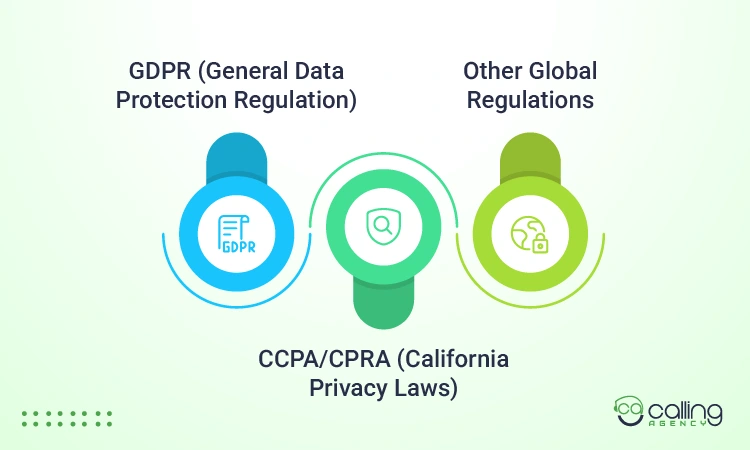
GDPR (General Data Protection Regulation)
GDPR is a strong continent-wide privacy law that protects people in the European Union. This also applies if your company is not located in Europe, but you collect data from EU users.
Who it applies to:
- It applies to any business which obtains information about EU residents
Consent requirements:
- Mostly, users should voluntarily agree beforehand to your data collection
- Do not pre-check boxes or confuse language
User rights:
- Users can see the data you have on them
- Recognizing or changing their data on the firm’s request
They have the right to withdraw consent at any time. It means keeping detailed documentation and providing users with methods to opt out.
CCPA/CPRA (California Privacy Laws)
These are laws regarding the data which protects people living in California and gives them more control over their data.
Consumer rights and opt-out rules:
- They allow users to ask about what data you collect about them.
- Request to delete their data
- They can prohibit you from selling or sharing their data
- Make your data practices obvious and offer humans easy options to opt out.
Other Global Regulations
More generally, other laws around the world already regulate how companies use personal data.
Examples:
- CAN-SPAM (USA) – Regulates e-mail marketing and requires an unsubscribe link every time
- PECR (UK) – Regulators cover cookies, emails and common communication permission
Why global compliance matters:
- Can attract international users to your website
- You are bound to adhere to the regulations that these areas have in place
- Broken laws can result in fines and loss of trust
- These laws allow you to generate leads without risks and build a reputable brand
Types of Consent in Lead Capture
Through understanding your specific forms of consent, you will know how to collect leads safely legally and effectively.
Your lead quality, b2b compliance, and customer trust hang directly on the type of consent you implement.
Explicit consent (opt-in forms, checkboxes):
- The user has explicitly consented via direct action to allow their data to be collected
For example, ticking an unchecked checkbox on a lead capture form or landing page
This is called informed consent, and the users are aware of what they will receive. Not only does it support permission-based marketing, which naturally improves engagement and conversion.
Implicit consent (existing relationships):
- Assumed permission from a previous purchase/request
- Frequent with customer relationship management (CRM) and retention campaigns
But it is weaker and would not bear the minimum privacy law standards.
Double opt-in vs single opt-in:
- Single opt-in – When a user fills the form, they are on your list right away.
- Double opt-in – Where the user confirms their signup via a verification email
Double opt-in improves lead verification, email deliverability & data quality.
When each type is appropriate:
- Explicit consent with double opt-in for new leads and online campaigns
- Complete consent for existing customers with a well-defined relationship
Risks of poor consent practices:
Fines and penalties for failing to stand by these data privacy laws can be severe. Should you send low-quality or spam my e-mail marketing emails? You can, but poor leads increase unsubscribe rates.
Its consequences cause brand reputation and the trust of the customers.
Best Practices for Privacy-Compliant Lead Capture
In order to get leads in a way that stays within the lines, you must develop clear privacy-first domain practices. This improves user credibility with you and also for your marketing.
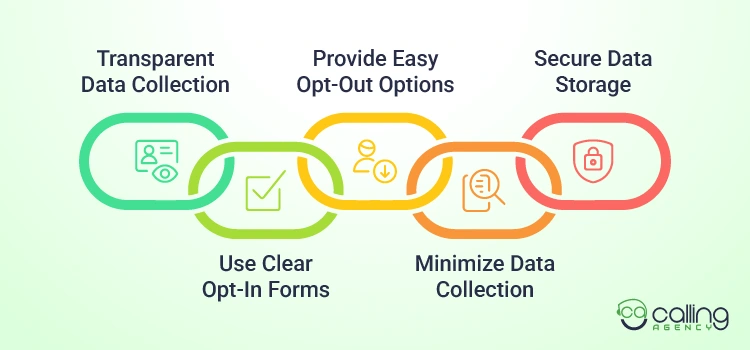
Transparent Data Collection
- Being transparent with your data practices will help ease user concerns.
- Be explicit about the type of data you collect (name, email, phone no.)
- Rationale for data usage (newsletters, promotions, follow-ups)
- Put a visible link to your privacy policy form
- Leave ambiguous or unclear communication out of your data-collection process
- When they feel your intent, it’s disseminated correctly
Use Clear Opt-In Forms
- Make your forms explicit about getting active consent from users
- Never use pre-checked boxes because such boxes do not comply with most regulations
- Use simple and straightforward call-to-action (CTA) like Get updates or Subscribe
- Don’t make the form fields lengthy and complicated
- Put consent checkboxes where they can be easily seen
It also ensures a better user experience (UX) and comes in handy in valid consent collection.
Provide Easy Opt-Out Options
- Users must always have control over their data and communication opt-ins/rights.
- Add an unsubscribe link to each email of yours
- Create a preference center where your audience can specify how many emails they want to receive and on what topics
- Minimizing friction in processing opt-out requests
- The user can not be forced to give consent, you respect the right to proceed and they can withdraw at any moment
- Keeps your email list wholesome and less insistent
Minimize Data Collection
- Do not collect data that is worthless for your campaigns.
- Follow the data minimization principle from privacy regulations
- Most of the time, ask for the basic info like name and email address
- Do not use long forms that can kill conversion rates
- Use progressive profiling to collect additional data when necessary
- Filling out a form is a risk and with less data, the risk goes down
Secure Data Storage
- Save the data in safe tools like CRMs or marketing platforms
- Encrypt and control access to sensitive data
- Only allow access to data that is appropriate for the team members
- Update the system regularly, It avoids data theft and cyber risk
Good data security creates trust, which helps safeguard your business.
Lead Capture Privacy & Consent: An Expert Framework
This is why experts have a planned framework to manage privacy and consent rather than randomly using methods. This method ensures compliance with data protection legislation while increasing both lead quality and user trust.
A comprehensive foundation links informed consent, consistent dialogue & secure data transaction.
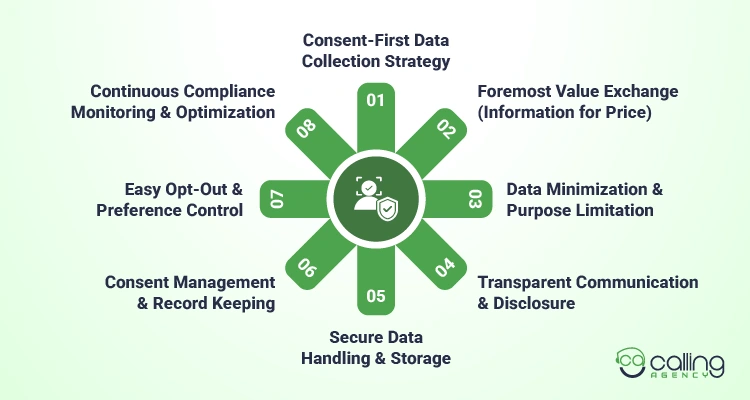
Consent-First Data Collection Strategy
The framework at the center of this is collecting data based on obtaining proper and explicit user consent. Your lead capture form must always be built with lawful consent and user awareness in mind.
- Explicit opt-in mechanisms (unchecked checkboxes) to understand genuine user consent
- List-wise permission marketing extensively so that users conscious consent to communication
- Do not do bundled consent or opt-ins without compliance
- Make the consent language unambiguous so that people know what they are consenting to
Foremost Value Exchange (Information for Price)
When users sense a fair and equitable exchange, they are more willing to share personal data. This improves compliance and also improves lead intent.
- Offer a strong value proposition (eBook, offer, demo) in return for user data
- Before collecting any information, be clear about the reason for asking you to collect this data
- Be clear on how often and what kind of communication
- Match your offers with intent signals from users to have quality leads
Data Minimization & Purpose Limitation
Therefore, experts adhere to data collection rules with their duty of care in risk management and meeting compliance requirements.
- The data minimization principle means that you collect only what is necessary
- You should clearly state the intended use of each piece of data
- Do not collect sensitive personal data unless it is completely required
Transparent Communication & Disclosure
Transparency with your lead capture is an essential part of winning trust and complying with different laws.
- Offer, clear, understandable privacy notices outlining what data is being collected and processed
- Put a link to your privacy policy in clear view on or just next to all lead capture forms
- Support informed consent with a host description
- Describe third-party data sharing or tracking practices
Secure Data Handling & Storage
Safeguarding user data is vital to compliance and customer relations.
- Safely store data in systems such as secure CRM platforms
- Data is encrypted when it is stored or transferred
- Create access policies to restrict who is able to see or find data.
- Constantly check for any breach, leaks or access
Consent Management & Record Keeping
Most of the organizations still lack good technology for tracking consent which can prove handy when needed during audits or to comply with regulations.
- Keep a record of consent by way of logs – what, when and who?
- Use bookkeepers or Consent Management Platforms (CMPs) to handle user permissions
- Facilitate the withdrawal of consent and preferences easily
- Record keeping for compliance audits and legal evidence
Easy Opt-Out & Preference Control
Must have complete control over their personal data and what they wish to communicate.
- Make sure that each email contains a clear unsubscribe mechanism
- Implement a preference center for communications management
- Do not delay the withdrawal of consent from a user
- Lower spam complaints and opt-out friction using a stress-free process
Continuous Compliance Monitoring & Optimization
Remember, privacy compliance is not a one time activity, upgrade and improvement are also required at regular intervals.
- Keep up with evolving data protection regulations (GDPR, CCPA)
- Conduct routine compliance audits for lead capture services
- Optimize forms with conversion rate optimization (CRO) without breaking privacy rules
- Educate teams on best data privacy practices and compliance requirements
This approach provides a plan for businesses looking to create a privacy-first lead capture system that abides by regulations, keeps user data secure, and raises marketing efforts.
Final Thoughts
Contemporary lead capturing is built on a foundation of privacy and consent. They can lead a business to lose trust, get into legal trouble and collect only unqualified leads that never convert.
If done correctly, they strengthen transparency, strengthen relationships and drive better marketing results.
In this blog, we explored:
- Understanding privacy and consent in lead capturing
- Why they are necessary for trust and compliance
- Important privacy laws, such as GDPR and CCPA
- Types of consent in marketing
- Implementation of best practices and frameworks used by experts
When you apply these principles, businesses can create ethical, compliant and high-performing lead generation systems that provide long-lasting success and sustainable growth.