



Understanding a glossary of merchant services terms for sales reps is very essential. It really helps a lot in selling in the payments industry. Generally, merchant services involve complex terminology, pricing structures, and technical processes. If you don’t understand the language, you can’t build trust or close deals easily.
Don’t worry, we will guide you here the most important merchant services terms. After reading it, you can surely communicate clearly with merchants and handle objections confidently. As a result, your sales performance will also improve day by day
Why Must Sales Reps Understand Merchant Services Terminology?
Merchant services sales is not just about pitching rates. It’s about explaining value, solving problems, and simplifying complex payment systems. When you understand the terminology, it becomes easy for you to handle everything. You then speak like an expert and build credibility easily. This is how merchants make such effective decisions.
As a sales rep, if you don’t have this knowledge, you may confuse prospects. Hence, you can lose trust quickly. Also, it will become difficult for you to differentiate their offer in a competitive market.
What Are The Core Merchant Services Terms Every Sales Rep Should Know?
Make sure you know all these terms as a sales reps that are essential in merchant services.
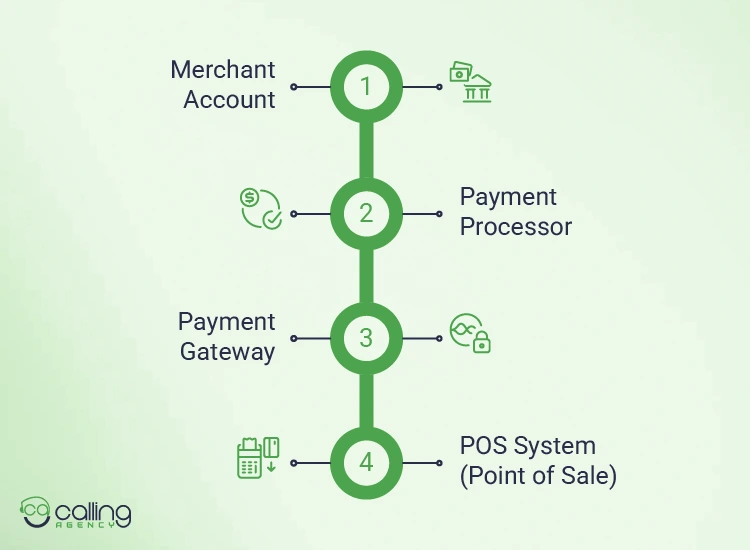
Merchant Account
A merchant account is a special type of bank account. It allows businesses to accept card payments. With a merchant account, you can temporarily hold funds before they are transferred to the business’s bank account.
Payment Processor
A payment processor is like a company. It handles the transaction between the merchant, issuing bank, and card network. A payment processor’s job is to ensure whether the payment is authorized and completed or not.
Payment Gateway
Unlike a payment processor, payment gateway is a technology. Its job is to capture and transmit payment data from the customer to the processor. Most merchants use it for online transactions.
POS System (Point of Sale)
A POS system is both hardware and software. Sales reps use it to accept payments in-store. In a POS system, you will get card readers, terminals, and inventory systems.
What Are The Pricing and Fee-Related Terms In Merchant Services?
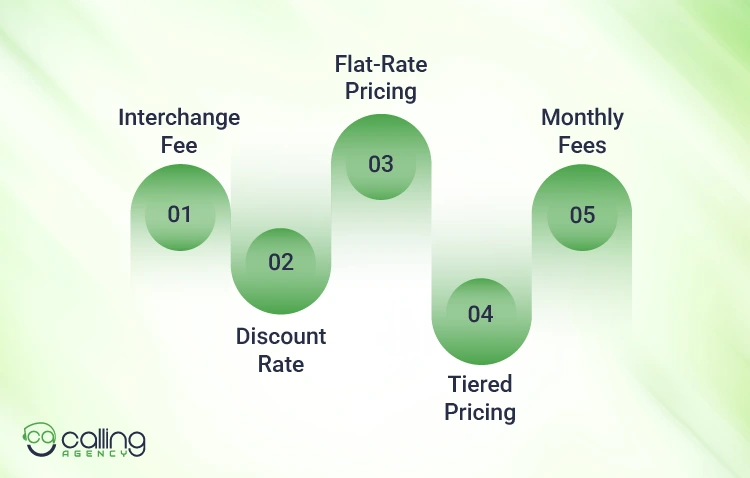
You also have to understand the pricing. Because most merchant objections come from fees and costs. So, don’t ignore them.
Interchange Fee
Interchange fees are charges set by card networks. They are then paid to issuing banks for processing transactions. These fees can vary. Like they can be set based on card type or transaction method.
Discount Rate
The discount rate is the percentage a merchant pays per transaction. It includes interchange fees plus the processor’s markup.
Flat-Rate Pricing
Flat-rate pricing charges a fixed percentage per transaction regardless of card type. It’s simple to use. But high-volume merchants who deal with high-volume calls, can find it expensive.
Tiered Pricing
Tiered pricing groups transactions into categories with different rates. Well, these categories are either qualified, mid-qualified, or non-qualified. You may find it less transparent.
Monthly Fees
Monthly fees are very clear. They include statement fees, gateway fees, PCI compliance fees, and some account maintenance charges.
What Are The Transaction and Processing Terms?
For transaction and processing, there are some more terms that you must bid on. These are:
Authorization
Authorization is a process. It verifies if a customer has enough funds or credit to complete a transaction or not.
Settlement
Settlement occurs when the funds from transactions are transferred to the merchant’s bank account.
Batch Processing
Batch processing refers to grouping transactions together. It then sends them for settlement at the end of the day.
Chargeback
A chargeback occurs when a customer disputes a transaction. Then the bank reverses the payment because of it. For this, merchants have to face fees and penalties.
What Are The Risk and Compliance Terms In Merchant Services?
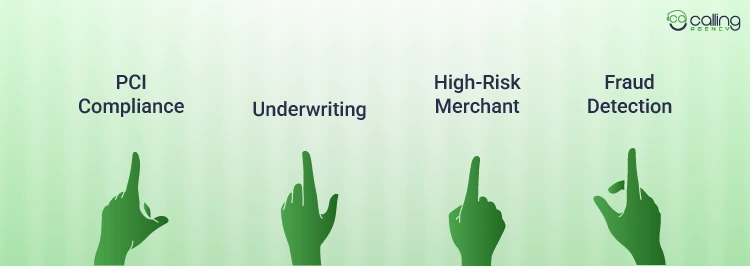
In merchant services, you should also be certain with the risk and compliance terms. These are:
PCI Compliance
PCI compliance refers to security standards. Businesses must follow them if they want to protect cardholder data.
Underwriting
Underwriting is the process of evaluating a business before approving a merchant account. Its job is to assess all necessary details. Like risk, industry type, and financial stability.
High-Risk Merchant
A high-risk merchant is a business considered more likely to experience chargebacks or fraud. These businesses often have to pay higher fees.
Fraud Detection
Fraud detection tools help identify suspicious transactions. With these, sales reps can prevent unauthorized payments.
What Are The Sales and Lead Qualification Terms In Merchant Services?
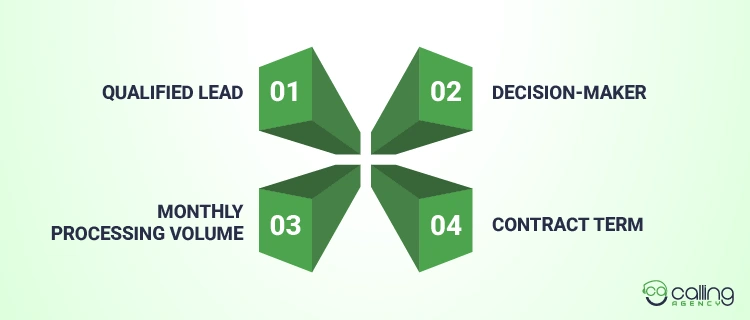
The sales and lead qualification terms that are necessary in merchant services are:
Qualified Lead
A qualified lead is a prospect that meets specific criteria. Such as business type, volume, and decision-making authority.
Decision-Maker
The decision-maker is the person responsible for choosing a payment provider. This is often the owner, CFO, or operations manager.
Monthly Processing Volume
Monthly processing volume refers to the total value of transactions a business processes monthly. It’s literally a key factor seen in pricing and qualification.
Contract Term
The contract term is the duration of the agreement. A merchant and a provider usually make this contract. Here, you will see some renewal clauses as compulsory terms.
What Are The Equipment and Technology Terms In Merchant Services?
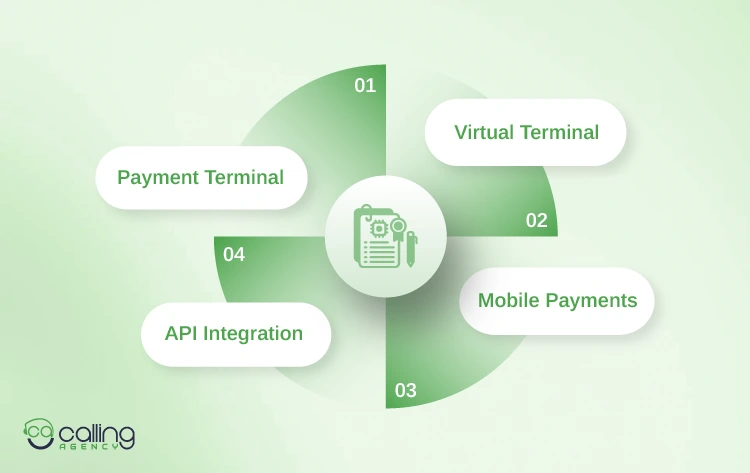
In merchant services, you will find some equipment and technology terms too. These include:
Payment Terminal
A payment terminal is a physical device. It is used to accept card payments in-store.
Virtual Terminal
A virtual terminal allows merchants to manually process payments through a web interface. It is often used for phone orders.
Mobile Payments
Mobile payments refer to transactions made through smartphones or digital wallets. This can be through Apple Pay or Google Pay.
API Integration
API integration allows payment systems to connect with websites, apps, or software. And that is how they ensure us seamless transactions.
What Are The Common Merchant Pain Point Terms?
Like any other terms, you have to consider the merchant pain point terms too. These include:
Chargeback Ratio
The chargeback ratio is the percentage of transactions that result in disputes. If the ratio is high here, it can lead to penalties or account termination.
Downtime
Downtime refers to system outages. It prevents transactions from being processed.
Approval Rate
Approval rate is the percentage of successful transactions coming from total attempts.
Hidden Fees
Hidden fees are unexpected charges. They are not clearly disclosed in pricing agreements.
How To Use This Glossary In Sales Conversations?
Knowing these terms is not enough. You need to use them strategically in conversations. When you speak with merchants, simplify the technical language first. Then relate these terms to their business problems and focus on outcomes.
For example, instead of saying “interchange optimization,” say “we help you reduce processing costs.” This will make your pitch clearer and more persuasive.
Conclusion
It’s very important for all sales reps to have a strong understanding of merchant services terminology. It will be a major competitive advantage for them. As a result, they can communicate clearly, build trust faster, and handle objections with confidence.
From now, you won’t sound like a generic salesperson. You will sound like a knowledgeable advisor. And in a competitive industry like payments, that’s what closes deals.
If you want to generate more qualified opportunities, combine this knowledge with a strong strategy. Start with professional merchant services lead generation. And you can surely turn your conversations into consistent revenue.
Frequently Asked Questions
What are merchant services in simple terms?
Merchant services are the tools and systems that allow businesses to accept and process payments. This includes credit cards, POS systems, and payment gateways.
What is the most important term for sales reps to understand?
Interchange fees are one of the most important terms in merchant services. It’s because they directly impact pricing and merchant costs.
What is the difference between a payment gateway and processor?
A payment gateway captures transaction data. But a processor handles the actual movement of funds between banks.
What is a chargeback in merchant services?
A chargeback is when a customer disputes a transaction and the bank reverses the payment. Here, the merchant often has to pay the fees.
How can sales reps explain complex terms to merchants?
Sales reps should simplify technical language and relate it to business outcomes. Then they shall focus on benefits. Such as, cost savings, security, and efficiency.