

An Ideal Customer Profile (ICP) is the type of company you should target, and a Buyer Persona is a semi-fictional profile of your ideal customer, built based on your market research.
A strong Ideal Customer Profile (ICP) can boost your conversion rates by up to 68%, while a well-defined Buyer Persona can help you close up to 2.3× more deals.
That’s because you’re not just targeting better accounts, you’re speaking directly to the people who make the decisions.
However, most businesses confuse an Ideal Customer Profile (ICP) with a Buyer Persona. Cause they kind of sound the same, but not the same. So, when we first joined the marketing industry, it confused me too.
That’s confusing, it cost me 1/2 of my high-value leads.
If you work with Account-Based Marketing (ABM) and advanced customer segmentation, you need both to work together. So, you need to understand both clearly.
Cause this isn’t just a theory problem. It’s a revenue problem. So, let’s try to understand it from the core.
| TL;DR
ICP helps you target the right companies, while Buyer Persona helps you connect with the right people inside those companies. ICP improves lead quality, and Buyer Persona improves conversions. Using both together creates a stronger, more efficient lead generation funnel. |
What is an Ideal Customer Profile (Icp)?
An Ideal Customer Profile (ICP) is the type of company most likely to convert, stay longer, and generate high Customer Lifetime Value (CLV). If you build it correctly, then you don’t need to chase every lead.
You can just focus on businesses that match your best customers and show real purchase intent. It uses firmographic data, such as company size, industry, revenue, and location, to identify high-value accounts.
That’s why those leads hardly go to waste if you nurture the lead with the correct scripts and all.
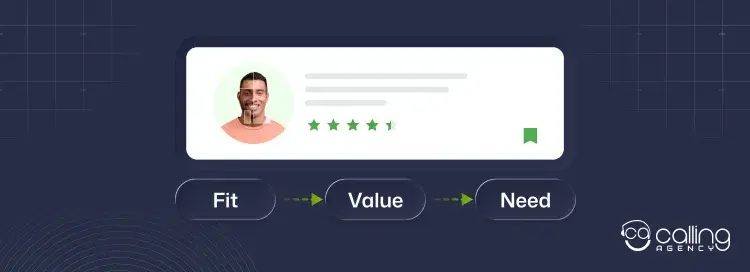
So, to build a high intent ICP, focus on 3 things:
- Fit
- Value
- Need.
Mainly, we build an ICP by looking at my best customers first and asking one question: what do they all have in common?
Usually, we start with firmographics like company size, industry, revenue, and business model because that quickly tells me which types of companies actually fit my offer.
Then, we go a bit deeper and check things like budget capacity, buying power, and the tools they already use, because even if a company looks good on paper, they still need to be able to afford and implement what I’m offering.
If you work this way, you’re naturally filtering out bad-fit leads and focusing only on companies more likely to move through your lead generation funnel and become real Sales Qualified Leads (SQLs).
ICP Template Field Example
Here is how a researched ICP looks:
| Field | Example |
| Industry | SaaS (B2B Marketing Tools) |
| Company Size | 50–200 Employees |
| Annual Revenue | $5M – $20M |
| Geographic Location | United States, UK, Canada |
| Business Model | B2B Subscription |
| Growth Stage | Scaling Startup |
| Target Account Type | Mid-Market Companies |
| Decision-Maker Role | Head of Marketing, VP Growth |
| Budget Capacity | $2K–$10K/month for tools |
| Tech Stack | CRM (Salesforce), Marketing Automation (HubSpot) |
| Key Pain Points | Low Lead Quality, High CAC, Poor Funnel Conversion |
| Buying Trigger | Scaling team, declining conversion rates |
| Sales Cycle Length | 30–60 Days |
| Customer Lifetime Value (CLV) | High (12+ months retention) |
| Lead Qualification Criteria | Matches firmographics + shows intent signals |
ICP Role In Lead Generation
Your ICP acts as a qualification layer across your entire B2B lead generation strategy. It improves lead scoring, aligns with Account-Based Marketing (ABM), and helps convert more Marketing Qualified Leads (MQLs) into Sales Qualified Leads (SQLs).
And here’s where it becomes powerful in practice:
- You run ads only toward high-fit industries and company types
- You prioritize CRM leads that match your ICP signals (size, revenue, intent)
- Your sales team immediately ignores low-fit prospects and focuses on real opportunities
This is exactly how teams reduce wasted spend and shorten sales cycles. Because every stage of the funnel is aligned with actual buying potential.
Now here’s something most people miss: ICP is not static. You need to keep yourself updated
Companies that regularly update their ICPs see stronger pipeline results.
In fact, according to Sales Management Association, quarterly ICP updates can lead to a 9.7% higher pipeline creation rate.
Why? Well, it’s simply because targeting stays aligned with market changes and real customer behavior. And when your ICP is properly refined, the impact compounds. In that way, you get better results in lead nurturing.
What Is a Buyer Persona?
A Buyer Persona is a semi-fictional profile of the individual decision-maker you are trying to reach inside a target company. A buyer persona focuses on real people. You focus on their goals, challenges, and buying behavior.
So, in this part, you’re no longer just selling to a business. Insist you’re communicating with a decision-maker, influencer, or end user who has specific motivations behind every action they take.
Mainly, we build a buyer persona by focusing on how a person thinks and behaves, not just their job title.
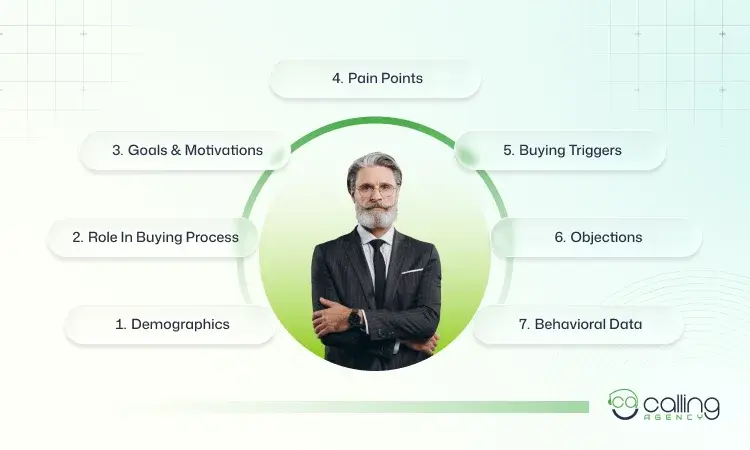
Here’s what we usually note down:
- Demographics: Job Title, Age Range, Industry Experience
- Role In Buying Process: Decision Maker, Influencer, Gatekeeper
- Goals & Motivations: What success looks like for them
- Pain Points: Daily challenges and frustrations at work
- Buying Triggers: What makes them start looking for a solution
- Objections: Price concerns, trust issues, or risk hesitation
- Behavioral Data: Content they consume, platforms they use, search intent
For example, a “Marketing Manager” persona might prioritize lead quality and ROI, while a “CEO” persona focuses on revenue growth and scalability.
This gives me a lead to connect with them and the right things to say.
Buyer Persona Template Field Example
This is what a buyer persona looks like:
| Field | Example |
| Persona Name | Growth-Focused Marketing Manager |
| Job Title | Marketing Manager |
| Industry | B2B SaaS |
| Experience Level | 5–8 Years |
| Role In Buying Process | Influencer / Decision Maker |
| Primary Goal | Increase Lead Quality and Conversion Rate |
| Key KPI | Cost Per Lead (CPL), Conversion Rate, ROI |
| Pain Points | Low-quality leads, high CAC, poor funnel performance |
| Challenges | Proving ROI, optimizing campaigns, and limited budget |
| Buying Trigger | Drop in conversion rate or rising ad costs |
| Objections | “Is this worth the cost?” “Will this actually improve ROI?” |
| Motivations | Career growth, hitting targets, and performance recognition |
| Preferred Channels | LinkedIn, Google Search, Email |
| Content Preference | Case Studies, Data Reports, How-to Guides |
| Search Behavior | Searches for “reduce CPL,” “improve conversion rate.” |
| Decision Factors | ROI impact, ease of use, integration with existing tools |
| Communication Style | Direct, data-driven, results-focused |
Buyer Persona Role In Lead Generation
This is where things get practical, because even with a strong ICP, you won’t convert if you don’t speak to the right person inside the company.
A Buyer Persona helps you write your message to convert really well. That’s why we use it to adjust everything:
- Ads that match daily problems, not generic benefits
- Emails that change tone based on role (CEO vs Manager)
- Landing pages that address real objections, not just features
For example-
A CFO doesn’t care about “feature-rich automation.” They care about cost savings and risk reduction. But a growth manager cares about lead volume and campaign performance.
Same product, different message.
Small changes can lift results fast, like shifting from “increase revenue” to “reduce cost per lead by 20–30%,” or using role-specific CTAs.
According to HubSpot, personalized messaging based on user behavior significantly improves engagement and conversions in B2B funnels by 1.8%.
ICP vs Buyer Persona Key Differences
Both are the main factors in achieving commercial lead-generation targets. So, you need to have a clear idea of both ends to close the deal better. Here is the main difference between them-
| Ideal Customer Profile (ICP) | Buyer Persona |
| Company-level targeting | Individual-level targeting |
| Identify high-value accounts | Understand decision-makers |
| Firmographics (industry, revenue, size) | Psychographics (goals, pain points, behavior) |
| Top-of-funnel targeting & filtering | Mid-to-bottom funnel conversion |
| “Which companies should we target?” | “Who inside the company are we selling to?” |
| Improves lead quality and reduces wasted spend | Improves engagement and conversion rates |
| SaaS companies with $10M+ revenue | Marketing Manager focused on lead quality |
Do We Need an ICP and a Buyer Persona in Lead Generation?
Yes, you need both. Without ICP, you waste time on low-fit leads. Without personas, you lose them even if they’re a good fit.
And this matters more now because 67% to 70% of the buyer journey happens digitally before a lead ever contacts your company.
That means your SEO, ads, and content are doing the selling before your sales team even steps in. So, your Buyer Persona becomes your “invisible salesperson.”
On the other side, companies that use deep customer insights from both ICP and persona alignment grow 85% faster in sales.
That’s mainly because they’re not guessing, they’re targeting and messaging with precision. So, yes, you need both.
How ICP and Buyer Persona Work Together In Lead Generation?
An ICP & Buyer Persona at the individual level work together by combining precise targeting with personalized messaging.
It mainly helps you attract the right companies and effectively engage the right decision-makers to convert high-value leads.
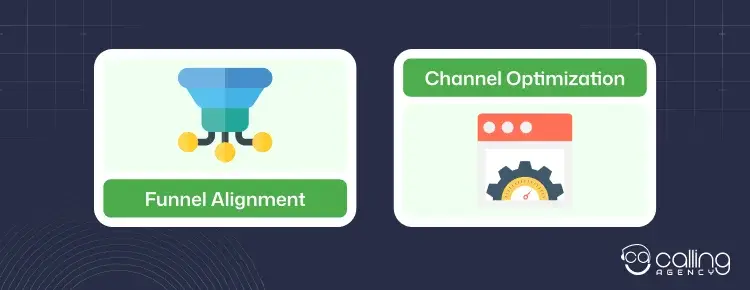
It basically works in 2 levels of lead generation, like-
Funnel Alignment
Your lead funnel has 2 layers:
- Company-Level Filtering First
- Human-Level Conversion Second.
Your B2B ICP sits at the top of the funnel.
It ensures you’re attracting the right companies based on firmographic factors such as industry, revenue, and company size. This prevents wasted traffic and improves lead quality from the start.
Then your Buyer Persona takes over in the middle and bottom of the funnel.
It focuses on the individual inside the company, their pain points, motivations, and objections. So, you can turn interest into action.
So, it looks like this:
- ICP filters: “Is this company worth targeting?”
- Persona converts: “How do we convince the person inside?”
When both align, you naturally move more leads from Marketing Qualified Leads (MQLs) to Sales Qualified Leads (SQLs) with less friction.
Channel Optimization
Once ICP and Buyer Persona are mixed, your marketing channels become much more efficient.
Cause now you stop spreading budget everywhere and start optimizing based on intent and role:
- ICP-driven targeting → Choose platforms and industries (LinkedIn for B2B SaaS, Google Ads for high-intent search)
- Persona-driven messaging → Adjust copy, tone, and offers based on job role and pain points
- Content alignment → Create blogs, ads, and emails that match specific stages of the customer journey
For example-
The same ICP campaign might target SaaS companies, but the messaging changes depending on whether you’re speaking to a CEO (growth-focused) or a Marketing Manager (lead-quality-focused).
That’s how you get the most successful lead hunt!
When to Prioritize ICP vs Buyer Persona?
Honestly, we don’t treat ICP and Buyer Persona equally all the time. We usually prioritize one over the other depending on where the leak is happening in the system.
If I’m honest, I’ve learned this the hard way. Fixing messaging before fixing targeting almost always wastes time.
So, We Prioritize ICP When Lead Quality Is Weak
We focus on ICP first when we see one clear problem: we’re getting leads, but they’re not the right ones. This usually shows up when:
- Too many unqualified Marketing Qualified Leads (MQLs)
- Low conversion into Sales Qualified Leads (SQLs)
- The sales team is spending time on poor-fit accounts
- Cost per lead keeps increasing without better revenue
At this stage, don’t touch messaging, go straight back to targeting.
Because if the company fit is wrong, even perfect personalization won’t fix the funnel. I’ve seen campaigns where we improved copy and CTR, but revenue stayed flat.
It’s simply because the ICP was off. So, we always correct:
- Industry focus
- Company size
- Revenue range
- Buying capacity
Only then does the funnel stabilize.
And, We Prioritize Buyer Persona When Traffic Is Already Good
Once the ICP is solid, we shift focus to Buyer Persona. We do this when:
- We’re attracting the right companies
- But engagement or conversions are still weak
- Sales calls don’t convert despite good-fit leads
In these cases, the problem is not who we target, but how we talk to them.
So we adjust:
- Messaging by role (CEO vs Manager vs Operator)
- Pain points based on real behavior
- Content based on search intent and objections
This is where personalization matters a lot more.
After working for almost 10+ years for a lead generation agency, we figured out multiple strategies and one most important rule which is:
- Fix ICP first when the leads are wrong
- Fix Buyer Persona when leads don’t convert
And when both are properly connected, I’ve seen funnels perform dramatically better, especially for companies using deep customer insights.
Mainly, we don’t pick one permanently, we just fix the weakest layer first.
Conclusion
So, yes, lead generation only works well when ICP and Buyer Persona are used together. You need to mix both to get the best result. Don’t neglect one for another. Both are must-haves, you just need to know when, where, and how to use them.
Frequently Asked Questions
Do You Need Buyer Personas If You Have An ICP?
Yes. An ICP tells you which companies to target, but a Buyer Persona tells you how to talk to the people inside those companies. Without personas, even good-fit leads may not convert because your messaging won’t match their needs or decision-making style.
Can One ICP Have Multiple Buyer Personas?
Yes. One ICP usually includes several personas because multiple people influence the buying decision. For example, a CEO focuses on growth, while a marketing manager focuses on lead quality. Same company, different motivations, different messaging.
How Often Should ICPs and Buyer Personas Be Updated?
Both should be updated regularly. ICPs are typically reviewed every quarter based on performance data, while buyer personas should be updated whenever customer behavior, objections, or buying patterns change. This keeps your lead generation strategy accurate and effective over time.