



Merchant services need to reach a high volume of leads as a part of their regular sales process. They spend a lot of money on lead generation and follow-up. Their revenue mostly depends on how many leads they can convert into their paying customer.
It is normal that you won’t be able to convert all your prospects. But if you don’t measure your lead quality properly, then most of your conversion attempts can become unsuccessful. As a result, your revenue will go down, and all the efforts of your sales team or Sales Development Representative (SDR) can be wasted.
In this blog, we’ll learn about how to measure lead quality for merchant services, including its importance, techniques, performance metrics and some other key facts.
What is Lead Quality?
Lead quality refers to the prospect’s possibility of buying a product or service, which can be determined by their ideal customer profile, buying interest, buying behavior, etc. Assessing lead quality is very important for merchant services lead generation since it determines your possibility of converting those leads into paying customers.
Here are some questions that you can use to assess merchant services lead quality:
- What is their role in the business?
- What is their industry and business size?
- What is their monthly processing volume?
- How do they engage with you? (for example, website visit or email open rate)
Lead Quality vs. Lead Qualification
During the B2B lead generation process, you can also get a list of contacts and verify whether they fit into your ideal customer profile. This process is known as “lead qualification,” and you must remember that it is very different from “lead quality.”
Lead qualification is necessary for filtering out the matching profile who shows interest in your service but doesn’t qualify to be in your lead list. For example, an individual visiting your merchant service website from online ads.
Why Lead Quality Matters in Merchant Services?
High-quality leads increase your chance of making sales. Poor lead quality can increase customer acquisition cost, reduce the efficiency of your sales team, and result in revenue loss.
So here is why measuring lead quality is important for merchant services:
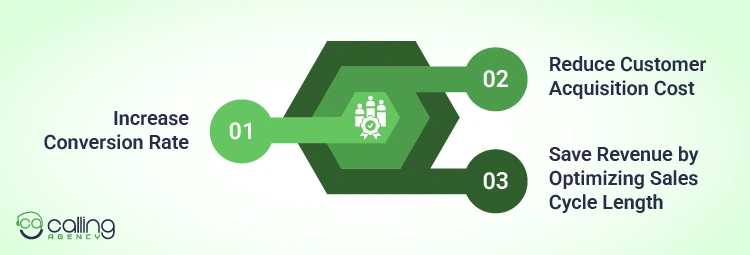
Increase Conversion Rate
Qualifying leads based on their possibility of converting into a customer gives you insights on what type of leads you should actively follow. It can have a significant positive impact on your sales conversations.
Reduce Customer Acquisition Cost
When Sales Development Representatives (SDRs) don’t have enough insight on how to prioritize their effort while following up on leads, it can increase your overall customer acquisition cost.
Save Revenue by Optimizing Sales Cycle Length
Lead quality measurement insights help you decide how you should optimize your sales cycle for different types of leads. Sales teams can close their sales cycle soon for the leads with low-ROI potential.
How to Measure Lead Quality for Merchant Services?
There are multiple techniques you can use for verifying lead quality. Some of the most effective techniques that you can use for your merchant service business include the following:
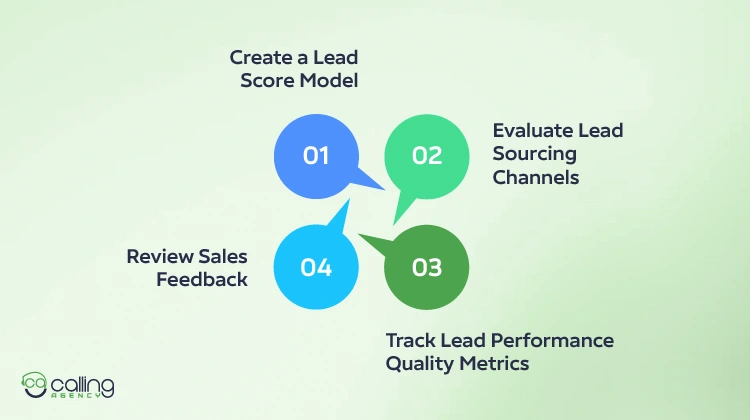
Create a Lead Score Model
A lead scoring model is a way of assessing the likelihood of converting your prospects based on some key types of data: firmographic, demographic, behavioral data, and lead source quality.
In this model, you have to assign a number or numeric value to each prospect. Some of the information you need to collect for building your merchant service lead scoring model includes the following:
Firmographic Data
Firmographic data include the business profile or company information of your prospect, including the type of industry they belong to (such as food, healthcare, clothing, and accessories), their business size, monthly payment processing volume, location, and transaction type (online, in-store, or hybrid).
Demographic Data
This data basically includes the personal or individual information of a prospect such as
- What is their role in their business or company? (owner, CFO, or head of finance)
- Do they have the decision-making ability? (or they need someone’s approval)
- Experience level
- Department (finance or operation)
Behavioral Data
How a lead interacts with your website, email, cold call, or communication channel can be useful for understanding their buying interest. These behaviors are also taken into account for lead scoring.
Negative Lead Scoring
There are some behaviors or issues with outreaching a prospect that you can use for negatively scoring a lead or deducting their overall lead score, such as
- A prospect not responding after several follow-up attempts
- A lead with invalid contact information
- Lead who is outside the target industry
- Prospects with low monthly transaction volume
- Leads with low-revenue potential
Evaluate Lead Sourcing Channels
Lead quality can also depend on the sources or channels you use to generate. The most common lead generation sources for merchant service include the following:
- Content Marketing (Blog, eBook, Articles)
- Email Marketing
- SEO and Website
- Social Media (Facebook, LinkedIn, or Instagram)
- Referral
- Event or Webinar
- Paid Campaign (PPC, display ads, and social media)
Assess the conversion rate of the leads generated from different channels to understand which channels give you the most high-quality leads. Then, assign a score based on their sources. Prospects from inbound lead generation channels such as SEO, websites, or referrals usually have a higher conversion rate than outbound leads.
Track Lead Performance Quality Metrics
Lead quality metrics are some key indicators that you use to assess leads. These metrics can evaluate lead quality based on some key factors such as lead sourcing channels, lead response time, rate of conversion etc.
Some of the effective lead quality metrics you can use are:
Lead Score
Lead score can be assigned based on your lead scoring model and lead sourcing channel. These metrics will include a numeric value or number for each lead that will help the Sales Development Representatives (SDRs) determine the effort and approach they should follow for outreaching a lead.
Lead Response Time
Lead response time refers to the time a sales lead takes to respond after the outreach or follow-up. This metric is one of the major indicators of lead quality measurement and a prospect’s buying intent.
Sales representatives who contact within the first 5 minutes of this time have a 100% higher chance of converting that lead than those who wait for 30 minutes.
Lead Conversion Rate
Lead conversation rate, also known as sales conversion rate, is measured by the percentage of how many prospects you have successfully converted into your paying customers.
For example, by email outreach, you did a follow-up on a total of 200 leads, and among them, 40 leads subscribed to your merchant services. In this, your sales conversion rate will be 20%.
Lead Conversion Rate = (Number of leads converted into customers) / (Total number of leads)
Lead Conversion Rate = (40 ÷ 200) x 100 = 20
MQL to SQL Conversion Rate
Marketing Qualified Leads to Sales Qualified Lead conversation rate is a key metric that can be used to measure the buying intent of a potential customer. This metric is used to verify high-quality leads in business.
“Marketing Qualified Leads” refers to the potential customer who has shown enough interest in buying the product or services of the company and has a higher possibility of conversion than the other leads. For example, someone who participated in your merchant service webinar and requested a demo can be a Marketing Qualified Lead (MQL).
“Sales Qualified Leads“ refers to the prospects who meet the key criteria as a buyer, such as budget, authority, need, and timeline, and fit into the ideal customer profile (ICP) of a business.
For example, an eCommerce business owner who is about to end his contract with his current payment processing solution and who meets the budget and transaction processing volume of your merchant service is actively showing interest by requesting information about contract terms and policy and can be a sales qualified lead.
Cost Per Lead
Cost Per Lead metric is used to identify the prospects who meet some specific criteria and have shown a strong buying intent such as frequent website visits,downloads or requests for a demo. This metric is calculated based on the total cost of acquiring leads.
For example, let’s say you spent $300 for a cold email campaign and from that you got 20 leads then your cost per lead will be ($300/20) = $15.
Sales Cycle Length
A sales cycle is a process where Sales Development Representatives (SDRs) identify leads, establish contact, and try to convert them into their customers. Tracking these metrics allows the sales team to understand how long they are taking to pursue their prospects. And what is the average amount of time they spend for a successful conversation?
This metric can help you shorten your merchant service sales cycle and examine if the time you are spending on your prospect aligns with your revenue expectation.
Customer Lifetime Value (CLV)
These metrics show how much profit or revenue a customer can expect to bring to a business throughout his or her entire journey. This customer lifetime value is a key metric for services or subscription-based companies. It is because if the cost of acquiring a lead seems to be much higher than their customer lifetime value, then the sales team can stop following that prospect and mark them as a low-quality lead.
Review Sales Feedback
The feedback from the sales team can also be very useful for varying lead quality. They can provide many key information about the lead list such as accuracy of information, lead readiness, intent and behavior of the leads, average sales cycle length etc. These insights can help you improve lead quality and reduce the unnecessary effort spent on converting low-quality leads.
Lead Quality Measurement Frameworks
Lead quality measurement frameworks are structured systems to assess the possibility and profitability of converting a prospect into customers. These frameworks use some key factors to assess the lead’s profile so that the sales team can prioritize their focus on the prospects based on their potential value.
Some of the most popular lead quality measurement frameworks that you can use to assess merchant service leads include the following:
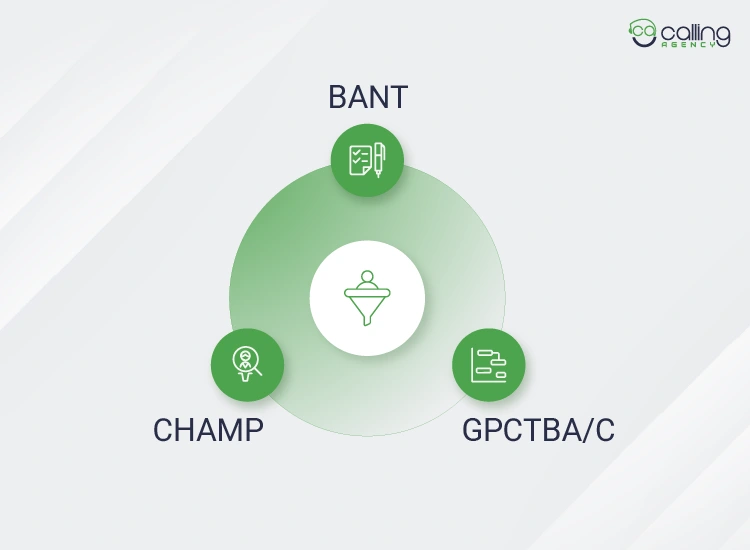
BANT (Budget, Authority, Need, and Timing)
BANT is a framework that assesses a lead based on these four key factors:
Budget
“Budget” refers to the amount of money a potential customer can spend for a product or service. Having enough money to subscribe to your service is one of the core competencies of a prospect, so you need to evaluate their ability to spend first.
Authority
This refers to the decision-making power or ability of a prospect who is in direct touch with you. It is because if you are reaching out to a person who doesn’t have any control or influence over the buying decision, then you are just wasting your effort. So you need to carefully verify the position of your prospect in their business.
Need
When it comes to making a buying decision, everyone has their specific needs and pain points. And it is essential for you to have a good understanding of those. Since, as a sales professional, if you want to convert a prospect, then you need to deliver your pitch specific to their needs and pain points.
Timing
Other than the three other key factors, it is important for you to know the possible timeline of decision-making of a prospect. Some leads can have an urgent need, and they can make fast decisions. So you need to follow up on them immediately and give them your most attention within that specific timeline. These leads should be at the top of your priority list.
While some leads may not have an urgent need to take a decision. They can wait for a long time, and in their case you need to go with the long-term nurture methods. The priority of these leads can be low.
CHAMP (Challenges, Authority, Money, and Prioritization)
The CHAMP framework starts with identifying the specific challenges of your prospects; then you will move on to other key factors that can impact their buying decision.
Here is how it works:
Challenges
Every prospect has some unique challenges or problems, and as a salesperson, you must know how to address those. Before trying to offer your service to a lead, ask what their major concerns are and how your solutions are going to help them. When you have a clear understanding about the problems of your potential customers and show genuine interest to solve them, the possibility of winning that prospect naturally increases.
Authority
Once you’ve understood the challenges of a prospect. Then, you need to establish contact with the right person who can make the decision whether or not they would like to accept your solution or service. It is important to remember that your priority should always be engaging in contact with a decision-maker instead of low-quality leads.
Money
A prospect must have the financial ability to sign up for your service. If not, then no matter how good of an offer you make to them, it is not going to make any difference. So, assessing whether your prospect has enough money to buy your product or service must always be your primary concern.
While following up on merchant service leads, you might suspect that your prospect simply doesn’t have the budget to take your service or their decision-maker is not ready to spend even the minimum amount that you are going to ask for your solution. Then, you can categorize that lead as low-priority and follow up on them at some other time when the budget situation improves.
Prioritization
The factor ‘prioritization’ always focuses on the urgency of your customer. Are they in a phase of their business where they need to act on your offer quickly? And, if so, are you ready to deliver within their timeline? Try to understand that if both of your priorities align perfectly, you can utilize your time and effort accordingly.
GPCTBA/CA (Goals, Plans, Challenges, Timeline, Budget, Authority, and Negative Consequences/Positive Implications)
GPCTBA/CA framework uses multiple factors and a relatively complex model to measure the quality of leads. Here is how it works:
Goals
Every prospect you will reach out to has some unique goals. And you need to understand their goals or objectives. Then, how your solutions help them achieve those goals. For example, an e-commerce business owner may want enhanced security and the lowest rates in online payment processing. So if you want to convert them, first, you must highlight how your services allow them to fulfill their objectives.
Plan
Once you get to know about the objectives of your prospect, you can ask them about their plans to achieve those. Some leads may not have set any clear goals; instead, they can depend on you to build a plan for them. But there are also some leads who already have a clear plan and strategy.
These types of prospects can often have more possibilities in converting your customer since they have already planned what they want to do. So it often means that they are closer to making a buying decision compared to those who don’t have any clear plan.
Challenges
Once you get to know the plan of your lead, you need to understand the challenges they are facing in achieving their goal. It is also a key factor because you need to realize whether or not your merchant service or solution can actually solve their problems.
Timeline
Studying the timeline lets you decide how long you need to nurture a lead. So you need to explore the progress your prospect has made in their buyer’s journey. Are they still in the research stage, or are they looking for an immediate solution?
The leads who are still in the researching stage or give you a response that they need time or they are not ready yet can suggest that the prospect doesn’t have a strong possibility to convert immediately. So you can give them less priority and focus on some prospects who are more likely to make an immediate decision.
Negative Consequences/Positive Implications
So once you have gone through all the factors, then you need to compare the possible negative consequences against positive implications. For example, let’s say a merchant doesn’t want to switch their payment processing solution because they have to pay early transaction fees. They are waiting for their contract terms to come to an end, which will take more than five months.
So you need to show them the amount of money they will be losing during these three months due to hidden fees and additional charges. Then, show how much they can save by ending their contracts early after deducting the early termination fees from the initial savings.
This factor is important because it will show you how likely it is that your prospect is going to switch. Now, if it seems that your potential customer is not going to get much value by switching early. Then it might be better to give them less priority and follow-up on them when their contract period with the current provider is closer to the end.
Challenges in Merchant Service Lead Quality Measurement
Merchant services need high-volume leads regularly, and measuring the quality of these leads with multiple key factors is not easy. Here are some major challenges you can experience while assessing the quality of your leads:
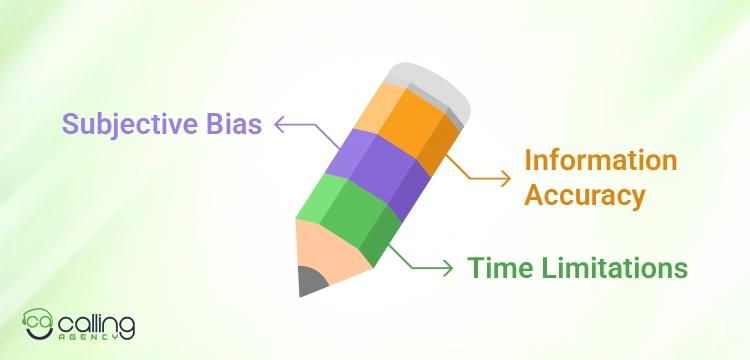
Subjective Biasness
Sales teams always have some matching criteria based on which they build an ideal customer profile for merchant services. But their subjective judgment and level of personal engagement can often impact their ability to select the right prospects. Sometimes, they can rule out a potential customer too early when they show slight disinterest. And they can also select a prospect based on their own personal interest even when that prospect doesn’t match with a major criterion such as budget for buying the service.
Information Accuracy
Sales Development Representatives (SDRs) often don’t get accurate and up-to-date information. This problem can happen if a lead list has been generated with CRM or automation tools without proper filtering and verification. Salespeople often have to give up on lead too early because they don’t have accurate information.
For example, a business may fit perfectly into your ideal customer profile, and you have the phone number of the decision-maker, but that individual doesn’t like cold calling. So you are trying to follow up on email, but the email address you have is not up-to-date.
Time Limitations
Sometimes, a sales representative can put a lead through a lengthy sales funnel for quality measurement. But that prospect may look for an immediate solution. So, they lose interest due to the follow-up process. And, sometimes, a sales professional can give up following up on a potential customer early because they have a short sales cycle.
How to Improve Lead Quality?
Lead quality measurement can help you spend less time, effort, and money on low-quality leads. But that can also be time consuming. So you also need to implement some techniques to improve your merchant service lead quality:
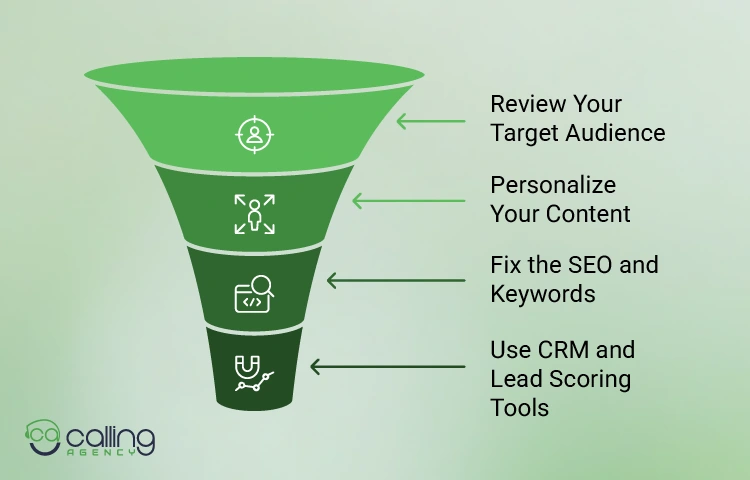
Review Your Target Audience
Low engagement and conversation rate can suggest that the majority of your leads are low-quality. So in this case, you need to refine your target audience to get the leads who exactly match with your ideal customer profile.
Personalize Your Content
The content you create for content marketing can often bring high-quality leads to your website and social media profiles. However, you need to know how to personalize your content accordingly so that it attracts the right prospects.
Fix the SEO and Keywords
If you are getting a lot of visits to your merchant service websites, but most of the leads you are getting from those channels are low-quality, then there might be issues with your SEO and keywords. So you should use the right keywords to acquire high-quality leads through your websites.
Use CRM and Lead Scoring Tools
There are CRM and lead scoring tools that can rank leads based on their possibility of conversion, such as HubSpot CRM, Salesforce Sales Cloud, Active Campaign. Some tools also let you understand the behavior and intent of your prospect based on web visits, such as Leadfeeder or Google Analytics.
Conclusion
It is essential to measure quality in merchant services so that you can reduce your lead acquisition cost and increase your conversion rate. Sales professionals need to reach out or follow-up on high-volume leads regularly. Some of the leads have strong buying intent while others may not even have the budget or urgency to buy your service.
So how you can maximize your revenue and increase your lead conversion rate basically depends on how you measure your lead quality. And, to do that you need to have a strong knowledge about lead quality measurement metric, techniques and framework.
While, in the process there are also some common challenges you will encounter which you need to overcome and you also need to learn how to improve your lead quality to avoid following-up on low quality leads.