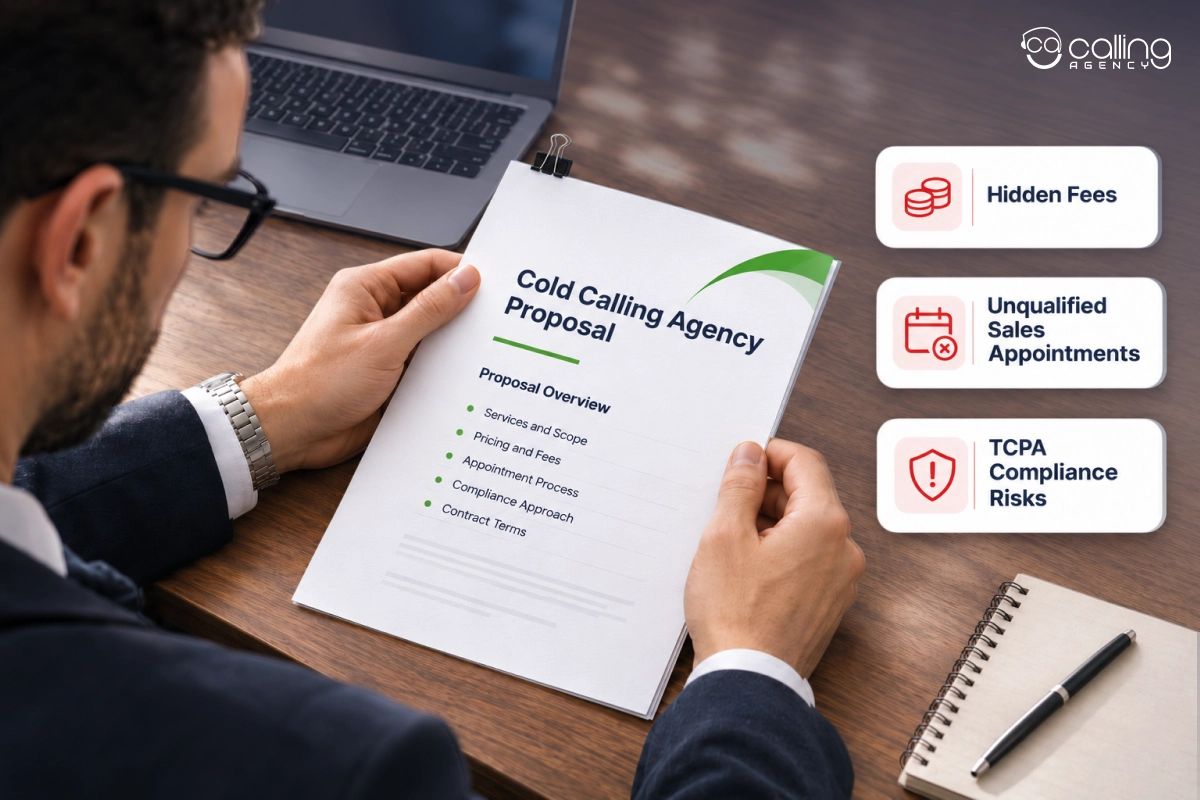


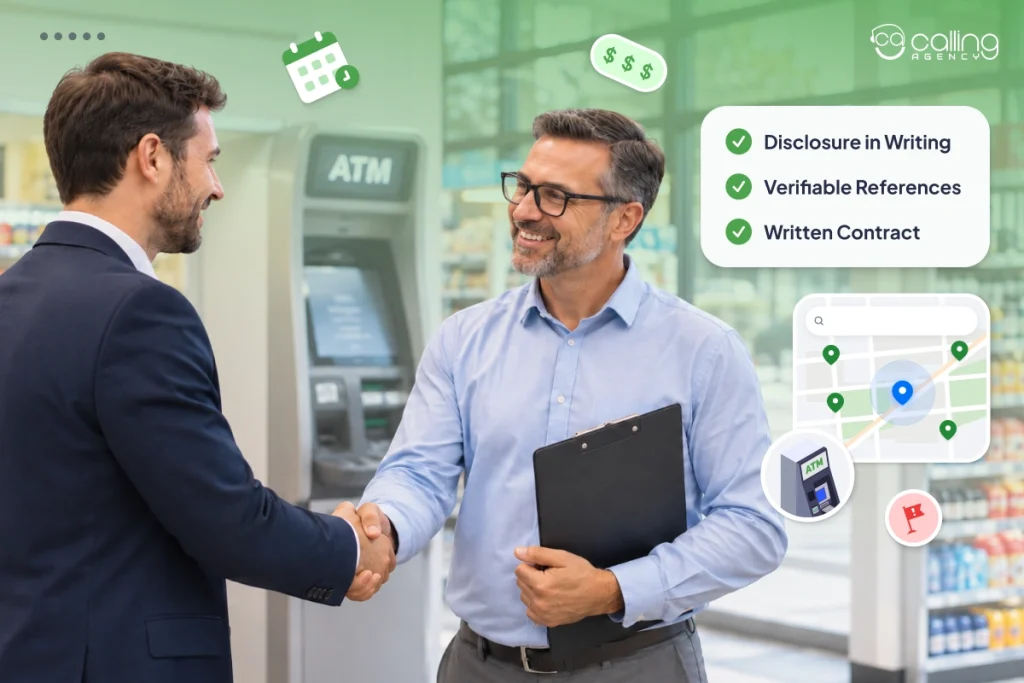
Don’t pay an ATM locator a dime or sign anything until they give you three things:
- A disclosure document in writing.
- References that can be reached and will tell you about their business practices.
- A contract in writing that states everything in detail.
Why such an insistence? In this industry, the oldest scam has always been making huge income claims along with the promises of prime locations that never seem to come true. A competent locator should identify businesses that can become qualified ATM placement leads and provide evidence that those locations are worth pursuing.
This is where the law is on your side. If the seller guarantees you that they will locate sites for you, the FTC Business Opportunity Rule would be applicable. In this case, they should disclose all of their legal history, refund policies, and references. They must give you a written disclosure, covering certain lawsuits, refund policies and references, at least seven days before you sign or pay.
The lack of a fixed rate per site makes the verification process far more important than any attempt to bargain. The remainder of this guide will help you with the process of verifying the locators, questions to be asked prior to payment, and contract requirements.
Key Takeaways
- Request the disclosure form in writing before signing and paying.
- Call the provided references yourself.
- Consider an income guarantee as a warning signal.
- Ask for site information and refund policy in writing.
- Examine the exclusivity clause, surcharge management, and automatic renewal policy.
- Compare locator service with appointment setting service, or even site-finding on your own.
What Does an ATM Locator Do?
An ATM locator helps locate and place your ATMs. A good locator searches for locations where people use money, counts how many people pass each day, and contacts business owners to place your machine in such a location.
There are two types of locators: one sells the location of your machine alone, while the other sells the machine with the location. But in both cases, you pay for the location, not for profits.
What You Should Expect to Get
The ATM locator service is more than just providing the address. Ensure that you know the services you are paying for before you settle any amount. Some of the services include:
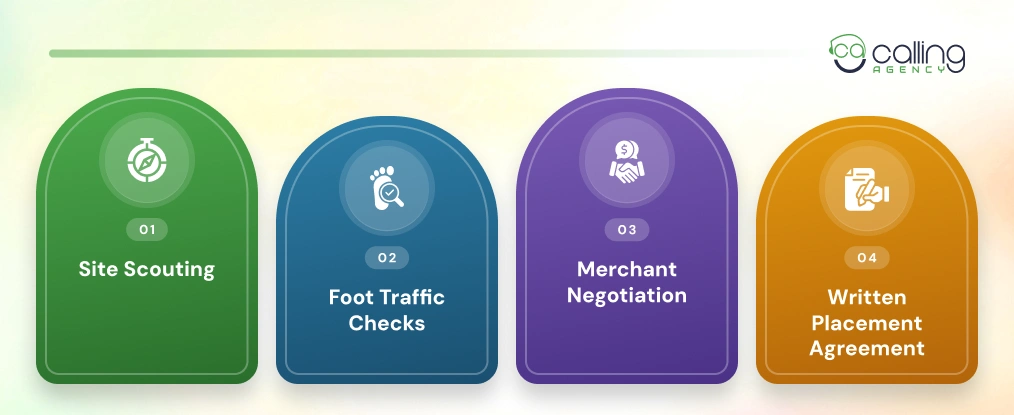
- Site scouting: scouting for businesses that attract many clients and where cash transactions are made frequently.
- Foot traffic checks: making sure the business has people coming in to keep the ATM busy.
- Merchant negotiation: talking with the business owner or manager to agree on placing your ATM.
- A written placement agreement: a contract that outlines the terms between you and the merchant.
However, not all locators provide all four services. Some locators only send a company list. If you plan to contact those businesses yourself, custom list building can help you identify the right companies and contacts. Very much unlike the case where the locator inspects the site, meets the owner, and draws up a contract. So check what you will be getting and ensure it is included in the contract.
What Is the Cost of an ATM Locator Service?
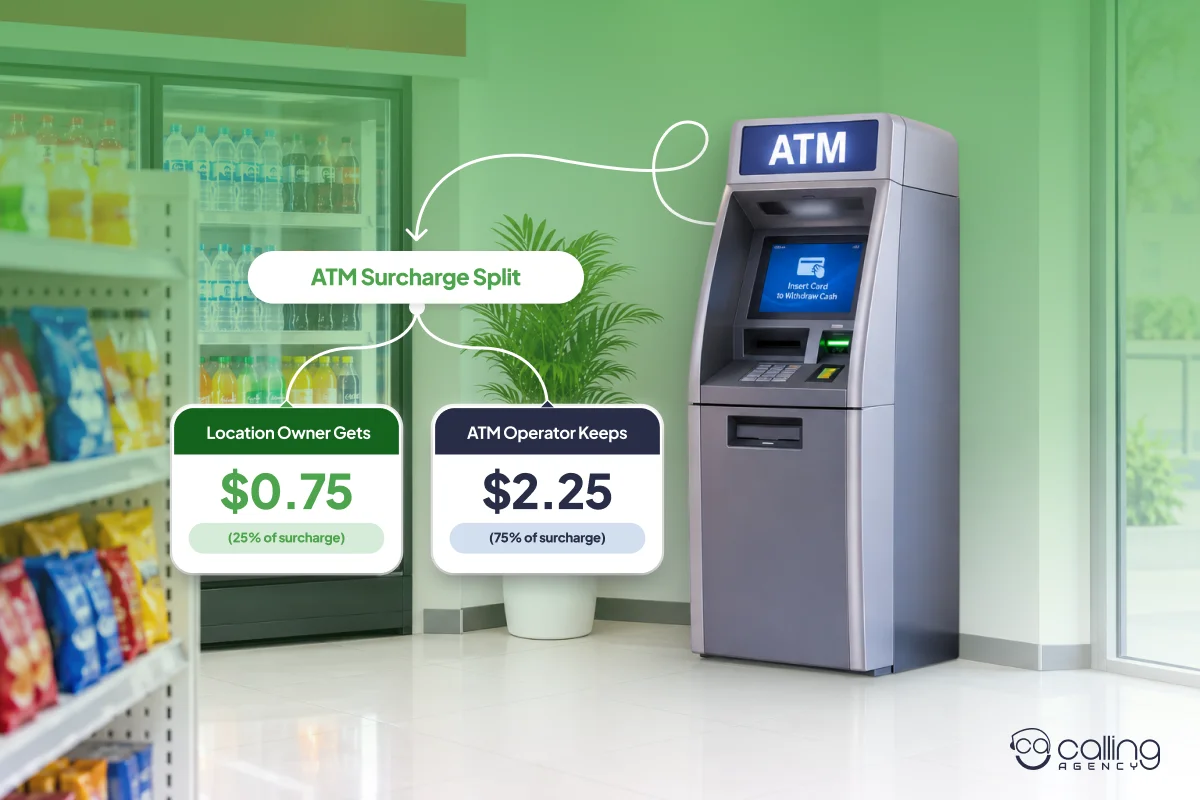
There is no official cost of an ATM locating service. The value of the site will be based on how many transactions it makes. The average owner surcharge, according to Bankrate’s 2025 ATM Fee Study is $3.22 per withdrawal. Your number of monthly transactions will dictate if the cost is worthwhile.
Locating Service Pricing Guide
| Offer | What you get | What sets the price |
| Per-location locating | One vetted site | Foot traffic and contract terms |
| Location package | Several vetted sites | Number of sites and region |
| Starter package with machine | Site plus ATM | Machine type and installation |
| Market analysis | Area demand review | Area size and research depth |
Costs to Plan For

- Machine and installation costs: You have to be sure to obtain a quote not only for the ATM but also for installation costs.
- Location fees: You have to pay for location fees such as monthly rental fees and transaction fees.
- Competing ATM networks: Be aware that many customers will not pay your surcharge.
How to Tell Whether the Fee Pays Back?
A locator’s fee is a gamble on a single number: how many individuals will utilize the ATM each month. You can check this prediction before paying.
Let’s begin with the surcharge. In its 2025 research, Bankrate estimates the average owner surcharge per transaction at $3.22. For instance, an ATM doing 300 transactions per month would generate $966 in surcharges prior to any division between the merchant and the locator and any processing fees. Note that the 300 figure is illustrative – replace it with your projection.
Now subtract the cost of the deal, the locator’s fee, the cost of the ATM itself and the merchant’s fee per transaction. If the deal only breaks even at transaction numbers that are unrealistic, it is a bad deal; however good it looks, the deal is a failure no matter how appealing its presentation is. Make sure to ask the locator about their assumptions and on what basis they are built.
When Does Federal Law Cover a Locator Deal?
Application of federal law takes place if the seller solicits you into a new business, you make a payment, and the seller promises locations, and the seller promises to provide you with locations for your equipment. Such things as ATMs are included in this group. In case all these happen, then the FTC Business Opportunity Rule (16 CFR Part 437) is applicable.
Under the terms of the rule, there should be a transaction in case of the following three situations:
- The seller persuades you into the new business relationship.
- You pay money to the seller or its affiliate.
- The seller tells you that he or she will provide locations for the equipment you possess, lease or pay for.
“Providing locations” is more complex than one thinks. This can include recommending a locator, giving you a list of locators, collecting a fee on a locator’s behalf, or helping you find your own locations.
What Should Be in the Disclosure Document?
The seller should give you this document at least seven calendar days before you sign a contract or pay money for a service, whichever comes first (16 CFR 437.2). What should it contain?
| Item | What it must show |
| Seller details | Name, address, phone, salesperson and date given. |
| Earnings claims | A yes or no box, plus an earnings statement if yes. |
| Legal actions | Fraud or deceptive practice cases in the past 10 years. |
| Refund policy | A yes or no box, plus all terms if offered. |
| References | Buyers from the past three years, with name, state and phone. |
| Receipt | A copy for you to sign and date. |
Before You Sign
- The sellers need to update this document quarterly, according to 16 CFR 437.3.
- This regulation does not apply where the transaction is a franchise pursuant to the Franchise Rule (437.8).
- Refer to the above references. These are your best sources.
This is general information, not legal advice. State laws may impose additional requirements.
Red Flags in a Locator Offer
The red flag in a locator offer is the promise of guaranteed money-making opportunities coupled with good location assurances. A standard fraud would be an exaggeration of the potential to make money coupled with good locations or professional locators.
Warning Signs to Watch
| Red flag | What it looks like | Your move |
| Big income promises | Ads claiming buyers net about $50,000 a year for a few hours weekly. | Ask for the written earnings statement. |
| Pressure to act fast | High-pressure sales and pushing you to sign right away (Alaska Department of Law). | Walk away and take your time. |
| Missing paperwork | The seller will not answer questions or give required disclosures (Alaska Department of Law). | Move on. |
| Fake references | In some cases, the references are paid shills, not real investors. | Call buyers, you find yourself. |
| Locator never delivers | In some cases, the promised locator services are never provided. | Get site details in writing first. |
How to Protect Yourself?
- Ask a lawyer, accountant or business advisor to read the paperwork before you sign.
- Check the seller with your state attorney general, your local consumer agency and the Better Business Bureau (FTC).
- Search the company name along with the words “complaint” or “scam” (FTC).
Questions to Ask Before You Pay
Questions never rattle good locators; take this sheet with you on your first call and record the answers.
- Can I have the disclosure document in writing and on what date are you providing it?
- Can I speak to three recent buyers and what are their contact details?
- What sites will I receive, and how did you verify the foot traffic at them?
- Who communicates with the merchant and who signs the placement agreement?
- What will happen in case the site closes or the machine isn’t used enough?
- What are the terms for a refund and are they listed in the disclosure document?
- Is there any exclusivity involved, and where is it stated?
- Who determines the surcharge amount and who maintains it?
- Is there any automatic renewal involved, and how do I cancel it?
When a seller runs away from your questions or says ‘that will be covered later when you sign’, he/she has just revealed much about the future transaction.
What a Locator Should Hand You
Before making any payments, if the rule applies, insist on the disclosure form and a signed receipt that should be sent to you at least seven days before making payments. The disclosure form should have information about the seller, suits, refund, references, and a signed receipt. Additionally, in case the seller makes any earnings claims, you should be provided with a written earnings claim.
Signed Agreement
The disclosure form is not an agreement; the agreement must include all promises in writing. Oral promises of “great locations” hold no weight if they’re not included in the agreement. You should have your lawyer review it.
Clauses to Check Before You Pay
| Clause | What to ask for | Why it matters |
| Low-volume exit | Right of cancellation if monthly transactions are less than a predetermined number. | Federal law does not require this, so you must negotiate it. |
| Exclusivity | Well-defined territory or confirmation that you do not have one. | Sellers cannot misrepresent exclusivity terms or sell overlapping exclusive territory. |
| Surcharge control | Which party sets the fee and which party retains it. | An operator cannot charge a fee unless the notice is shown and the user chooses to continue. |
| Auto renewal | Length of the renewal period and cancellation notice period. | Federal law does not set this, so read the fine print. |
Quick Checks
- Make contact with the references contained in the disclosure document.
- Any income guarantee will have to be weighed against the written statement of income.
- Get clear on what happens to your equipment if the facility closes down.
If Something Goes Wrong After You Sign the Contract
Savvy buyers have encountered some issues. If the locator has not delivered, take action quickly and document it. Obtain copies of the disclosure document, the receipt, the contract, any ads, and all the emails and text messages.
- Record the date and the content of the seller’s statements on each phone call.
- File complaints in writing and ask for a written response.
- Failing that, contact the state attorney general or consumer office in your state.
- Consult an attorney before you spend more money.
In addition, business opportunity sellers covered by the regulation have to keep certain records for three years.
Locator or Appointment Setter: Which Fits Your Route?
Choose an ATM placement appointment-setting service if you want meetings with merchants and plan to close the deals yourself. Operators who don’t have much selling time prefer locators. Operators who wish to have control over agreements prefer meetings.
| Factor | Locator | Appointment setter |
| What you get | Named sites or a site list | Booked calls or meetings with merchants |
| Who closes | Varies by provider | You |
| Your control | Lower | Higher |
| Federal angle | May fall under the Business Opportunity Rule | Telemarketing Sales Rule honesty limits |
The Legal Side
“Providing locations” by law (16 CFR 437.1) includes recommending a location finder, listing a location finder for you, or charging you to access a location finder.
Since May 16, 2024, B2B outbound compliance includes the TSR’s misrepresentation ban. In other words, making false representations when calling store owners about placing ATMs has become illegal under the final rule of the FTC.
How to Decide
- Choose a locator when time is of the essence, but request the disclosure document.
- Choose an appointment setter if you want to talk with owners and handle common ATM placement objections yourself.
- If you need ATM placement leads, ask about the provider’s lead qualification and what callers tell merchants.
- Put everything in writing.
Frequently Asked Questions
How much do ATM locations cost from an ATM locator?
There is no one price set or rate sheet to charge for ATM locations. The price varies depending on the quality of the spot, its location, and what the locator guarantees. Request a written quotation for each individual spot, and then evaluate the quoted price against the projected income from the ATM’s transactions.
Is it good for a newbie to buy atm locations?
Buying an ATM location can be a good idea, provided that you have investigated all the aspects of the location beforehand. It is not enough just to walk around the spot and decide whether or not it would work for you. In case the deal falls under the FTC Business Opportunity Rule, make sure to read the disclosure before signing, and ask for the written evidence of income projections.
Do atm locators promise that the sites they provide will work?
Only in case of such a promise in the contract. Verbal promises are not important. In certain cases, there were no promised services provided. Ask for written rules describing site conditions, consequences of site failure and refund/termination policy.
What should I do if the locator claims earnings?
It is a warning sign. In the case that a seller makes any sort of earnings claim, according to the rule, a seller must provide an earnings claim. Otherwise, you should stop dealing with such a seller. Hire an attorney or accountant to examine the documents. Also, check out the seller through your attorney general.
Is it possible to check out atm locations on my own?
Yes, it is possible. You can build a prospect list of ATM placement locations and contact high-traffic businesses such as bars, laundromats and convenience stores.
Final Thoughts
It’s better that a good ATM locator provides evidence, not assurances. Before signing the document, contact the references and carefully review the terms of the contract. If the seller makes guarantees of big earnings without providing a written earnings statement, leave him/her alone.
The four important contract clauses to be aware of are low volume exit, exclusivity, surcharge control and automatic renewal clause. It is up to those terms that risk will be transferred in case the location fails. Those clauses are not mandatory according to federal law, so ask for them in writing.
In addition, you have options. The locator provides you with the locations; an appointment setter helps you to set appointments so that you can make your deal. The same site-finding methods used to find vending machine locations work for ATMs.
Whichever option you select, check out everything before signing. Just a couple of hours of your time may prevent you from losing months of money.