

In freight, one person does not usually make every buying decision. The decision-maker changes depending on the service. The person who approves truckload rates may not handle warehousing or customs services. That is why you should target buyers based on the service you sell, not just their job title.
Here is a quick look at who typically makes the call for five major freight services, and how the size of the shipper and the type of transportation can influence that decision.
| Service Line | Owns the Decision | Signs the Contract | Can Kill the Deal |
| FTL, LTL, and brokerage | Transportation Manager | Director of Logistics | Procurement |
| Warehousing, distribution, 3PL | VP of Supply Chain | CFO or COO | IT and Operations |
| Forwarding, drayage, customs | Import or Export Manager | Director of Global Trade | Trade Compliance |
| Final mile and fulfillment | Head of Ecommerce Operations | VP of Operations | Customer Experience |
| Reverse logistics and returns | Returns or Aftermarket Manager | VP of Supply Chain | Finance |
Why Job Title Alone is the Wrong Filter
Freight buying authority does not always follow the org chart. Two things explain why.
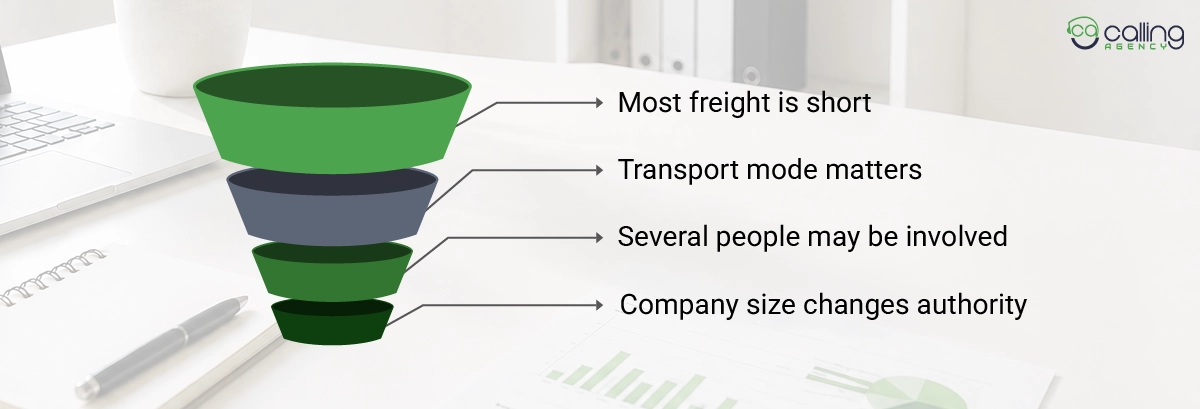
First, most freight is short: US Census Bureau Commodity Flow Survey data shows 56.4% of national tonnage traveled under 50 miles. Short-haul and regional moves are often decided at the site level by a plant manager, DC manager, or shipping manager. National contract lanes are usually decided at headquarters. So the same company can have different buyers.
Second, transport mode matters: Trucks moved 68.1% of tonnage and 73.5% of shipment value. This makes truck-side roles a common target and also a crowded one. Buyers responsible for forwarding, drayage, and returns usually hear from fewer vendors.
Third, several people may be involved: Gartner puts a complex B2B buying group at six to ten stakeholders. Freight decisions often involve cost, service, systems, and risk.
Finally, company size changes authority: A Logistics Manager at a 40-person distributor may control the budget. At a 4,000-person manufacturer, the same title may mainly handle dock scheduling. The job title tells you the function. Company size tells you the authority.
The Four Roles in Every Freight Buying Group
Before looking at each service line, know the four main roles involved in a freight deal.
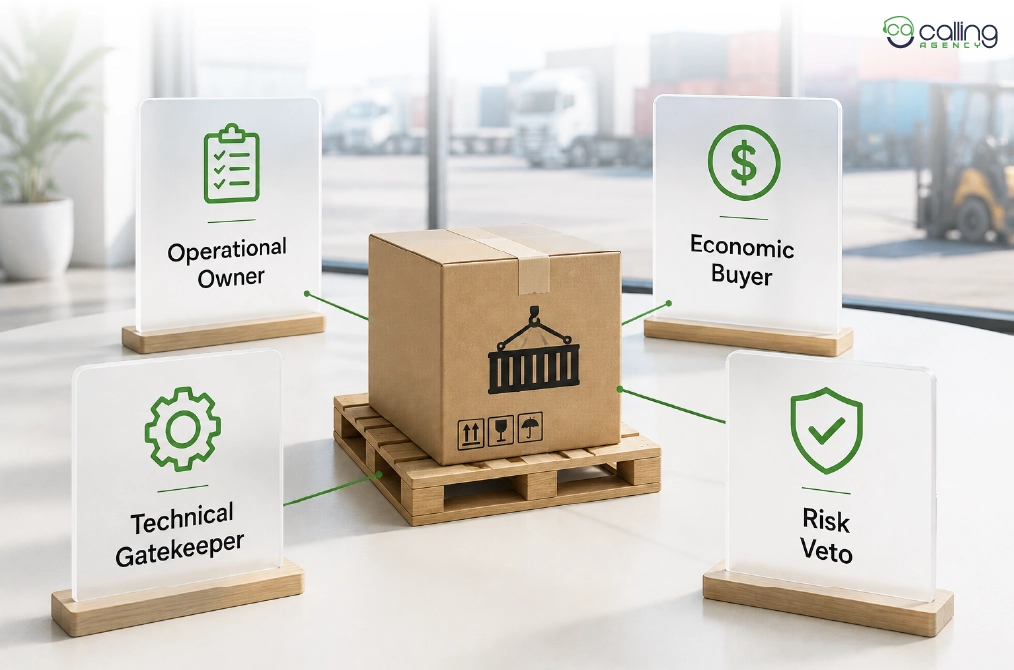
- Operational owner: Handles the service every day. Deals with proof of delivery, delays and detention charges. Usually does not control the budget.
- Economic buyer: Controls the freight budget. Focuses on freight audit, cost per shipment and total landed cost.
- Technical gatekeeper: IT checks EDI, API integration, Transportation Management System, WMS compatibility and visibility feeds.
- Risk veto: Usually safety, legal, insurance, or trade compliance. Checks operating authority, cargo insurance, and safety scores.
As a small shipper, one person may handle all four roles. At a large company, different people usually handle each role. Missing one of them can delay or stop the deal.
The Decision-Maker Map by Service Line
The right buyer depends on the freight service you sell. Each service line has a different owner, signer and person who can block the deal.
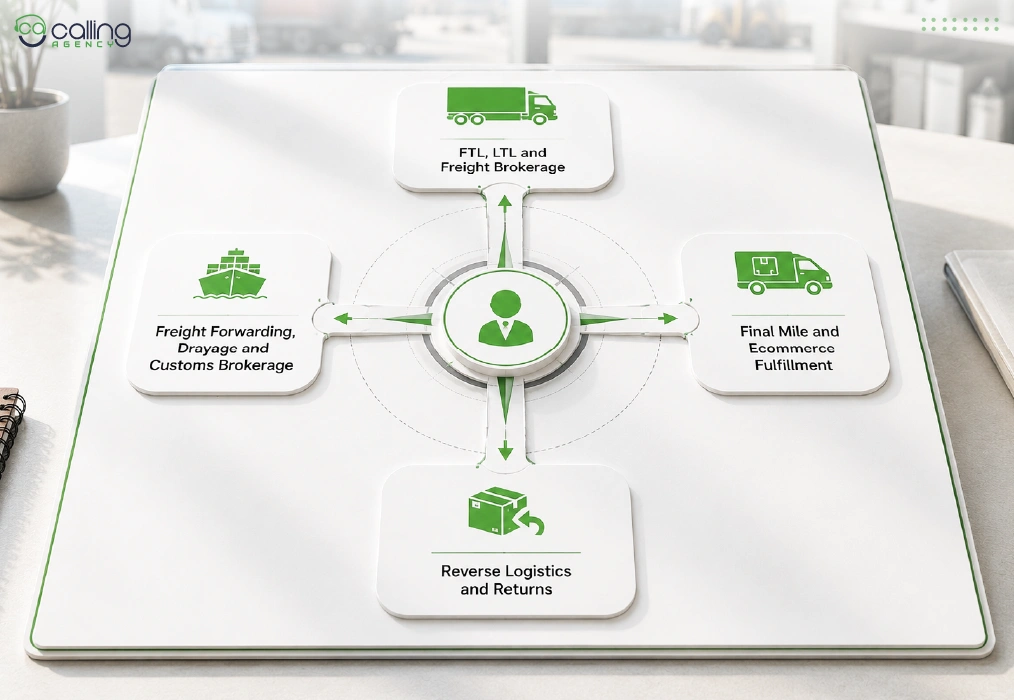
FTL, LTL and Freight Brokerage
For a freight broker, the buyer often depends on whether the freight is spot or contract.
- Owns it: Transportation Manager, Traffic Manager, Shipping Manager or Logistics Coordinator.
- Signs it: Director of Logistics or Director of Transportation for contract lanes.
- Kills it: Procurement if your rate misses the bid target, or the warehouse if service problems hurt operations.
Spot buyers move freight now. Buyers of contract freight wait for an RFP.
Qualifying question: Are you covering that lane on a contract rate, or buying it on the spot market?
Warehousing and Third-Party Logistics
Warehousing deals often involve several teams because they affect inventory, staffing, day-to-day operations, and the systems that keep everything running.
- Owns it: VP of Supply Chain, Director of Distribution or DC Manager.
- Signs it: CFO or COO.
- Kills it: IT over WMS integration, or Operations over capacity and labor.
These deals often take longer because several areas may need approval.
Qualifying question: When does your current warehouse agreement come up for renewal?
Freight Forwarding, Drayage and Customs Brokerage
International freight forwarders care more about ports, customs and compliance than domestic transportation buyers do.
- Owns it: Import Manager, Export Manager or International Logistics Manager.
- Signs it: Director of Global Trade or VP of Supply Chain.
- Kills it: Trade compliance, because classification or duty mistakes can create serious risk.
Focus on container volume, port pairs, per diem and demurrage charges.
Qualifying question: Which ports do you clear through, and who manages your customs broker?
Final Mile and Ecommerce Fulfillment
For ecommerce brands, fulfillment is closely tied to the customer experience. Buyers care about how quickly orders reach customers, how reliably they arrive, and whether the delivery experience matches what was promised at checkout.
- Owns it: Head of Ecommerce Operations, Fulfillment Manager, or DTC Operations Lead.
- Signs it: VP of Operations or, for a growing brand, the founder.
- Can block it: Customer Experience or Marketing.
These deals can move fairly quickly, especially when a brand is growing fast or preparing to scale. But poor performance during peak seasons can quickly lead to unhappy customers and put the renewal at risk.
Qualifying question: What delivery promise do you currently make to customers on your product pages?
Reverse Logistics and Returns
Returns often have less clear ownership than other logistics services.
- Owns it: Returns Manager, Aftermarket Services Manager, or DC Manager.
- Signs it: VP of Supply Chain.
- Kills it: Finance if the recovery value does not cover handling costs.
Focus on recovery rate and disposition cost instead of only capacity.
Qualifying question: Who owns your returns process today?
How the Map Shifts by Shipper Size
The service line tells you the buyer’s role. Company size tells you how many people are involved before a deal gets signed.
- Under roughly $50M revenue: One or two people often control the whole decision. This may be the owner, controller, or operations manager. Focus on the result, not RFP language.
- Roughly $50M to $500M: Logistics and procurement usually share authority. Contract cycles become more common, and one contact may not be enough.
- Above roughly $500M: More people join the buying process. The group now includes category managers, strategic sourcing, trade compliance and IT. Expect formal bids, vendor scorecards and long-term incumbent relationships.
A common outbound mistake is using enterprise messaging for mid-market shippers, or the reverse. Matching the message to the buying group size is one of the first things we set before any logistics lead generation campaign goes live. In our multichannel campaign for a supply chain solutions company, segmenting prospects by shipper size helped increase meetings from three or four a month to seventeen.
How to Confirm You Reached the Real Buyer
Job titles alone do not confirm who makes the decision. Three signals during a live call can help you identify the real buyer.
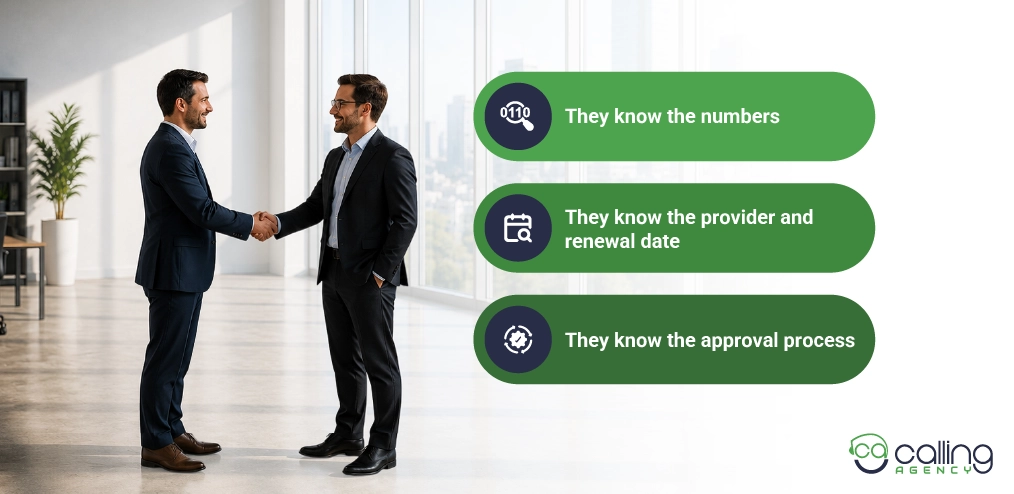
- They know the numbers: They can quickly share loads per week, average cost per shipment, or on-time delivery rates. Decision-makers usually know these numbers well.
- They know the current provider and renewal date: Someone tracking when a contract ends is usually involved in managing that contract.
- They know the approval process: “I would need to run it past our CFO” shows they understand the decision path. “I would have to check who handles that” usually means they do not.
If you do not see these signals, you may be speaking with an influencer or a gatekeeper. Do not ignore them. Ask a simple routing question such as, “Who owns the carrier network for the Midwest lanes?” They may give you the right contact.
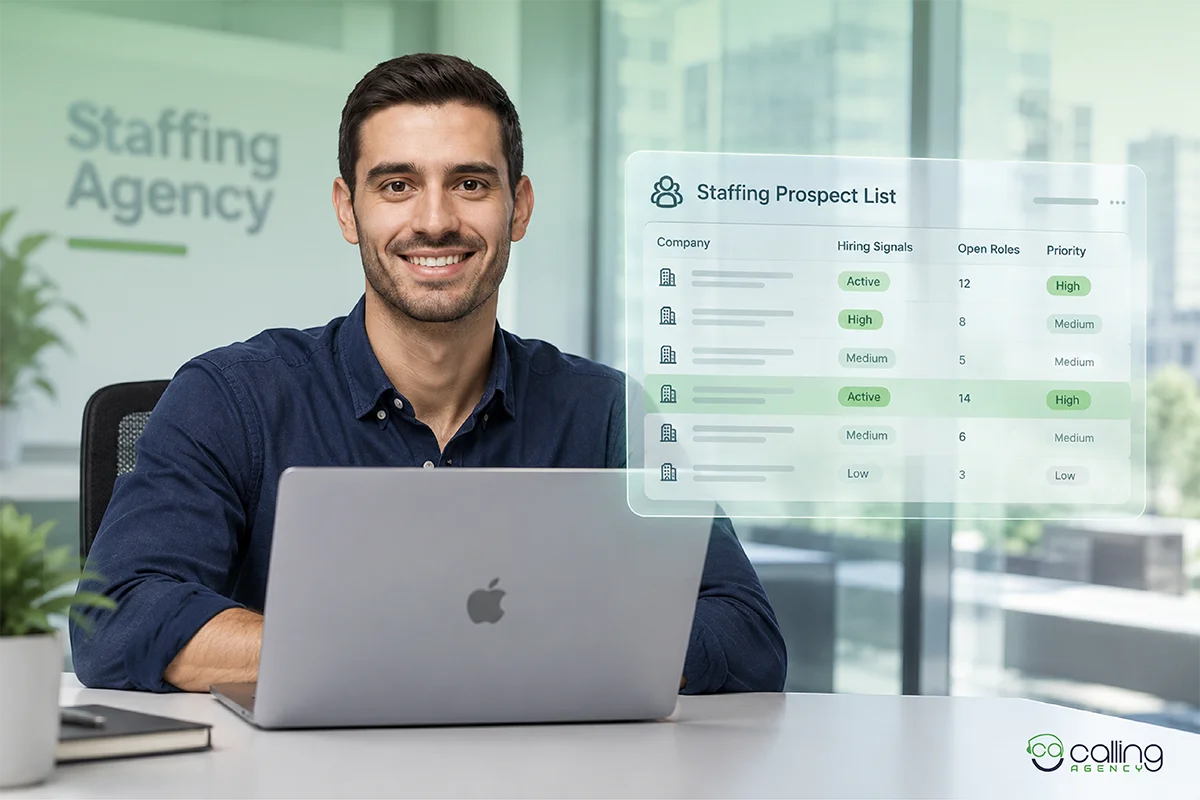
At scale, finding the right buyer starts with accurate data. A verified prospect list with service line, shipper size, and role authority can reduce wasted calls. This mapping supports our outbound campaigns built around freight decision-makers.
Frequently Asked Questions
Who is the main decision maker for logistics services?
There is no single one. Authority splits by service line. Truckload and LTL usually sit with a transportation manager and are signed by a director of logistics. Warehousing and 3PL sit with a VP of supply chain and are signed by finance. Forwarding and customs sit with an import or export manager and are gated by trade compliance.
What job titles buy freight services?
The recurring set is transportation manager, traffic manager, shipping manager, director of logistics, director of transportation, VP of supply chain, DC manager, import or export manager, director of global trade, and head of ecommerce operations. Which one holds authority depends on the service line and the size of the shipper.
Does procurement or logistics make the final call?
Logistics defines the requirement. Procurement runs the process and controls the award once a formal bid exists. Below roughly $50M in revenue, procurement is usually not involved at all. Above roughly $500M, procurement can block a deal that logistics already wants.
How many people are involved in a freight buying decision?
Gartner puts a complex B2B buying group at six to ten stakeholders. Freight sits at the high end because a logistics provider change touches cost, service, systems and risk. Small shippers compress all of that into one or two people.
How do I find the freight decision maker at a company?
Start from the service line you sell, not from a title list. Identify the function that lives with that service daily, confirm authority with the three call signals above, and use the operational owner to route you upward. Sales and customer service teams inside the target company will often name the freight owner faster than the freight department will.