


Business loan leads cost anywhere from $0.02 to $300, and the exact price depends on three things: the lead type, the loan product, and the acquisition channel. Aged data records sell for pennies. Live transfer calls sell for hundreds of dollars. Neither price tells you if the lead will actually fund a deal.
This guide breaks down real 2026 pricing across every major lead type, from MCA and SBA leads to shared, exclusive, and pre-qualified sources, plus what paid search, in-house SDRs, and outsourced appointment setting cost by comparison.
The stakes are high: the Federal Reserve Small Business Credit Survey reports that 38 percent of small employer firms applied for a loan, line of credit or merchant cash advance in the prior twelve months, and 22 percent of applicants received none of the financing they sought. Every wasted lead dollar is a borrower who never got funded.
Business Loan Lead Prices at a Glance
Business loan lead prices span from $0.02 to $300 per unit, and the type of lead is the single biggest price driver. This table breaks down every major lead type from raw data records to live transfer calls.
Pricing Table
| Lead Type | Typical Price | Best Suited For |
| Business data and list records | $0.02 – $0.20 | Bulk cold outreach, list building |
| Aged funding leads | $0.05 – $5 | High-volume dialers with follow-up systems |
| UCC, trigger and response leads | $0.20 – $0.75 | Renewal and re-funding campaigns |
| Real-time shared leads | $10 – $30 | Teams with fast speed-to-lead |
| Real-time exclusive leads | $30 – $150 | Brokers wanting first contact only |
| Pre-qualified and bank statement leads | $50 – $150 | Closers who need verified financials upfront |
| Live transfer calls | $50 – $300 | Immediate conversations, no cold dialing |
Why the Range is So Wide
- Raw data records carry no verification, so price stays near zero.
- Exclusivity and freshness push price up as competition for the borrower drops.
- Shared MCA leads cost less because more than one buyer may receive the same merchant record, while exclusive leads cost more because one buyer controls the follow-up from that lead source.
- Live transfers cost the most since the borrower is already engaged and ready to talk.
Why the Same Borrower Costs $2 or $200?
The price gap comes from four factors: intent recency, exclusivity, verification depth and delivery method. The same business owner’s data can sell for $2 as a stale, unverified record, or $200 as a fresh, exclusive, phone-verified lead ready to talk.
Business loan lead cost depends on exclusivity and freshness: aged or list leads run roughly $0.50 to $5, real-time shared leads $10 to $30, exclusive real-time leads $30 to $150, and live transfers $50 to $300. Cheap leads are old, shared and unverified. Expensive leads are fresh, exclusive, verified and delivered as a live call.
Understanding cost per lead helps brokers judge whether a higher price actually brings a better return.
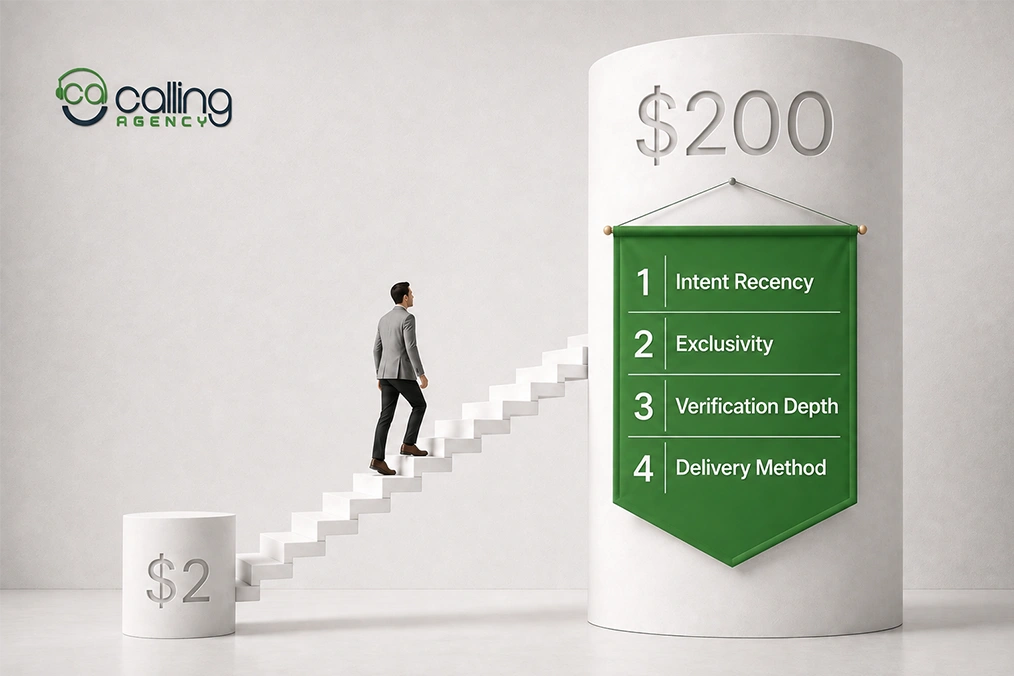
Intent Recency
A lead from someone who searched for funding minutes ago still has active buying intent. One collected weeks ago has often already found a lender or lost interest, so it sells for cents.
Exclusivity
Exclusive leads offer higher conversion rates, stronger client relationships and better long-term value because only one buyer competes for the borrower’s attention, unlike shared leads sold to several brokers at once.
Verification Depth
Established lead providers with strict verification processes charge more than aggregators who sell unverified data. Confirmed revenue, credit band and time in business raise the price.
Delivery Method
Live transfers, where the borrower is already on the phone, cost the most. Email or CRM delivered leads cost far less since the broker still has to make first contact.
Lead Pricing by Loan Product
Business loan lead prices range from $0.02 to $300, and the loan product is the biggest price driver after exclusivity. Short-term, high-volume products like MCA sit at the bottom of the range. Complex, high-ticket products like SBA and commercial real estate sit at the top, since fewer borrowers qualify and each deal pays a much larger commission.
Pricing Table by Loan Product
| Loan Product | Aged / Data Leads | Shared / Real-Time Leads | Exclusive / Live Transfer |
| MCA lead | $0.02 – $0.50 | $10 – $30 | $30 – $150+ |
| Working capital and term loans | $0.50 – $5 | $10 – $30 | $30 – $150 |
| Business line of credit | $0.50 – $5 | $10 – $30 | $30 – $150 |
| Equipment financing | $25 – $75 | $50 – $100 | $100 – $200 |
| Invoice factoring and A/R financing | $10 – $30 | $30 – $75 | $75 – $200 |
| SBA loan leads | $5 – $20 | $50 – $100 | $100 – $150 |
| Commercial real estate | $1 – $9 | $30 – $50 | $50 – $200+ |
Why MCA Leads Sit at the Bottom
MCA leads typically cost between $0.02 and $150+ depending on the lead type, intent level, and recency. High supply and fast approval cycles keep the low end cheap. For scale outreach, aged MCA data is the standard entry point since aged MCA leads range in price from $0.05 to $0.50 per lead, depending on the age of the lead.
Why SBA and CRE Sit at the Top
SBA and business loan leads typically cost $100 to $150 per lead, and are often sold to multiple brokers, with exclusive generation improving close rates. Commercial real estate follows a similar pattern: the cost to generate a single commercial real estate loan lead runs around $50, while leads bought directly from a lender vault can cost $1 to $9 each
What Each Acquisition Channel Costs?
Cost per lead swings from $0.02 to $600 depending on the channel, since each channel buys a different amount of intent, exclusivity, and human labor. Shared data costs least, live conversations cost most, and paid media and staffing sit in between.
Channel Pricing Table
| Channel | Typical Cost | Unit |
| Shared real-time leads | $10 – $30 | Per lead |
| Exclusive real-time leads | $30 – $150 | Per lead |
| Live transfers | $50 – $300 | Per call |
| Paid search (Google Ads) | $50 – $150 | Per lead |
| In-house SDR | $110,000 – $160,000 | Per rep, per year |
| Outsourced appointment setting | $80 – $250 | Per qualified meeting |
Paid Search Runs High for Finance Keywords
Lead generation campaigns on Google Ads typically cost $50 to $150 per lead, but finance keywords push toward the top of that band. Finance has a lower cost per click but one of the worst conversion rates, at 2.55%, which drives the cost per lead up significantly.
In-House SDRs Cost More Than the Salary Line
A fully loaded in-house SDR runs roughly $110,000 to $160,000 per year once salary, tools, ramp time and management are added. Outsourced models avoid that fixed cost. B2B appointment setting costs roughly $80 to $250 per qualified meeting when fully-loaded spend is divided by meetings that actually reach the calendar.
Where to Go Next
Not every lead source deserves the same budget. Our list building service page covers the filters worth paying for, and the business lending cold call scripts, cold email templates, and LinkedIn message templates for business loan companies show what the outreach itself looks like once the leads or lists arrive.
The Number That Decides Your Budget: Cost Per Funded Deal
Cost per funded deal equals total spend divided by loans that closed, and it is the only number that tells you if a cheap lead is actually cheap. Aged leads at $2 each, exclusive real-time leads at $80 each, and booked qualified appointments at $150 each can each win, depending on how many turn into funded loans, not on the sticker price.
The Math Behind Each Source
| Lead Source | Price Each | Spend on 100 Units | Est. Funded Deals | Cost Per Funded Deal |
| Aged leads | $2 | $200 (100 leads) | 1 | $200 |
| Exclusive real-time | $80 | $4,000 (50 leads) | 6 | $667 |
| Booked qualified appointments | $150 | $3,000 (20 appointments) | 8 | $625 |
Why the Cheapest Lead is Not Always the Cheapest Deal
- Aged leads look cheap per unit but need heavy call volume, since most contacts have gone cold.
- Exclusive real-time leads cost more per unit but reach the borrower before competitors do.
- Exclusive leads offer higher conversion rates, stronger client relationships, and better long-term value than shared or aged sources.
- Booked appointments cost the most per unit but skip the contact and qualify steps entirely, which is why brokers who buy pre-qualified business loan appointments booked with verified borrowers often see a lower cost per funded deal despite the higher sticker price.
How to Calculate It Yourself
The full formula for folding staff time and tooling into this number lives in our walkthrough of customer acquisition cost. Real numbers from a funded pipeline that made this switch are laid out in the Elite 1 Finance case study.
Small Business Lending Is Growing
In fiscal year 2024, the SBA supported 103,000 financings to small businesses, the highest level since 2008, with capital impact rising to $56 billion, a 7% increase over fiscal year 2023.
What Compliance Adds to the Real Price
Compliance adds a hidden cost layer on top of the sticker price of any lead, and skipping it can cost far more than the lead itself. TCPA rules, state disclosure laws and consent tracking all raise the real price of a lead.
Every non-compliant call carries legal risk on top of its purchase price. Standard TCPA violations run up to $500 per call, and willful violations reach $1,500 per call, with no cap on total damages. One bad list can turn a $2 aged lead into a $500 liability the moment a call gets made.
Where the Extra Cost Comes From
- DNC scrubbing against the National Do Not Call Registry before every call.
- Consent verification, since the FTC’s Telemarketing Sales Rule requires disclosure and subjects violators to a civil penalty of over $53,000 per violation.
- State disclosure compliance, since several states now require commercial financing terms disclosures.
- Legal defense reserves, since class-action TCPA suits regularly settle for millions.
A compliant lead costs more upfront but avoids five- and six-figure exposure later.
How to Set a Lead Budget You Can Defend?
A defensible lead budget starts from your loan commission per deal, not from what competitors spend. Work backward from your average commission, target LTV: CAC ratio, and cost per funded deal to set a number you can justify to any partner or lender.
The industry standard for a healthy LTV: CAC ratio is 3:1 or better, meaning every dollar spent acquiring a customer should generate at least three dollars in lifetime value. Apply that ratio to your average commission per funded loan to set a per-lead ceiling you can defend with math, not guesswork.
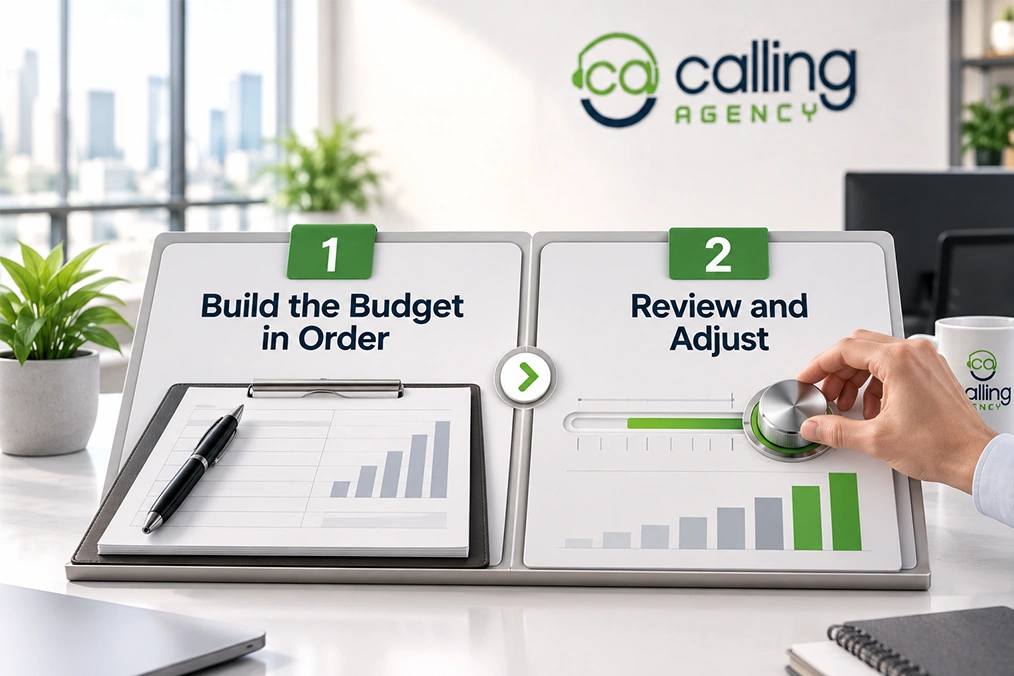
Build the Budget in Order
- Calculate average commission per funded deal.
- Divide that commission by 3 to set your maximum cost per funded deal.
- Track cost per lead, contact rate, and close rate separately, since a cheap lead with a low close rate can still miss the target.
- SBA’s Strategic Marketing guide recommends businesses allocate 7 to 8 percent of revenue to marketing, a useful starting point before you refine the number using your own LTV: CAC math.
- If your budget cannot absorb the volatility of shared or aged leads, shifting part of the spend to pay-per-appointment lead generation turns a variable cost into a predictable one, since you only pay when a qualified meeting is booked.
Review and Adjust
- Recalculate monthly, not annually, since lead prices shift by season and competition.
- Cut sources below your ratio threshold before adding new budget.
Frequently Asked Questions
What is a fair price for an exclusive business loan lead?
A fair price runs $30 to $150 per exclusive lead, depending on product and revenue tier. SBA and CRE leads sit higher; MCA and working capital leads sit lower in that range.
Are aged business loan leads worth the low price?
Yes, if you have volume and a follow-up system. At $0.50 to $5 each, even a 1% close rate can beat expensive leads with weak contact rates.
How much do MCA leads cost compared to SBA loan leads?
MCA leads run $0.02 to $150+ depending on type. SBA leads run $100 to $150 at the exclusive tier, since larger loan sizes and stricter qualification justify the higher price.
Is it cheaper to buy leads or book appointments?
Appointments cost more upfront, $150 to $600 each, but often produce a lower cost per funded deal because the contact and qualification work is already done.
Why do live transfers cost so much more?
Live transfers put the borrower on the phone instantly, skipping missed calls and cold outreach entirely. That immediate access and higher close rate justify $50 to $300 per transfer.