

Most businesses invest heavily in lead generation, running ads, building landing pages, and collecting contact details. But 79% of leads never convert into sales because of poor lead nurturing.
One of the most successful lead-nurturing strategies in merchant services is guiding prospects through the sales funnel with targeted email marketing and marketing automation.
SDR using those strategies see up to a 50% increase in sales-ready leads at a 33% lower cost. That’s a massive advantage, especially when you’re dealing with high-value services like merchant accounts, payment gateways, and POS systems.
How to navigate the lead the right way? Which strategy works the best? Let’s get a closer look at that.
| TL;DR
Lead nurturing in merchant services is about guiding prospects through the sales funnel with the right content, timing, and follow-ups. When sales and marketing are aligned, you can turn cold leads into long-term payment processing clients more consistently and efficiently. |
What Is Lead Nurturing in Merchant Services?
Lead nurturing campaigns in merchant services is the process of building relationships with potential clients, such as business owners seeking payment processing, merchant accounts, or POS systems. You can do that by guiding them through the sales funnel until they’re ready to convert.
Mainly, it’s not about pushing for an instant sale. It’s about staying relevant, building trust, and providing the right information at the right time.
Most merchants don’t switch their payment processor overnight. They compare interchange fees, worry about PCI compliance, and evaluate different payment gateways before making a decision. That’s where you need to do lead nurturing comes.
Instead of letting those merchant leads go cold, you engage them through:
- Email marketing campaigns that educate and follow up
- Drip campaigns that deliver value over time
- Lead segmentation to send personalized offers
- Marketing automation to stay consistent without manual effort
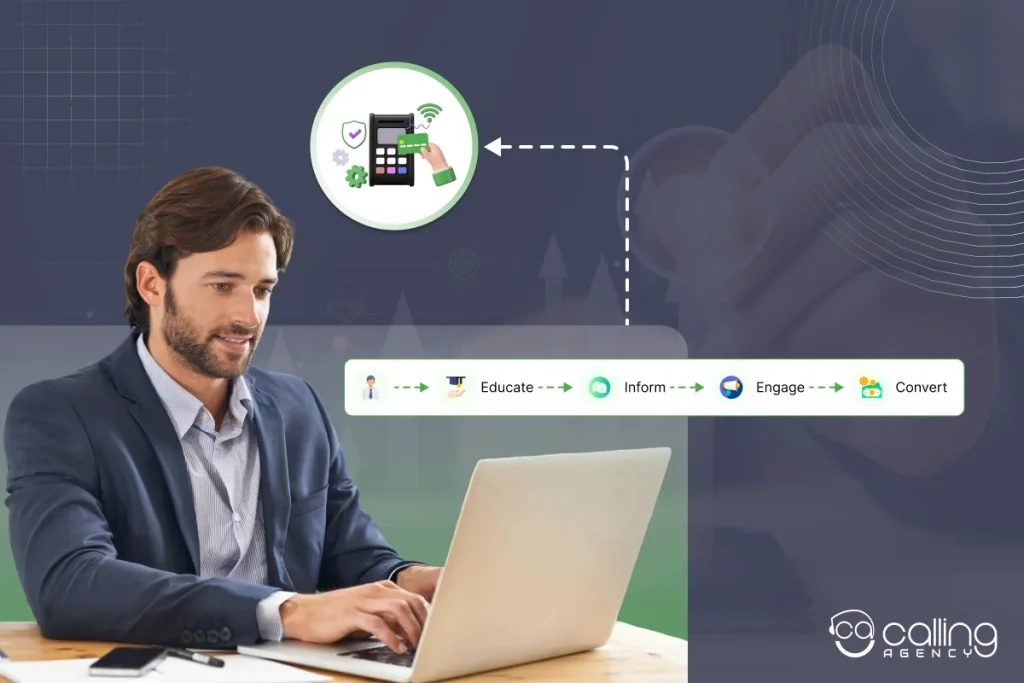
The main point is to move leads step by step through the customer journey from awareness to consideration to decision. Not forcing it, but by improving your conversion rate optimization (CRO).
5 Lead Nurturing Strategies For Merchant Services
So instead of chasing quick wins, I focus on nurturing leads the right way. Here are strategies I personally use that you can apply right away.
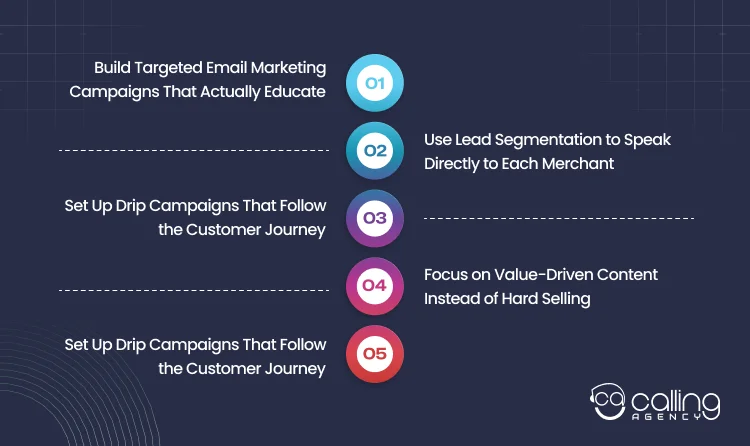
1. Build Targeted Email Marketing Campaigns That Actually Educate
Email marketing campaigns focus on leading the prospect deeper into the sales funnel with information and trust building and eventually generating leads.
You should focus on educating, not selling. When you explain things like hidden fees or how a better payment gateway can improve their business, you position yourself as someone they can trust. Over time, this builds authority and keeps you top of mind.
2. Use Lead Segmentation to Speak Directly to Each Merchant
Not all leads are the same, and I learned this the hard way. A small retail store and a high-risk business need completely different messaging.
That’s why I use lead segmentation. I group leads based on business type, transaction volume, or whether they need a POS system or a high-risk merchant account.
When you tailor your message like this, your conversion rate optimisation (CRO) improves naturally because you are speaking directly to their needs.
3. Set Up Drip Campaigns That Follow the Customer Journey
I don’t rely on one follow-up. I build drip campaigns that guide leads through the full customer journey.
For example, I start with educational content, then move into comparisons of payment processors, and finally share case studies or offers. This step-by-step approach keeps leads engaged without overwhelming them.
You can automate this with marketing automation tools, saving time and ensuring consistency across your merchant sales funnel.
4. Focus on Value-Driven Content Instead of Hard Selling
Early on, I made the mistake of pushing offers too quickly. It did not work.
Now I focus on content marketing that solves problems. I create guides, short explainers, and even simple breakdowns of chargebacks or recurring payments.
When you consistently deliver value, leads start seeing you as a trusted partner rather than just another sales rep. That trust is what drives long-term conversions in B2B fintech marketing.
5. Align Your Sales Handoff to Close Leads Faster
One thing I never ignore is the transition from marketing to sales. A messy sales handoff can ruin all your nurturing efforts.
I make sure that every lead passed to the sales team includes clear details from the CRM, like their pain points, business type, and previous interactions. When you do this right, your sales pipeline flows more smoothly, your team follows up more effectively, and your chances of closing the deal increase significantly.
How to Build a Lead Nurturing Framework for Merchant Services?
A lead nurturing framework turns cold contacts into closed deals. For merchant services, it structures every follow-up around payment pain points, bridging merchant service lead generation with consistent, conversion-focused outreach.
So, to do that, you build a framework like this:
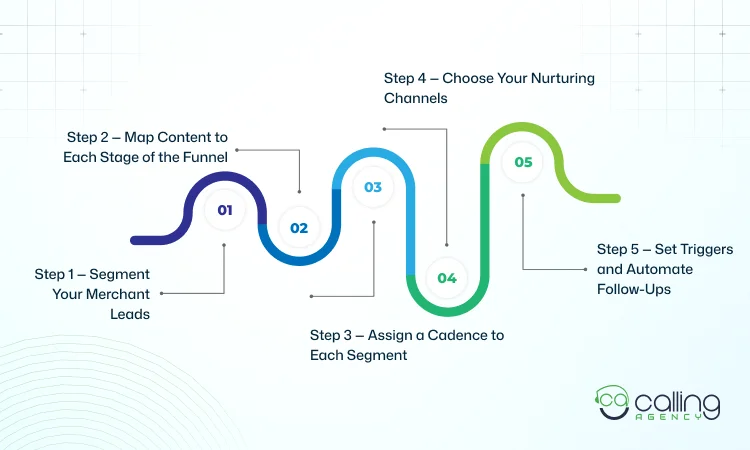
Step 1 — Segment Your Merchant Leads
I never treat all leads the same because that’s the fastest way to lose conversions.
So, I start by organizing leads based on factors such as business type, transaction volume, and whether they need a payment gateway, a POS system, or a high-risk merchant account. This is where lead segmentation becomes powerful.
When you segment properly, your messaging becomes more relevant. You are no longer sending generic offers.
Step 2 — Map Content to Each Stage of the Funnel
Once I have my segments, I map content to the customer journey.
At the top of the sales funnel, I focus on awareness. I create simple content explaining payment processing, interchange fees, and common issues when switching payment processors.
In the middle stage, I move into comparisons, benefits, and case studies. At the bottom, I focus on decision-driven content like offers, demos, or consultations.
You should think of this step as guiding your lead step by step rather than throwing everything at them at once.
Step 3 — Assign a Cadence to Each Segment
Timing matters more than most people realize. I used to either follow up too much or not enough, and both hurt results. Now, I assign a clear merchant follow-up schedule using drip campaigns.
For example, a new lead might receive emails every 2 to 3 days, while a warmer lead receives more frequent, targeted follow-ups.
You need to find a rhythm that keeps you present without being annoying. A well-planned cadence improves engagement rates and shortens your sales cycle.
Step 4 — Choose Your Nurturing Channels
I don’t rely on just one channel. Different leads respond differently. Like IT leads react differently than merchant leads. So, I usually combine 4 nurturing channels like:
- Email marketing campaigns for consistent communication
- Retargeting ads to stay visible
- Content like blogs or case studies for education
- Occasional SMS or direct outreach for high-intent leads
So, which channel should I choose?
I get these questions a lot from new SDRs. But the thing is, there is no right answer. You should choose channels based on where your audience spends time.
However, if you are doing B2B marketing, especially in fintech marketing, email and content still perform extremely well when done right.
Step 5 — Set Triggers and Automate Follow-Ups
This is where everything becomes scalable. I set up marketing automation rules based on actions.
For example, if a lead clicks on a pricing email or visits a landing page about merchant accounts, they automatically move to a more sales-focused sequence. This is different from the janitorial lead sequence, so keep that in mind.
You can also assign lead scoring to identify high-intent prospects and prioritize them in your sales pipeline.
When you automate follow-ups like this, you never miss an opportunity, and every lead gets the right message at the right time without manual effort.
Email Nurturing Sequences for Merchant Services
The good news is, when you structure your email marketing campaigns properly, the numbers start growing into 40% – 50%. Here’s how I structure my email sequences depending on where the lead is in the sales funnel.
Cold Lead Email Sequence (Months 1–3)
Cold emails only work if they are used with a proper follow up plan and target to build trust. These cold email frameworks follows this strategies:
- Week 1: Welcome email + simple intro to merchant services
- Week 2: Educational email about reducing payment costs
- Week 3: Guide on choosing the right payment gateway
- Week 4+: Case studies and real examples
Cold email sequences usually see open rates between 15% to 25%, but with proper lead segmentation, I’ve seen it go above 30%.
The goal here is simple. Stay consistent and become familiar. So, when they are ready, they think of you first.
Warm Lead Email Sequence (Active Evaluation Stage)
This is where things get interesting. Warm leads are already comparing providers, evaluating payment processors, and considering a switch.
Here, I shift my strategy from education to conversion. I send more targeted emails focused on:
- Pricing breakdowns and savings
- Benefits of your merchant account
- Comparisons with competitors
- Demos or consultation offers
I also increase frequency because timing matters during this stage of the customer journey.
Warm leads typically have open rates of 27.5% to 30% and much higher click-through rates (CTR). In fact, nurtured leads at this stage can convert up to 20% more than non-nurtured leads.
If you do this right, you shorten your sales cycle and move leads through your sales pipeline faster.
Re-Engagement Sequence for Inactive Leads
Inactive leads are not dead leads. I’ve reactivated plenty of them with the right approach.
If someone stops engaging, I trigger a re-engagement sequence using marketing automation. The goal is to bring them back into the funnel without being pushy.
Here’s what I usually send:
- A “still interested?” style email
- A new offer or incentive
- Updated insights about payment solutions
- A quick win tip, like reducing PCI compliance risks
Re-engagement emails often have lower open rates, around 10% to 20%. But they can recover 5% to 15% of inactive leads. This is huge considering these leads were almost lost.
Content Assets That Support Merchant Services Lead Nurturing
The content you use matters a lot. You can’t use fluff stuff and expect a rise in ROI. When I started taking lead nurturing for merchant services seriously, one thing became obvious really fast. Emails alone are not enough. What actually moves leads through the sales funnel is the content you attach to those emails.
Here are the core assets I always use, along with how you can apply them.
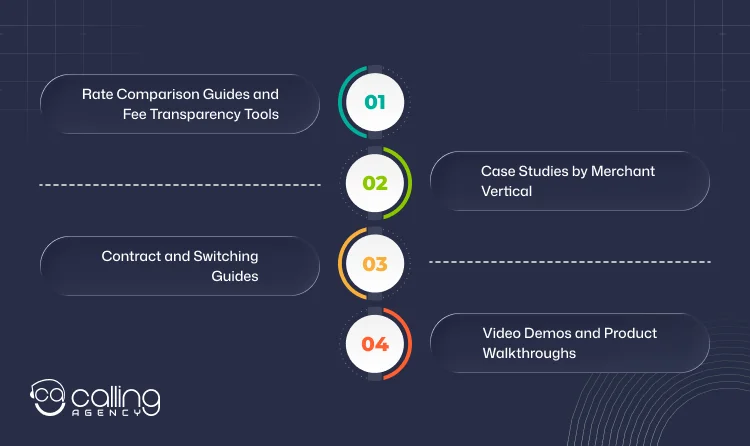
1. Rate Comparison Guides and Fee Transparency Tools
This is one of the most powerful assets I use, especially in the payment processing space, where pricing confusion is a huge barrier.
I create simple rate comparison guides that break down interchange fees, monthly charges, and hidden costs. Sometimes I also include interactive or visual tools to compare different payment processors.
It works because around 60% of merchants say unclear pricing is the main reason they delay switching providers. So, when you give clear things, you stand out from the crowd.
When you provide transparency, you instantly build trust. And trust is what drives conversions in merchant services.
2. Case Studies by Merchant Vertical
Generic case studies don’t work well. I always make them based on the merchant’s industry. For example, I’ll create separate case studies for:
- Retail businesses using POS systems
- E-commerce brands using payment gateways
- High-risk businesses needing specialized merchant accounts
This is where lead segmentation and personalization come together.
Case studies can increase conversion rates by up to 70%, especially when the lead sees a business like theirs succeed with your solution.
You are not just telling them it works. You are showing proof within their own context.
3. Contract and Switching Guides
Switching payment processors can feel risky for most merchants. They worry about downtime, hidden clauses, and long-term contracts. So I create simple guides that explain:
- How to switch providers step-by-step
- What to look for in contracts
- How to avoid early termination fees
- What happens during onboarding
This type of content reduces friction in the customer journey.
In fact, studies show that over 50% of B2B buyers delay decisions due to perceived complexity. When you simplify the process, you remove that hesitation and move leads through your sales pipeline faster.
4. Video Demos and Product Walkthroughs
Sometimes, instead of explaining, I just show. I use short video demos to walk through dashboards, POS systems, reporting features, or how a payment gateway integrates with a business.
Video content is incredibly more effective than you think.
It can increase engagement rates by over 80% and improve conversion rates by up to 30% compared to text-only content.
This is often the tipping point for warm leads in the evaluation stage. They get to see exactly how your solution works before making a decision. This way, you can easily break through the lead-to-sale gap.
CRM and Automation Tools for Merchant Services Lead Nurturing
I’ve learned pretty quickly that spreadsheets and manual follow-ups just don’t cut it nowadays. Leads go cold fast, especially when they’re comparing payment processors, checking merchant accounts, or exploring payment gateway options.
So instead, I keep things simple and structured with a mix of CRM and automation tools. I usually rely on tools like:
- HubSpot to keep all my leads in one place and track what each merchant is actually doing in the sales funnel
- Salesforce, when things get more complex, and I need stronger pipeline management
- Zoho CRM when I want something lighter but still effective for everyday lead management
Then I let automation do the follow-up work for me:
- Active Campaign helps me set up simple drip campaigns and trigger emails based on user behavior
- Mailchimp is what I use for basic email marketing campaigns and staying in touch without overthinking it
Once you connect everything properly, it just feels easier. Instead of chasing every lead, you’re naturally guiding them through the customer journey, and that’s what actually improves conversions in merchant services.
How to Align Sales and Marketing in Merchant Services Nurturing?
When I first started working with merchant services leads, I noticed something pretty quickly. Most of the problems weren’t even about lead quality.
It was sales and marketing, not really talking to each other. Marketing would bring in leads. Sales would complain they’re “not ready.”
And in the middle, good prospects just… go cold, especially when they’re still comparing payment processors and merchant accounts or figuring out payment gateways.
Once I fixed that gap, things started flowing way better. Here is what we do:
Build Feedback Loops Between Teams
I always encourage sales to tell marketing what’s working and what’s not. For example:
- Which email marketing campaigns are bringing in real conversations
- Which leads are dropping off in the funnel
- What objections are merchants raising about fees or payment processors
This feedback helps marketing adjust content and improve conversion rate optimization (CRO) over time.
Align Messaging Across Every Stage
One thing I always double-check is consistency. If marketing says one thing and sales says another, trust drops immediately. So I make sure:
- Ads, emails, and landing pages all match
- Sales pitches reflect the same value points
- Content stays consistent around the merchant services benefits
This creates a smoother experience for the merchant throughout the sales funnel.
Automate The Handoff Process
Finally, I don’t rely on manual handoffs anymore. I use automation to pass leads from marketing to sales when they’re ready.
I set triggers based on behavior, like visiting pricing pages or engaging with multiple emails. Once a lead is warm, it automatically moves into the sales queue.
So, yes, those things can easily turn the lead into customers in no time.
Warp Up
So, lead nurturing in merchant services only works when everything is connected: your messaging, your timing, and especially your sales and marketing teams. When you stop treating leads as one-off contacts and start guiding them through a proper customer journey, things become much more predictable.
At the end of the day, it’s not about chasing more leads. It’s about handling the ones you already have more effectively.
So, more of them turn into long-term merchant services clients.