


To get gym and fitness center cleaning contracts, confirm your insurance and staffing capacity first, then target facilities large enough to outsource. Most gyms will not schedule a walkthrough without proof of general liability coverage, workers’ compensation and a crew that can handle locker rooms, cardio floors and equipment at the same time the kind of professional commercial cleaning services larger facilities expect from a vendor.
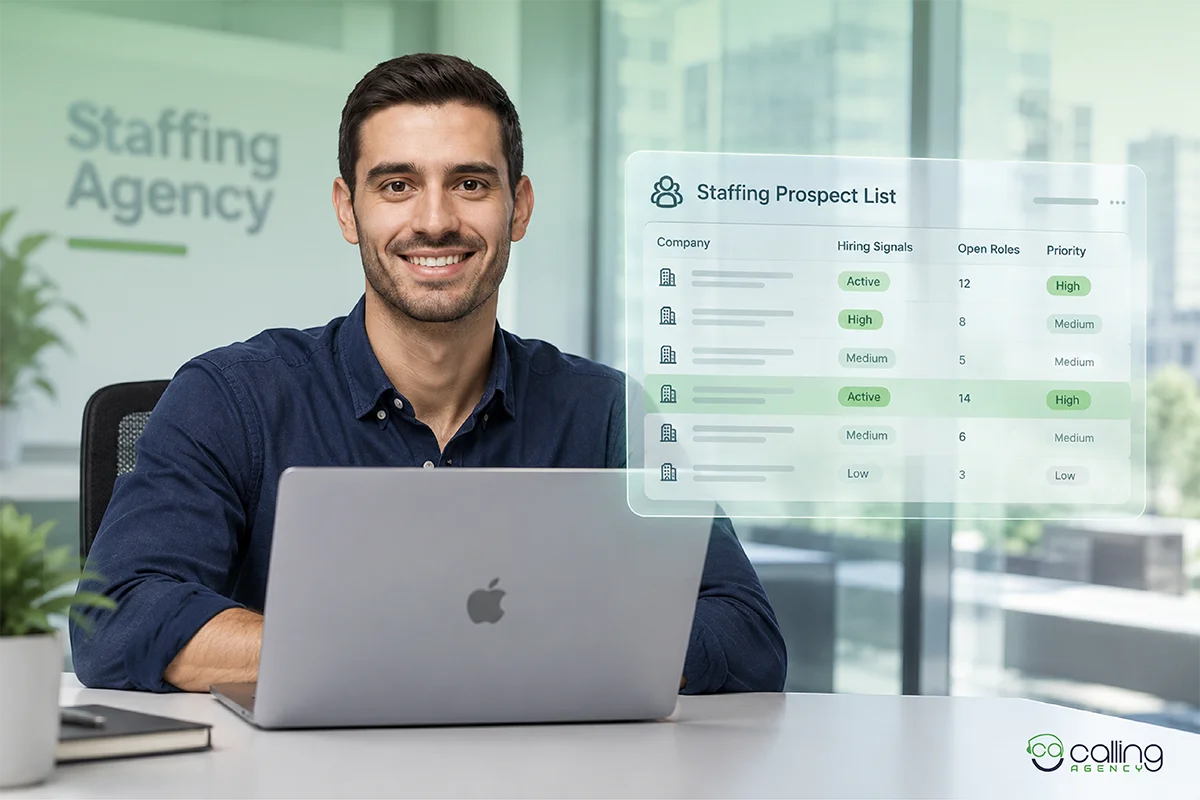
Once your paperwork is ready, the real work starts with finding the right contact. Front-desk staff cannot approve vendors, so pitching them wastes time. Facilities managers and regional operations directors control the budget, and they respond to specific offers, not generic pitches. Finding qualified commercial cleaning leads helps you focus your outreach on the people most likely to approve a cleaning contract.
This guide breaks down the exact steps, from building your target list to pricing by zone and expanding one contract into several through the same ownership network.
Gym Cleaning Contracts: The 7-step Process
Get contracts, demonstrate your ability to operate, then seek facilities by size and price per zone and build off of the accounts that you have.
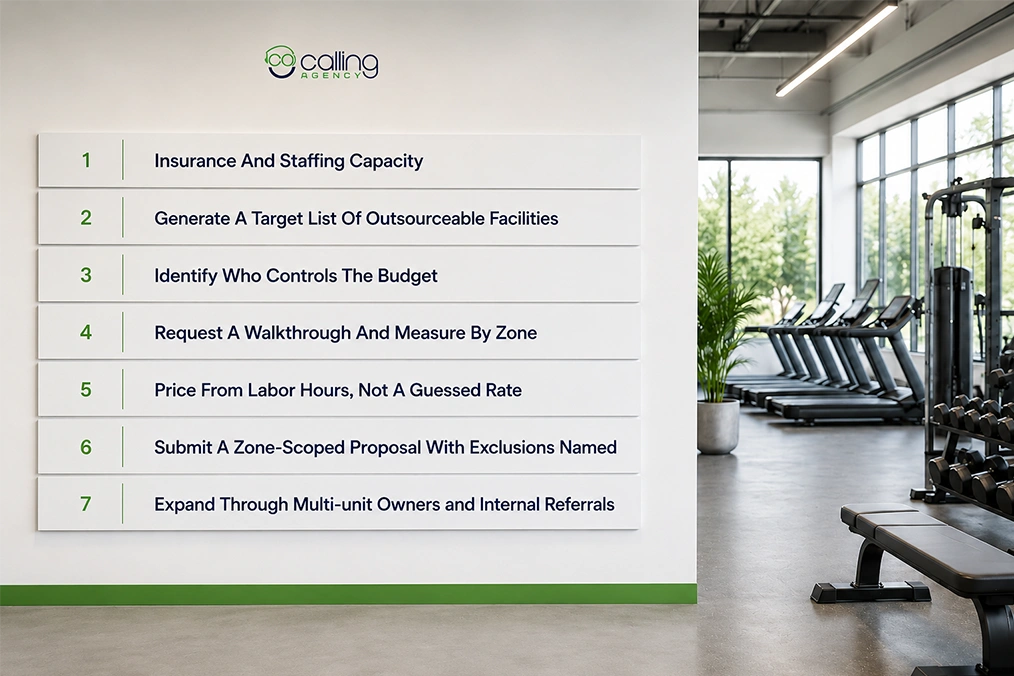
- Insurance and staffing capacity: gyms won’t even answer your call until they confirm you have general liability (typically in the $1M+ range), workers’ comp, bonding – all! Check if your crew can handle locker rooms, cardio floors, and equipment simultaneously without a gap in overtime.
- Generate a target list of outsourceable facilities: Concentrate on gyms larger than 10,000 sq ft, including franchises, chains and multi-location studios. In-house cleaning is the common practice of small boutique studios.
- Identify who controls the budget: A facilities manager or regional operations director, not just the front-desk manager. Cold-calling the wrong contact leads to a wasted pitch.
- Request a walkthrough and measure by zone: Split the space into locker rooms, cardio floor, weight area, and studios. Each zone has different frequency and labor needs.
- Price from labor hours, not a guessed rate: Calculate hours per zone, multiply by crew wage and frequency, then add margin.
- Submit a zone-scoped proposal with exclusions named: Leave no ambiguity on what’s covered.
- Expand through multi-unit owners and internal referrals: once you’ve proven yourself at one location.
What Do Gyms Require Before They Hire a Cleaning Company?
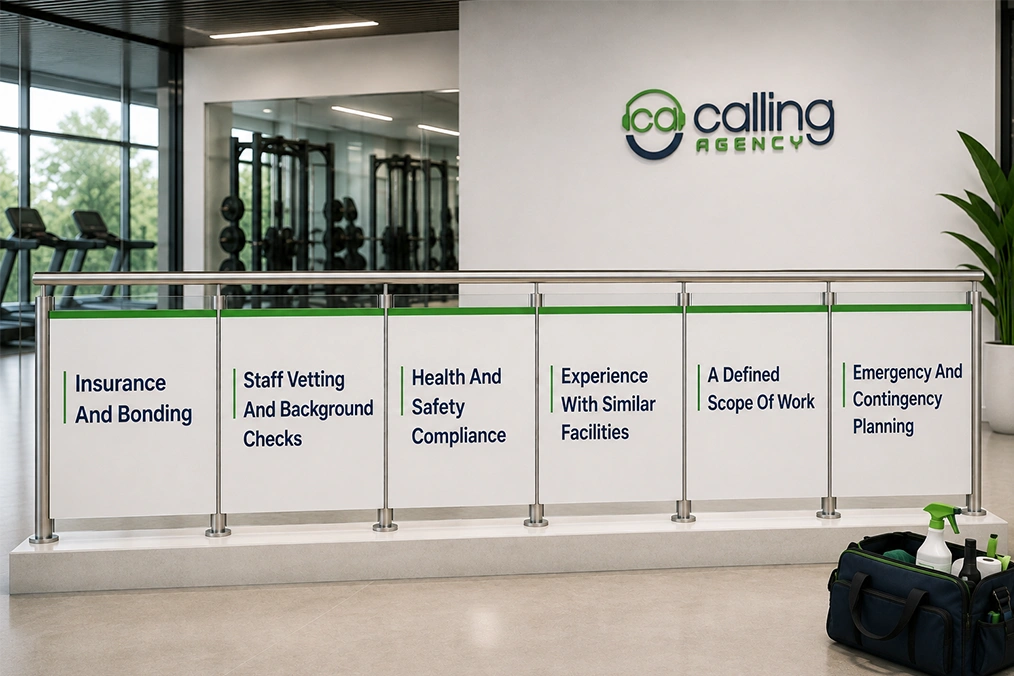
Before enlisting cleaning services, gyms need to see proof of insurance, staff background checks and references from similar facilities, in addition to adhering to health & safety guidelines. Without these basics confirmed first, most facility managers will not even bother to schedule a walkthrough.
Insurance and Bonding
This is the first filter. This is why, before anything else gym managers ask for it– a slip-and-fall claim or some broken equipment can be expensive if the vendor isn´t insured.
- Inherently, general liability insurance (for example, $1 million to $2 million per occurrence).
- Workers’ compensation coverage for all cleaning staff.
- Fidelity bonding, since crews work unsupervised near lockers, wallets and member belongings.
- Proof of coverage as a certificate naming the gym as additional insured.
Staff Vetting and Background Checks
Gyms contain sensitive areas, like locker rooms, showers and childcare centres. They need to be assured by the facility owners that improperly trained cleaning staff will not generate liability or safety concerns.
- Criminal background checks for every crew member.
- Drug screening in some regional or franchise chains.
- ID verification and documented work authorization.
- A named point of contact who manages the crew, not a rotating roster.
Health and Safety Compliance
Health and compliance are never optional for gyms because of sweat, shared equipment, and heavy foot traffic. Janitorial service firms must demonstrate that they can operate in this new environment and not merely be another contract cleaner to tend workplaces.
- OSHA-compliant chemical handling and storage.
- Safety Data Sheets (SDS) available for every product used.
- EPA-registered disinfectants suited for gym surfaces, not generic all-purpose cleaners.
- A written plan for high-touch zones like equipment handles, mats and locker room surfaces.
Experience With Similar Facilities
Gym managers rarely hire a company with zero fitness industry experience. They want references that prove the vendor understands equipment care, not just floors and trash.
- At least two to three references from comparable facilities.
- Case examples showing turnaround time and consistency.
- Knowledge of equipment-safe cleaning agents that will not damage upholstery, rubber flooring or metal surfaces.
A Defined Scope of Work
Before signing, gyms want the scope written zone by zone, not as a vague “full cleaning” line. Ambiguity here is the most common cause of contract disputes later.
| Requirement | Why Gyms Ask For It |
| Certificate of insurance | Protects gym from liability claims |
| Background-checked staff | Protects members and gym assets |
| SDS and OSHA compliance | Legal requirement for chemical use |
| References from gyms | Confirms fitness-specific experience |
| Zone-based scope of work | Prevents disputes over what is included |
| Emergency response plan | Covers spills, biohazards, equipment malfunction |
Emergency and Contingency Planning
In a high-traffic space like a gym, unforeseen needs crop up regularly, which is why gyms also inquire about how a company handles these situations.
- Response time for biohazard spills, like blood or vomit.
- Plan for backup staffing if a planned cleaning person is not available.
- When a 24-hour gym is never technically really closed, it’s important to have 24/7 contact after hours for urgent issues before opening.
Many gyms simply change vendors in a matter of months without ever performing these checks, so this list is typically a non-negotiable term of any contract signed by most facility managers.
Who Do You Contact at a Gym to Win a Cleaning Contract?
Contact the facilities manager or regional operations director at a gym, since they control the cleaning budget and approve vendors for commercial cleaning services. Front-desk staff and trainers have no authority here, so reaching them wastes time and delays the pitch.
Who Signs Cleaning Contracts at Gyms?
The decision maker changes based on the size and structure of the gym.
| Gym Type | Decision Maker |
| Independent single-location gym | Facilities manager or owner |
| Franchise chain, multiple locations | Regional operations director |
| National gym brand | Corporate procurement team |
| Small boutique studio | Owner-operator directly |
- For franchise gyms, always ask for the regional office, not the branch manager.
- For corporate brands, procurement teams often require a formal bid process.
- For independent gyms, one conversation with the owner can close the deal directly.
What if the Gym Already Has a Cleaning Company?
Most gyms already have a vendor, so this should not hinder outreach. Inability to keep up with cleaning contracts due to missed zones, inconsistent scheduling or price increases from the existing vendor. Instead of assuming an account is closed, inquire about the contract renewal date and any service problems. At this point, the low-pressure ask for a walkthrough is better here than going to pitch directly. After all, it keeps doors open and avoids head-on confrontations.
Outreach Methods That Get Replies
- Cold calls placed mid-morning, after the opening rush ends.
- Emails proposing a specific walkthrough date, not a generic introduction.
- LinkedIn messages sent directly to regional operations directors at franchise chains.
- Referrals from equipment vendors or gym suppliers who already have facility contacts.
- Follow-up calls timed near the known contract renewal window.
Setting janitorial appointments works well for this outreach, since it turns cold contact into a scheduled walkthrough, which is the actual decision point in most gym cleaning deals.
Run the Walkthrough and Win the First Job
When doing the walkthrough, measure every zone, ask pointed questions about now-pain, and send a proposal within 48 hours to get in for the first job.
If the facility manager mentions certain sacred areas to walk in only, learn your role and what you can do. For instance, ask what is wrong with the current vendor if schedules are missed or if they have not taken care of their equipment.
- Count fixtures in locker rooms and track equipment density, because those metrics drive labor hours per square footage.
- Capture photos or write notes on location to later produce a quote zone by zone.
- Check what times and if cleaning windows. It may determine staff cost.
- Leave knowing who the contract administrator is, i.e., who will actually sign this proposal.
- Submit the proposal within 48 hours while the walkthrough is still fresh in their minds.
Almost always, a quick topical follow-up right after the walkthrough is better than something detailed and polished, but one hour later.
How Do You Price and Bid a Gym Cleaning Contract?
Gym cleaning contracts are dependent on the type of facility, the square footage and cleaning frequency. It costs between $0.05 and $0.20/sf per service (most companies), with monthly contracts between $400 and over $4,500 (size, traffic and frequency specific). It can run about $500 to $1,500/month for weekly service at a medium-sized gym, while daily cleaning runs $1,000 to $3,000/month.
Pricing Models Used in Gym Cleaning
Cleaning companies use three main pricing structures for gyms.
- Per square foot: standard rate for routine service, best for larger facilities.
- Hourly: usually $25 to $60 per cleaner, common for smaller gyms or one-time jobs.
- Flat rate: fixed monthly fee, best for gyms with a set weekly schedule.
| Model | Typical Rate | Best For |
| Per square foot | $0.05 to $0.20/sq ft | Large gyms, chains |
| Hourly | $25 to $60/hour | Small studios, one-off jobs |
| Flat monthly | $400 to $4,500+ | Fixed schedule accounts |
Factors That Change Your Bid
Real Janitorial bids start with labor hours, not guesswork. ISSA, the cleaning industry’s trade association, publishes cleanable square feet per hour as a bidding benchmark, not a time-motion study. Mopping runs at 5,355 square feet per hour and restroom cleaning runs at 3 minutes per fixture. These rates convert facility size into labor hours per visit.
Wage data then turns those hours into a cost floor. The May 2025 BLS median wage for janitors and cleaners is $17.71 per hour. Applied to a typical gym visit, this puts direct labor near $44 per visit before supplies, overhead, or profit margin.
Other factors that move a bid:
- Equipment density: climbing walls, turf, and recovery zones raise cleaning time per square foot.
- Locker rooms and showers: add fixture count and disinfection time.
- Scope: deep cleaning like grout and carpet work is billed separately, usually $0.20 to $0.50 per square foot per visit.
How to Build Pricing Tiers?
Build three simple tiers so clients can compare options directly.
- Basic tier: daily wipe-downs, floor cleaning, restrooms, trash removal.
- Standard tier: adds locker room sanitation and high-touch equipment cleaning.
- Premium tier: full nightly service with sauna cleaning, laundry, and deep sanitation, similar to larger accounts that scale toward $2,000 to $6,000 monthly for exercise areas, locker rooms, pools, and extra staffing.
Always add a cancellation clause and a small annual price increase, since a 3- to 4-percent annual escalation cap protects both the cleaner and the client as labor costs rise.
Write a Gym Cleaning Proposal That Wins
A gym janitorial proposal wins when it is scoped zone by zone, priced clearly, and backed by facility-specific experience rather than a generic template.
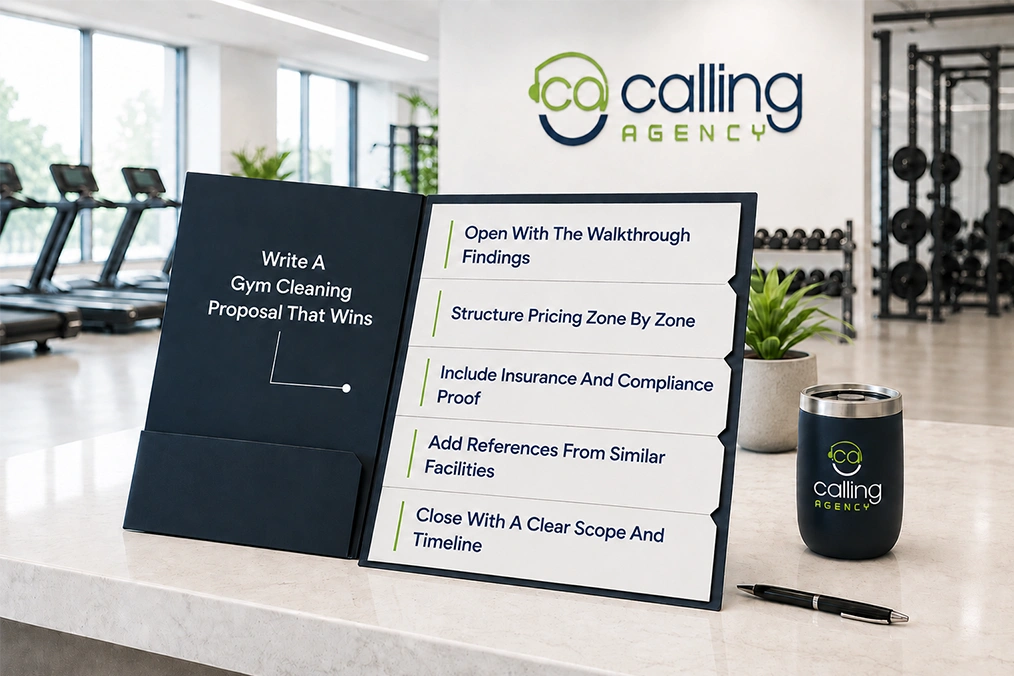
Open With the Walkthrough Findings
Reference specific zones observed during the walkthrough, such as locker room fixture count, cardio floor square footage and equipment density. This shows the buyer you measured the space instead of guessing.
Structure Pricing Zone by Zone
List cardio floor, weight area, locker rooms, wet areas and common spaces as separate line items with named exclusions. Bundled flat rates create disputes later, while itemized pricing builds trust upfront.
Include Insurance and Compliance Proof
Attach the certificate of insurance, workers’ compensation coverage and SDS documentation directly in the proposal. Gyms will not sign without these, so including them early speeds up approval.
Add References From Similar Facilities
List two or three gym or fitness client references with contact details, since facility managers rarely hire a vendor with no fitness-specific track record.
Close With a Clear Scope and Timeline
State the start date, cleaning frequency and review checkpoint. A gym cleaning proposal needs this structure to move from pitch to signature without back and forth on missing details.
Turn One Gym Contract Into Multiple
Turn one gym contract into multiple by using it as proof to reach the same owner’s other locations, then expanding through referrals inside that network.
- Ask the facility manager who else in the company handles vendor decisions for other locations.
- Request an introduction to the regional operations director if the gym is part of a chain.
- Use the first contract as a reference case, since one proven location removes the biggest objection at the next site.
- Offer a small discount for adding a second or third location to the same contract.
- Ask satisfied contacts for referrals to other gym owners or fitness brands they know through a structured cleaning referral program.
- Track franchise ownership groups, since one owner often controls several locations under different brand names.
- Set a 90-day check-in with the facility manager to ask about expansion before the contract renewal date.
One strong reference account grows faster through the same network than through cold outreach to a new one.
Conclusion
Winning gym cleaning contracts comes down to preparation, not luck. Confirm your insurance and staffing capacity first, since no facility manager will schedule a walkthrough without proof of coverage.
Target gyms large enough to outsource, reach the right decision-maker, and measure the space by zone before you price anything. A bid built from labor hours, not a guessed rate, holds up during negotiation and protects your margin once the contract starts.
Once you land one account, treat it as leverage. Use it as a reference to reach the same owner’s other locations, and ask for referrals inside that network. One well-run gym contract, serviced through reliable professional cleaning services, priced correctly and serviced consistently, often opens the door to several more without a single cold call.
Gym Cleaning Contracts FAQ
What insurance do I need to clean a gym?
You need general liability insurance, workers’ compensation coverage and fidelity bonding. Most gyms require certificates naming them as additional insured before scheduling a walkthrough.
How to quote a gym cleaning task?
The number of labor hours per zone, multiplied by wage and frequency, then adding supplies and margin, then pricing per square foot or a flat monthly rate.
How long do gym cleaning contracts last?
Many have 12-month terms for gym cleaning contracts, with the option to renew or a cancelation provision for an initial trial period.