



When a funding deal stalls, the problem is usually not the rate. The pitch often reached someone without decision authority. In a twelve-person shop, the business owner may be the borrower, signer, and bookkeeper.
In a thirty-million-dollar company, a controller may run the approval chain while the owner signs last. Equipment leasing may start on the shop floor, while an SBA loan may start with the cap table.
This guide maps the decision makers behind different business loan leads across six loan products and three annual revenue bands.
The Short Answer: Who Owns, Signs, and Kills a Funding Deal
A business loan decision maker may own the need, sign the note, or stop the deal. One person may fill all three roles, or several may share the approval process.
| Role | Who It Usually Is | What Moves Them |
| Owns | The person who feels the cash problem first: business owner, general manager, plant manager, practice administrator, or controller. | A dated problem: payroll gap, broken machine, or unfunded order. |
| Signs | The majority owner or managing member. Many business loans carry a personal guarantee (PG). | Clear cost, downside risk, and what they are pledging. |
| Kills | The bookkeeper, outside CPA, or commercial banker who reviews terms later. | Being included before the term sheet, not after. |
Most sales professionals work with the person who owns the need but never check who can approve financing. That is where deals die. According to the Federal Reserve’s Small Business Credit Survey, 86 percent of small employer firms use financing regularly and 60 percent applied in the prior twelve months. These businesses already borrow. The question is who can sign.
Company Size Changes the Answer Before Loan Product Does
Company size often shows who approves business loans first. Knowing how to identify key decision-makers in B2B companies helps you find the right title before the product does.
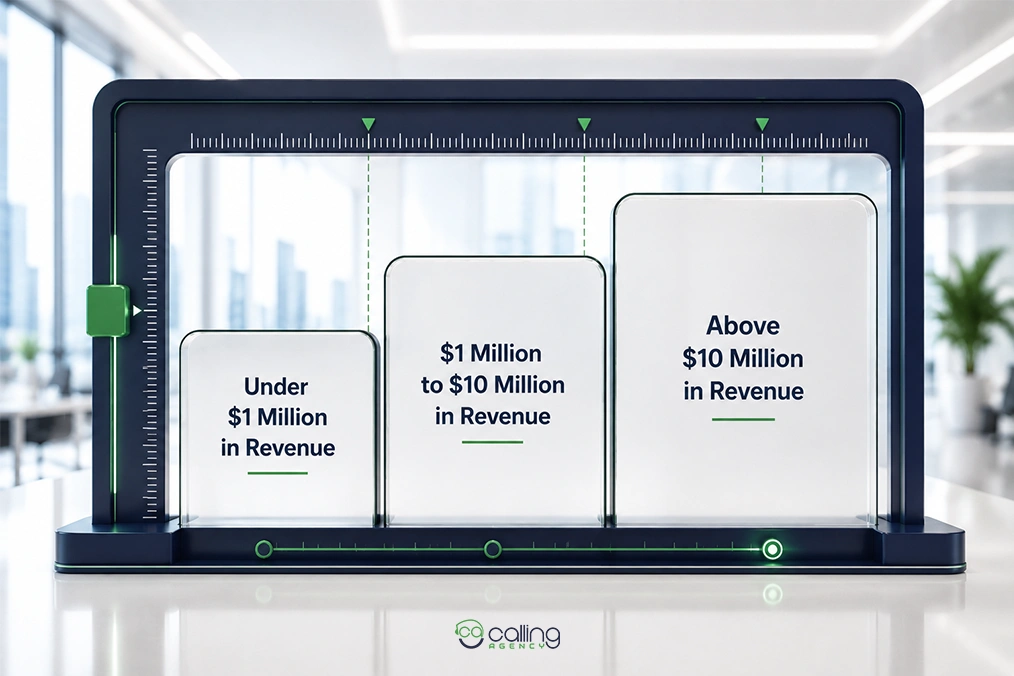
Under $1 Million in Revenue
Under $1 million, the owner usually controls the funding decision. There is often no separate finance team.
- A spouse may be a co-guarantor and quietly veto the deal.
- Reach the owner on mobile before or after the workday.
- One conversation can produce a signed application.
$1 Million to $10 Million
Between $1 million and $10 million, the owner usually signs. A bookkeeper, office manager, or outside CPA may influence approval.
- The bookkeeper or office manager handles paperwork and access.
- An outside CPA may influence structure and tax treatment.
- Plan for two conversations: qualification and signer approval.
Above $10 Million
Above $10 million, a controller or CFO usually runs the process. The owner or board signs, while other finance contacts may stop it.
- Expect financial projections, a credit memo, and a longer sales cycle.
- Plan for a business loan buying committee of three or more and use multithreading in sales to reach several stakeholders.
- Map the group through outbound prospecting for lenders and funders because the controller may only summarize your offer to those with budget authority.
The Decision-Maker Map by Loan Product
Each product has a different approval chain and business funding decision maker. Find who owns the need before explaining the offer.
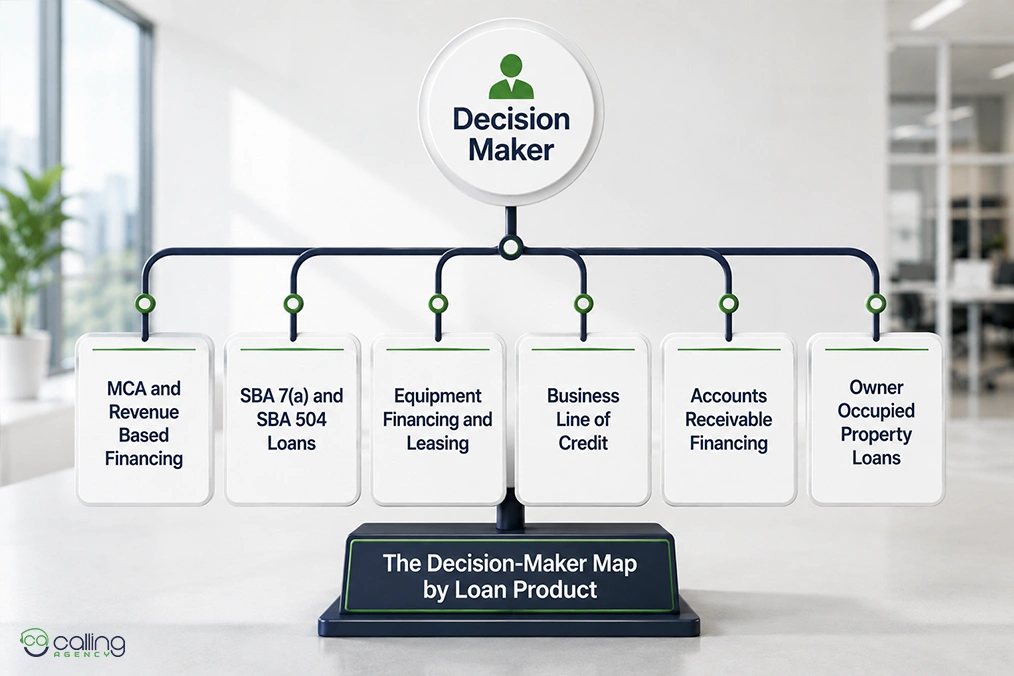
Merchant Cash Advance and Revenue Based Financing
The owner or general manager usually owns it. These deals fund quickly, so speed to lead and decision authority matter.
- Owns it: The owner or general manager.
- Signs it: The owner personally, along with the business bank account.
- Kills it: The bookkeeper who converts the factor rate into an APR and calls it predatory.
- Profile and pace: Restaurants, retail, salons, auto repair, and medical practices. Qualify on card volume, monthly deposits, time in business (TIB), personal credit, and daily remittance. Campaigns for merchant cash advance prospects filter on deposits before credit score.
- Opening question: How many months of the year does your cash position get tight?
SBA 7(a) and SBA 504 Loans
SBA loans depend on ownership structure. The owner or CFO may lead, but one missing partner can stop it.
- Owns it: The owner or CFO.
- Signs it: Every holder at or above the 20 percent ownership threshold. Under 13 CFR 120.160, holders of at least 20 percent ownership generally must guarantee the loan.
- Kills it: The partner nobody told. Three partners at a third each means all three must agree, or the file does not close.
- Profile and pace: The heaviest loan underwriting file of the six. Ask for the ownership split, cap table, and use of funds early in any SBA borrower conversation. SBA 504 deals may also involve a CDC, or certified development company.
- Opening question: What does the ownership breakdown look like on paper?
Equipment Financing and Leasing
Equipment financing and equipment leasing usually start with operations. The asset buyer may not sign but can lead you upward.
- Owns it: The plant manager, fleet manager, service manager, or shop foreman picks the business equipment and knows the delivery date.
- Signs it: The owner or CFO.
- Kills it: The controller who prefers to buy outright, or the dealer’s captive finance arm.
- Profile and pace: Lead with the asset, not the loan. For asset-heavy companies, solve the schedule problem and the operator may introduce you upward.
- Opening question: What is the next piece of equipment you need, and when does it have to be running?
Business Line of Credit and Working Capital Term Loans
A line of credit or working capital loan starts with whoever manages cash daily. Company size decides whether that is the owner or controller.
- Owns it: Whoever runs cash day-to-day. The owner under a million, a controller above five million.
- Signs it: The majority owner.
- Kills it: The incumbent commercial banker, who may match terms to keep the relationship.
- Profile and pace: Timing matters. Companies open lines before they need them, so the best call lands in a quiet quarter, not a crisis.
- Opening question: If a large order came in next month, could cash reserves cover it before receivables arrive?
Invoice Factoring and Accounts Receivable Financing
The controller or AR manager usually feels this problem first. The owner signs, while sales may resist third-party collections.
- Owns it: The controller or AR manager looking at an aging report.
- Signs it: The owner.
- Kills it: The sales leader who does not want a third party contacting customers about collections.
- Profile and pace: Staffing firms, trucking companies, manufacturers, and government contractors. Notification vs non-notification factoring changes the customer experience, so explain it early.
- Opening question: What are your average days sales outstanding, and which customers are the slow payers?
Commercial Real Estate and Owner Occupied Property Loans
The owner or CEO usually leads owner-occupied commercial real estate loans. Guarantors, counsel, accountants, and business property ownership can extend the funding timeline.
- Owns it: The owner or CEO.
- Signs it: All guarantors, and often a separate holding entity that owns the property.
- Kills it: The attorney or the appraisal.
- Profile and pace: The longest cycle here. Expect sixty to a hundred and twenty days and a buying committee of four or more, including counsel and an accountant. DSCR, or debt service coverage ratio, may affect credit approval.
- Opening question: Is the building held in the operating company or a separate entity?
The Gatekeepers You Will Actually Meet First
You rarely reach the signer first. A gatekeeper may control access or information before you reach the person who signs a business loan.
Understanding what a gatekeeper is actually protecting helps you handle them.
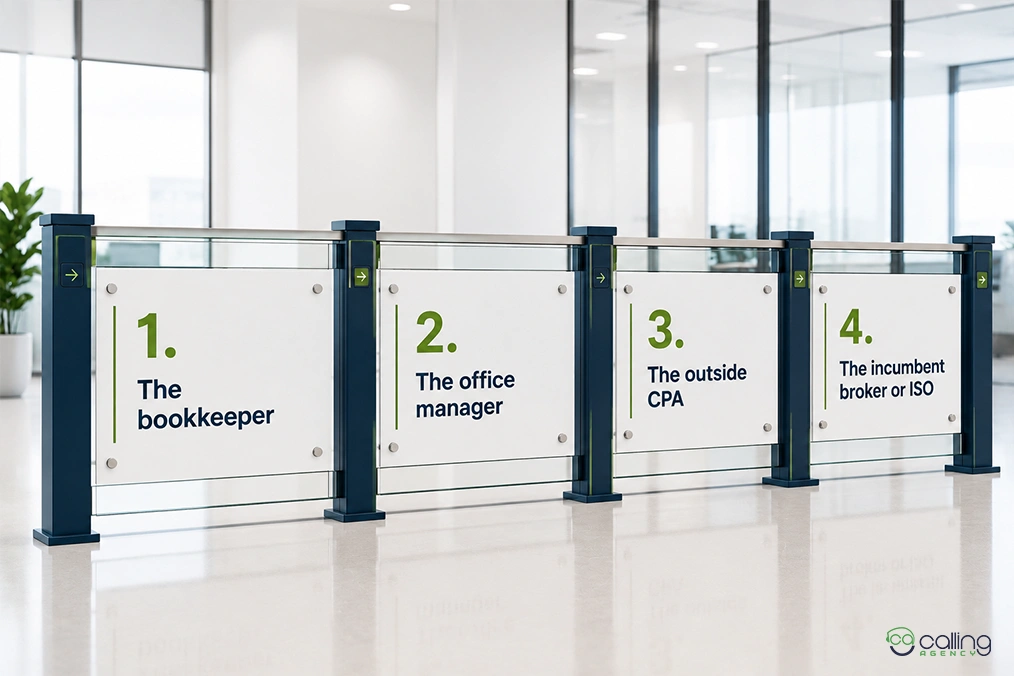
- The bookkeeper: Holds bank logins and payment history. Treat them as an internal advocate who can explain debt quickly.
- The office manager: Controls the calendar. Give them a reason and time window, not a pitch.
- The outside CPA: Often the most trusted voice. If the owner wants to check with their accountant, take it seriously.
- The incumbent broker or ISO: An ISO, or independent sales organization, is not always an obstacle. One broker with ten clients can be worth more than ten cold owners.
Trigger Signals That Tell You Which Product to Lead With
A trigger event can point to both the contact and product. Timing may matter more than the perfect title.
These signals also belong in an ideal borrower profile and verified prospect list build using custom filters.
- A new UCC-1 filing. The company is borrowing. Whoever approved it is your renewal target.
- A UCC filing nearing the end of its term. The five-year lapse window is a strong refinance trigger.
- An equipment purchase, facility move, or new commercial lease. Operations is involved, so start there.
- A hiring spike. Payroll growth increases working capital needs and points to whoever runs cash.
- A seasonal revenue trough. Predictable and calendar-based, it gives a funder a clear opening.
One caution: Lending outreach carries TCPA, DNC, CAN-SPAM, and state commercial financing disclosure obligations. Build the outbound compliance checks into your sales cadence before scaling.
How to Confirm You Have the Right Person Before You Pitch
A few questions can confirm decision authority. Ask who signs, who influences the choice, and what happens before funding.
Ask these questions early while the conversation is still discovery:
- Besides yourself, who signs on the business bank accounts?
- What does the ownership split look like? Anyone at twenty percent or more?
- Who handled your last financing, and are they still involved?
- If the terms work, what has to happen between yes and funded?
The fourth question reveals hidden approvers. Asking it early makes multi-stakeholder navigation easier and helps prevent lost files. That separates a booked meeting from a qualified one. In a business funding campaign, a five-month cold call and email program produced seventy-nine qualified funding consultations and more than three million dollars in estimated pipeline.
Once the role map is clear, adjust your opening for the person you are calling. A business owner, controller and plant manager may care about different funding problems. These business lending cold call scripts show how to change the opening and qualification questions by situation.
Frequently Asked Questions
Who is the decision maker for a business loan?
The business loan decision maker is usually the owner in a small company and the CFO or controller in a larger company. Below roughly one million in revenue, the owner decides and signs. Between one and ten million, the owner signs while a bookkeeper or outside CPA may influence the decision. Above ten million, the CFO or controller manages the process while the owner or board gives final approval.
Should I call the owner or the CFO when selling business loans?
Call the owner for smaller businesses and the CFO or controller for larger companies. Below one million in revenue, the owner is usually the best contact. Between one and ten million, contact both. Above ten million, start with the CFO or controller because they usually manage lender comparisons and funding.
Who has to sign an SBA loan?
Anyone who owns 20 percent or more of the business usually has to sign a personal guarantee on an SBA loan. The SBA or the lender can ask other owners or people to guarantee it too. Sort out the ownership split early. That way you know who needs to be at the table before funding.
Why do deals stall after the first meeting?
Most loan deals stall because the person you met cannot approve anything. They may get why you need the money. They still have to run it past an owner, a partner, a CFO, a CPA or someone else. Ask in that first talk who can approve and sign the loan.
How do I get past the bookkeeper?
Do not try to get past the bookkeeper. Work with them because they can confirm current debt, monthly deposits, existing credit lines, and useful financial details. This information helps you qualify the opportunity and makes the owner conversation more focused.