

You can get security guard contracts with property managers by building a targeted prospect list. This shows you’re fully compliant and solving the property’s real security needs.
Start with properties where security is already part of day-to-day operations, such as apartment communities, commercial buildings, warehouses, and retail centers. The need might be patrols, access control, overnight coverage, or simply having a visible guard on-site.
You need to focus on timing.
A property manager is more likely to consider a new security company when a contract is coming up for renewal, the property has had recent incidents, or security coverage needs have changed.
How to Get Security Guard Contracts With Property Managers?
Here is how we get security guard contracts with property managers:
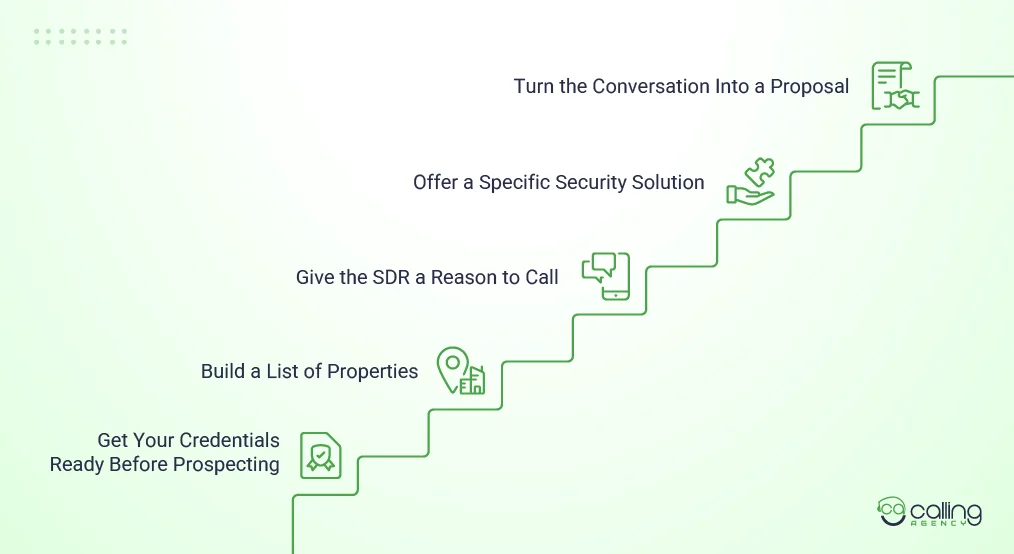
1. Get Your Credentials Ready Before Prospecting
Before an SDR starts outreach, make sure nothing can stop a qualified prospect from moving forward. Property managers are taking on liability when they hire a security company. So, they will want to see that you are properly licensed, insured, and able to provide qualified guards.
Have these documents ready:
- Security licenses: Confirm your agency has the required state and local licenses.
- Insurance certificates: Keep current general liability and workers’ compensation certificates ready to send.
- Guard credentials: Maintain records of guard licenses, training, certifications, and background checks.
This matters for the SDR because the moment a property manager asks, “Can you send over your insurance and licensing?” you should be able to respond immediately.
2. Build a List of Properties
Don’t have SDRs call every property manager in the area. Start with properties where there is a clear reason to consider security services. Good targets include apartment communities, commercial buildings, industrial warehouses, construction sites, and retail properties.
Then look for a buying trigger. Recent break-ins, vandalism, vehicle theft, trespassing, a new property management company, or a contract renewal can all create an opening. Your SDR should build the B2B prospect list around 3 things:
- Property: Name, location, property type, and size
- Trigger: The security issue or business event creating the need
- Decision-maker: Property manager, regional property manager, facilities director, or another person responsible for security vendors
LinkedIn, property directories, local crime reports, police blotters, and neighborhood sources can help fill in the list.
3. Give the SDR a Reason to Call
Once the list is ready, don’t let the SDR open with, “We provide security services.” Tie the call to something happening at the property. For example:
“I noticed there have been several vehicle break-ins around the property. Are you currently using overnight patrols?”
This gives the property manager something specific to respond to.
Use the same approach with email and LinkedIn. Mention the property, the issue, or the type of coverage you believe may be relevant. You don’t want the first conversation to be about selling the entire contract.
You need to find out how security is currently handled, what problems exist, and whether the manager is open to reviewing another provider.
4. Offer a Specific Security Solution
Once the SDR identifies a problem, move the conversation toward a specific service. If the issue is overnight break-ins, discuss nighttime patrols or an overnight guard. If unauthorised access is the concern, talk about access control and on-site coverage. If the property needs regular monitoring, propose scheduled mobile patrols.
Cold calling scripts for security guards should have practical details such as:
- Guard or patrol schedule
- Number of visits or hours
- Expected response times
- GPS-verified patrol tracking
- Supervisory coverage
- Incident reporting
This gives the property manager something concrete to evaluate, not another generic security pitch.
5. Turn the Conversation Into a Proposal
Once the property manager confirms there is a real need, the SDR should collect the information needed for a proposal.
Ask about the property size, current security setup, coverage hours, problem areas, number of entrances, patrol requirements, and any contract or insurance requirements.
Then build the proposal around that information.
Keep the pricing realistic. Cutting the price too far can make it difficult to maintain reliable guards, overtime coverage, supervision, and payroll. The proposal should also clearly explain billing, cancellation terms, supervision, reporting, and the scope of work.
The SDR’s job is to get the right information and create a qualified opportunity. The operations or sales team can then use that information to build the final proposal and close the contract.
Who Signs a Security Contract at a Property Management Company?
The person signing the security contract depends on who has authority to hire vendors for the property. The signing authority depends on the company. However, the authority mainly stays between:
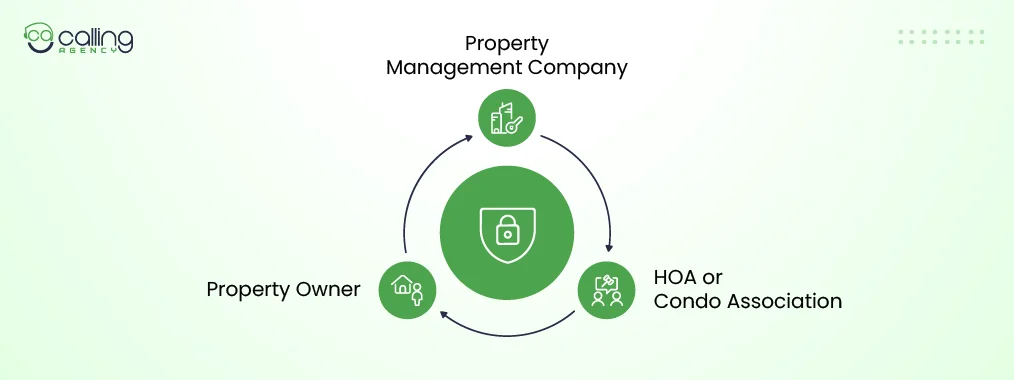
- Property management company: Usually the property manager, designated broker, or general agent. They can sign if the management agreement allows them to hire security vendors.
- HOA or condo association: Usually an authorised board member, such as the president or treasurer. A managing agent can also sign if the board has given them that authority.
- Property owner: The owner signs when the manager lacks authority to approve the contract. This can happen when the contract is above the manager’s spending limit or requires owner approval.
Procurement signs the contract. That contract exists before the property manager controls anything. Here is how those functions are split.
- The Deputy Chief Procurement Officer signs the agreement.
- The Chief Executive Officer or a written designee approves any amendment.
- The Director of Procurement and Contracts is the sole point of contact for all communication.
- The same director decides disputes.
- The Property and Asset Management Department receives invoices.
- The Assistant Director of Facilities Management approves or rejects them.
That’s why contacting the wrong person during an open solicitation can create a serious problem. Some procurement documents state that vendors may be disqualified for contacting staff outside the named procurement officer.
The same applies after the contract is awarded.
For example, a contract may require guards to follow instructions only from a designated security or emergency-management director. Any change to the contract may also require procurement’s written approval.
What Insurance Do Property Managers Require From a Guard Vendor?
Property managers usually require security guard vendors to carry specific insurance and prove it with a Certificate of Insurance (COI). Common requirements include:
| Coverage Type | Typical Requirement / Limit |
| Commercial General Liability (CGL) | $1M per occurrence / $2M aggregate |
| Assault & Battery Coverage | Added endorsement or separate coverage |
| Workers’ Compensation | Statutory limits |
| Commercial Auto Liability | Often $1M |
| Excess / Umbrella Liability | Often $1M–$5M |
| Professional Liability / E&O | Varies by contract |
But the policy limits alone are not enough. Property managers also pay close attention to the endorsements attached to the policy, because those determine how the coverage responds when a claim involves both the security company and the property.
Three common requirements are:
- Additional Insured: The property owner and property manager are added to the vendor’s liability policy, often through an endorsement such as CG 20 10 or an equivalent form.
- Waiver of Subrogation: Limits the insurer’s ability to pursue the property owner or manager after paying certain covered losses.
- Primary and Non-Contributory: Requires the security vendor’s insurance to respond before the property’s own insurance is asked to contribute.
For a security company trying to win or renew a property contract, the important point is that the COI should match the contract requirements exactly. Insurance isn’t enough if the limits, endorsements, or named parties don’t meet the property manager’s vendor standards.
Security Guard Vendor Insurance Limits Across Public Contracts
| Coverage | CHA 2022 | CHA 2026 | Contra Costa | Loudoun | Mobile HA | Transit authority |
| General liability, per occurrence | $1,000,000 | $2,000,000 | $1,000,000 | $1,000,000 | $1,000,000 | $1,000,000 |
| General aggregate | $2,000,000 | $4,000,000 | $1,000,000 | $2,000,000 | $1,000,000 | $2,000,000 |
| Employers liability | $500,000 | $500,000 | Not stated | $100,000 | Not stated | $500,000 |
| Automobile, combined single limit | $1,000,000 | $1,000,000 | $1,000,000 | $1,000,000 | $1,000,000 | $1,000,000 |
| Professional liability | $5,000,000 | $5,000,000 | Not required | Not required | $2,000,000 | $1,000,000 |
| Excess or umbrella | Not required | $5,000,000 | Not required | Permitted | Not required | $1,000,000 |
| Carrier rating floor | A.M. Best A- VII | A.M. Best A- VII | Not stated | A.M. Best A- VII | Not stated | A.M. Best A-VIII |
| Cancellation notice | 30 days | 30 days | Not stated | 45 days | 30 days | 30 days |
How to Find Property Portfolios That Are Actually Buying?
You can find active portfolios by tracking recent transaction activity and ownership patterns, rather than relying only on public listings.
You can use Reonomy, PropertyRadar, and PropStream platforms to find property portfolios. These tools can help you identify recent buyers, cash transactions, portfolio owners, and entities that are acquiring multiple properties in the same market.
You can also narrow the search by looking for:
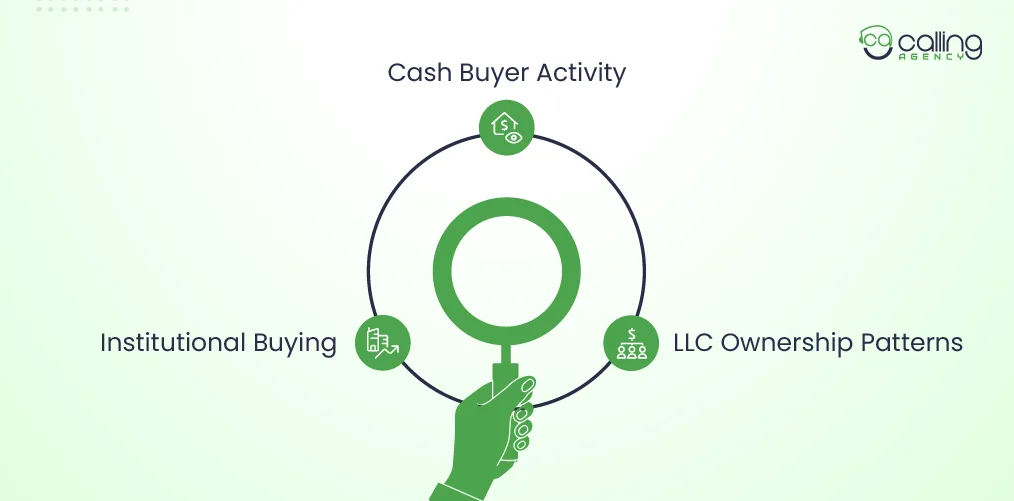
- Cash buyer activity: Use title or public-record data to find buyers closing multiple cash purchases within a short period.
- LLC ownership patterns: Check county assessor or recorder records for the same LLC, registered agent, or mailing address appearing across multiple properties.
- Institutional buying: Track larger operators and investment firms to see which ZIP codes or neighbourhoods they are actively targeting.
You need to identify buyers who are currently acquiring properties, not just investors who happen to own real estate.
What Do They Require Before You Can Bid?
Finding a portfolio that is buying only helps if you qualify to bid. The same documents publish the thresholds.
| Requirement | Range across the set |
| Years in business | 3 in Chicago, 5 in Loudoun and Mobile |
| References | 3 at the transit authority, 5 at Mobile, 6 at Loudoun |
| Project manager experience | 10 years supervising guards at Loudoun, 5 of those in government buildings |
| Pre-assignment training | 8 hours plus 24 on the job at Contra Costa, 16 hours per post at Loudoun |
| Local office | Required by Loudoun only |
When Do Security Contracts Come Up for Rebid?
Security contracts often stay in place for several years before returning to bid. In the five examples reviewed, base terms ranged from 1 to 3 years, while the full contract period with renewal options stretched from 4 to 7 years.
The timing also depends on the buyer type, for example:
| Buyer | Base term | Options | Maximum |
| Mobile Housing Authority | 1 year | Three 1-year | 4 years |
| Contra Costa | 1 year | Two 2-year | 5 years |
| Transit authority | 1 year | Four 1-year | 5 years |
| Chicago Housing Authority | 2 years | Three 1-year | 5 years |
| Loudoun County | 3 years | Four 1-year | 7 years |
Three of the five contracts can run for five years, while Mobile caps at four and Loudoun can continue for seven. That means missing one rebid window can lock a vendor out of that opportunity for years.
The lead time before the next contract starts also varies.
Across seven documents reviewed by CallingAgency, the gap between solicitation release and contract start ranged from 60 to 215 days. One Chicago Housing Authority rebid moved from release to start in 81 days, while the original award took 215 days.
The submission window is much tighter.
Four buyers allowed only about 25 to 38 days between solicitation release and the bid deadline. Once that window opens, there is very little time to build relationships or influence the opportunity. So, outreach has to start well before the RFP is published otherwise, the cost of security guard lead generation will increase.
Conclusion
The bigger opportunity is to think beyond one property. One property-management company may control dozens of sites, so a strong first contract can become an entry point to a much larger portfolio.
Treat every win as an account-expansion opportunity: document performance, keep incident reports clean, ask for introductions to regional managers. Then use renewal conversations to uncover other properties that may need coverage.