



March is usually the month when the most real estate agents change brokerages. But if you wait until March to start recruiting, you are already late. Most agents decide on a move weeks before the actual switch. So if you want an agent to start with you in March, the first serious conversation often needs to happen in December or January.
That is why January is usually one of the best months to recruit real estate agents. But recruiting does not depend on one month alone. Some months are better for agent prospecting, some for nurturing and others for closing.
The Three Windows That Matter
Not every month gives you the same recruiting opportunity. These three windows are when agent attention, business costs and movement timing line up best.
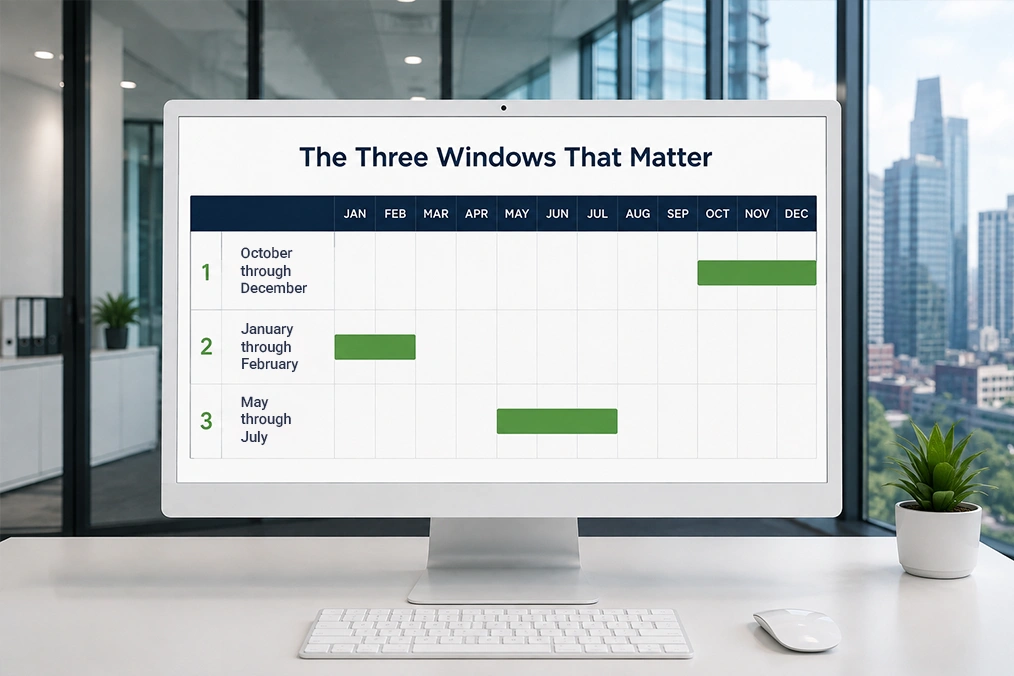
- October through December: Association and MLS dues begin to show up. Agents review the year, think about what they want to change and usually have more time to talk. These conversations can turn into January or March starts.Long-form real estate agent recruiting email templates can work well here because agents have more time to read and compare.
- January through February: This is the strongest window for active recruiting. The 1099-NEC arrives and the annual cost of staying with a brokerage becomes easier to see. Commission split, desk fees, monthly brokerage fees, Realtor dues and MLS dues all come into focus.
- May through July: Spring closings bring money in, some pending pipelines start to clear and license renewal cycles come up in several states. Mid-year production also becomes easier to judge.
What the Movement Data Actually Shows
The Agent Movement Index tracks how many experienced agents change offices using MLS data. The pattern is fairly stable. March is usually the peak movement month, while December sits well below the annual average. In stronger movement periods, April can even move ahead of March.
The Month-by-Month Real Estate Recruiting Calendar
Each month creates a different recruiting opportunity. Use this calendar to see when to prospect, when to nurture and what to lead with throughout the year.
| Month | What Is Happening in the Agent’s Year | Your Priority | Lead With |
| Jan | 1099-NEC arrives. Dues, MLS and E&O billing hits the card. | Prospect hard | Annual cost of doing business |
| Feb | Spring listing prep begins. Decisions firm up for a March move. | Prospect and close | Spring ramp support |
| Mar | Peak movement month. Notice letters go out. | Close December leads | Clean transition of pending files |
| Apr | Spring market in full swing. Tax filing lands. | Nurture only | One short value touch |
| May | Peak listing season. Renewal deadlines cluster in several states. | Light prospecting | CE support and renewal costs |
| Jun | Closings fund the year. Mid-year review begins. | Prospect | Production against goals |
| Jul | Slow patch after spring. Cap anniversaries hit. | Prospect hard | Cap math |
| Aug | Fall planning begins. | Set fall appointments | Fall pipeline |
| Sep | Dues invoices begin arriving. | Prospect | Full annual cost stack |
| Oct | Dues deadlines approach. Year-end planning starts. | High-quality conversations | Next year business plan |
| Nov | Pipeline winds down. | Book Dec and Jan meetings | Planning, not pitching |
| Dec | Movement through. Agents have more time. | Low volume, high value | Year in review |
Use the table to separate prospecting months from closing and nurture months. January, February, June, July, August, September and October are strong prospecting months. February, March and November are better closing months.
April and May need a lighter approach. Use that time for short touches, list cleanup and data work. It is also a good time to review your scripts and tools stack instead of pushing hard for appointments.
Five Timing Triggers That Beat “Are You Happy Where You Are?”
A season tells you when the market is warmer. A timing trigger tells you when one specific agent may be ready to talk.
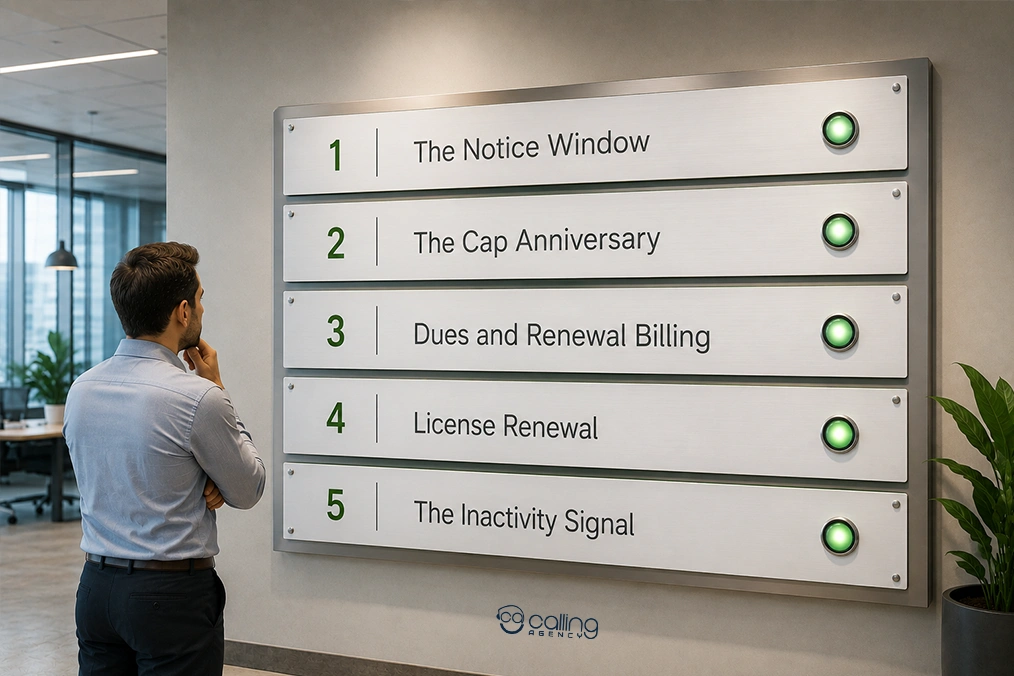
1. The Notice Window in the Independent Contractor Agreement
Real estate agents usually work under a written Independent Contractor Agreement. Under 26 USC 3508, statutory nonemployee treatment depends in part on having a written contract stating that the agent is not treated as an employee for federal tax purposes.
That agreement can also contain the notice terms for leaving the brokerage. If an agent has a thirty-day notice period, the decision needs to happen before the planned start date. Work backwards from it.
2. The Cap Anniversary
For agents on a capped commission plan, the cap year can matter more than January 1. If the cap resets on the agent’s join anniversary, moving at the wrong time may mean paying toward one cap and then starting again at another brokerage.
Ask, “What month does your cap reset?” It can tell you when a brokerage switch makes more financial sense. That is why it fits naturally inside cold calling scripts for recruiting real estate agents as a qualifying question.
3. Dues and Renewal Billing
Annual dues create another predictable trigger. National Association of Realtors dues are billed through the primary local association and are due January 1, with the Consumer Advertising Campaign assessment included on the statement.
Add local association dues, state dues, MLS participation fees and errors and omissions insurance. By the time those charges arrive, agents can see the cost of staying where they are more clearly. That makes fall a natural time for targeted messages and outreach.
4. License Renewal
License renewal timing depends on the state. In Pennsylvania, salesperson licenses expire May 31 of even-numbered years. New York sends a renewal notice about three months before the license expires.
Other states may use the licensee’s birth month, issuance date or another cycle. If the state real estate commission or real estate association publishes licensee roster data, use it to build outreach around real dates.
5. The Inactivity Signal
Do not assume the best targets are agents who look like they are struggling publicly. Relitix identifies recent listings, closings and other production activity as signals that can help indicate an agent’s likelihood of switching brokerages.
A canceled listing still shows that the agent won business. No listings and no recent closings may tell you more.
The Calendar Changes by Producer Tier
Not every agent should sit inside the same recruiting calendar.

Top producers: Top producing agents usually need a longer runway. They have more production volume, more pending business and a stronger business case for timing the move carefully.
Work these agents over six to nine months and try to line the close up with the cap anniversary. Our guide to recruiting experienced agents covers the qualification side.
Mid-tier producers: Mid-tier producers often become easier to reach in January. Once the 1099 arrives, commission split, cap, desk fees and other brokerage costs become easier to compare.
Newer agents: Newer agents respond to different triggers. Their first dues invoice and first slow quarter can create a reason to look elsewhere. That makes October through February especially important. But screen for production intent, not enthusiasm alone.
One calendar cannot cover the whole licensee roster of every real estate brokerage. Top producers, mid-tier producers and newer licensees need different timing and nurture sequences. That is the idea behind a recruiting campaign built around producer tier.
How to Work Backwards From a Target Start Date
Start with the date you want the agent producing under your license. Then count backwards.
- Choose the start date: Use the cap anniversary if you know it. If not, use the first of a month.
- Subtract the ICA notice period: If the agreement requires thirty days of notice, build that time in.
- Allow time for the pending pipeline: Give the agent two to four weeks for active transactions, listing agreement questions and offboarding.
- Allow time for your recruiting process: Two conversations and an interview can take three to six weeks.
- Find the first touch date: For a March 1 start, first contact may need to happen in late November or early December.
A ninety-day recruitment process is not one call. It can include recruiting calls, emails, follow-ups, recruiting appointments, an interview and a nurture sequence that stays active for weeks.
If your team starts thinking about March recruiting in February, the timing is already working against you. Whether you manage that sequence internally or use outsourced vs in-house real estate recruiting is a separate decision.
The fall window is the one to protect. Using outsourced realtor recruiting and interview setting is one way to keep the sequence moving without pulling sales leadership away from production. We used the same timing logic in a Georgia brokerage recruiting campaign.
What Not to Do
Good timing can still fail if your recruitment practice does not match what agents are dealing with that month. These are the mistakes most likely to waste a good recruiting window.
- Do not stop recruiting in December because movement is low. Few agents may move that month, but many are finally available to talk. Movement and attention are different.
- Do not chase top producers for meetings during their busiest spring weeks. Late April through June is better for short asynchronous touches. LinkedIn messages for recruiting realtors can fit that window better than repeated calls.
- Do not use the same message in January and October. January is about costs, commission structures and economics. October is more about planning for the next year.
- Do not build your agent prospecting list only around agents who look unsuccessful. Some of the better agent retention insights come from agents whose production has simply gone quiet.
Frequently Asked Questions
What is the single best month to recruit real estate agents?
January is usually the best month to actively recruit. Agent movement peaks later, but January gives you enough time to discuss brokerage costs and work toward a March start.
When do most real estate agents switch brokerages?
March is usually one of the strongest months for brokerage movement, while year-end movement is typically much quieter. The Agent Movement Index published by Relitix tracks these seasonal brokerage changes using MLS data.
How far in advance should you start recruiting an agent?
For many mid-tier producers, sixty to ninety days is practical. Top producers may need six to nine months because cap timing, pending business and a larger production pipeline make the move more complex.
Is there a bad time to recruit real estate agents?
You can prospect in any month, but late April through June can be difficult with busy producers. Use lighter touches and focus on data work instead of pushing appointments.
Does recruiting timing change by market?
Yes. Local agent movement can differ from the national pattern. Review your MLS, brokerage metrics and market share to see when agents changed brokerages over the last two full years, then adjust your calendar.
Should you recruit new agents and experienced agents on the same schedule?
No. New agents respond more to dues bills and slow production periods. Experienced producers care more about cap timing, commission economics and the effect of moving an active pipeline.
What is the best day of the week to make recruiting calls?
There is no single weekday that matters enough to build your strategy around it. Mornings can work because many agents spend more time on showings later in the day. Consistency matters more.
How long does a brokerage transition take once an agent says yes?
A brokerage transition often takes thirty to sixty days. The timeline can include notice to the current broker, license transfer, MLS and association updates, transaction management, offboarding and decisions about active listings.
The calendar will not recruit an agent for you. But it can help you reach the right agent when the conversation is easier to have.