



If you spend enough time making cold calls, you will quickly notice something, i.e. timing objections. It’s better that you know some cold calling strategies. Prospects say things like, “not now,” “Call me next week,” “We’re too busy right now,” and so on. New SDRs or sales reps take them as rejection.
So, their natural reaction seems like apologizing, hanging up, and moving on to the next number. But experienced cold callers do the opposite. They don’t take timing objections as rejections. They understand that the prospect is focused on something else at that moment. Perhaps, they are in a meeting, working on a project, or dealing with internal priorities currently.
Experienced callers know that the prospect isn’t saying “never.” They’re saying “not right now.” You just need to learn how to handle these responses properly. Hopefully, you can turn your call into a future sales opportunity.
What Is A Timing Objection In Cold Calling?
There is a time when the prospect says that he is not willing to talk about your offers. That’s called the timing objection.
Don’t think they are rejecting your solution directly. They are just delaying the conversation. This situation is common in cold calling services, where outreach may interrupt a prospect’s workflow. Maybe at that time the prospect didn’t plan to evaluate a new solution when you called.
They just give a natural reaction just to protect their time. But here’s the key insight many new sales reps miss. When they face timing objections, it usually means the prospect hasn’t evaluated their offer yet. Or maybe they simply don’t want to do it at that moment.
Most experienced cold callers you will see treat such timing objections to schedule the next conversation. Not a reason to abandon the opportunity.
The Most Common Timing Objections and What They Signal
Timing objections usually sound simple. But each of them reveal something different about the prospect’s situation. You just have to understand these signals. Only then can you respond intelligently.
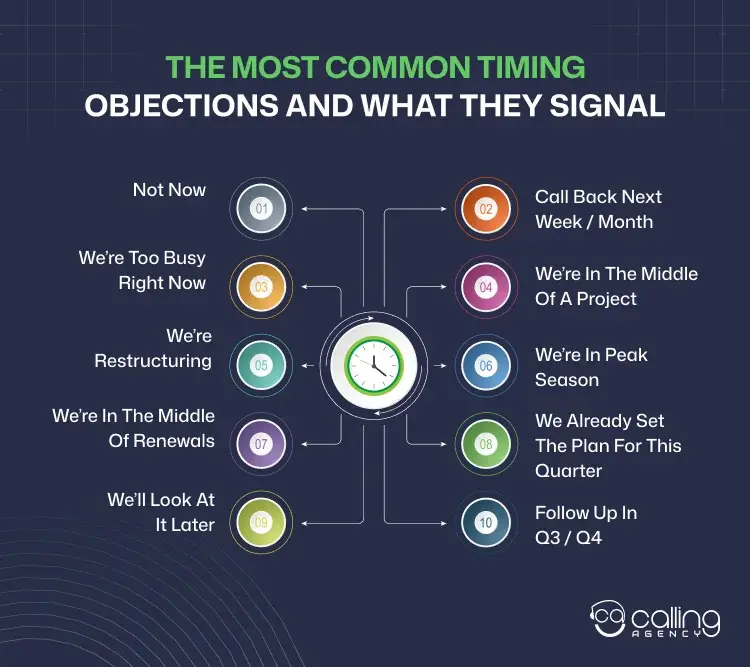
Not Now
The “not now” objection is one of the most common responses in cold calling. It’s often seen in B2B telemarketing.
Most of the time, the prospect wants to end the interruption quickly. It’s because they haven’t actually evaluated what you are offering to them.
At that time, you should not push forward with a pitch. Instead, you should secure a better time to talk.
For example, you can respond like this:
“Totally fair. I did catch you out of the blue. I’m not asking you to dive into anything right now, but would later this afternoon be a better time, or is tomorrow morning easier?”
Or you can also say:
“Understood. Sounds like now isn’t the best moment. When would be a better time for a quick five-minute conversation so I can explain why I reached out?”
Then I bring the focus back to them saying:
“Out of curiosity, are your mornings usually easier for calls, or do afternoons work better?”
Call Back Next Week / Month
This response actually shows some openness. But the timing just doesn’t work right now.
At this time, many reps make a common mistake. They say “sure” and hang up without confirming a specific time. That almost always leads to missed follow-ups.
Instead, you should say like this:
“Sure, happy to do that. Just so I can catch you at a better time, would Tuesday morning next week work, or is Wednesday afternoon better?”
Or you can say:
“That works. I’d rather call you when you actually have a moment to talk. Is there a specific day next week that tends to be quieter for you?”
Then I reconnect the conversation to their situation:
“Before I let you go, can I ask, are you currently looking at ways to improve your sales pipeline this quarter, or is that something you usually revisit later in the year?”
We’re Too Busy Right Now
The we’re too busy right now objection usually means the prospect is dealing with immediate operational priorities. At this time, the worst you can do is try to convince them to listen to you. But instead, you should acknowledge their situation.
This response style is especially important in b2b lead generation, where building trust and respecting a prospect’s schedule often leads to better follow-up conversations.
I usually respond like this when I hear it:
“I completely understand. It sounds like you’ve got a lot going on right now. I’d rather catch you when things are a bit calmer. When would be a better time to reconnect?”
Or you can also say:
“That makes sense. Most teams I speak with are juggling a lot right now. Would later this week work better, or should I try you next week?”
Then I involve the prospect again, saying:
“Is the workload right now related to a specific project, or is this just a busy time of year for your team?”
We’re In The Middle of A Project
When teams are focused on a project, their attention and resources are already committed. If you introduce a new initiative during this time, they will take it as a distraction.
So don’t force the conversation. Focus on understanding their timeline.
However, in such situations I normally say:
“That makes sense. When teams are deep into a project, the last thing they want is another distraction. When does that project usually wrap up?”
Or sometimes I say:
“Totally fair. Projects can take a lot of focus. Would it make sense for me to reach out once things start wrapping up?”
Then I redirect the conversation, saying:
“Just out of curiosity, is the project related to improving your sales process, or is it something different?”
We’re Restructuring
Restructuring usually means internal changes. Such as, leadership shifts, new priorities, or departmental adjustments. During these transitions, companies often pause new initiatives. At that time, what you should do is acknowledge the situation, not push.
You can say:
“Got it. That sounds like a big internal shift. When things settle down, would it make sense to revisit this conversation?”
Or you can say:
“That makes sense. Restructuring can take time to sort out. When do you expect things to stabilize a bit?”
Then you can ask something simple, like:
“When things settle, are you mainly focused on improving pipeline generation or optimizing the sales process?”
We’re In Peak Season
Many industries experience intense busy periods. For example, retail during holidays, accounting during tax season, agencies during major campaigns, etc. During these periods, decision-makers are focused entirely on operations. For sounding professional I usually say:
“Understood. Sounds like this is your busiest time of year. When things slow down a bit, would it be worth reconnecting?”
If that doesn’t sound convincing, I say:
“That makes sense. Peak season can be intense. When does the schedule usually start easing up for your team?”
Then I involve the prospect with a quick question:
“When things slow down, are you typically looking for ways to improve next season’s performance?”
We’re In The Middle Of Renewals
This usually means the company is reviewing existing vendors or contracts. During that time, they don’t want to evaluate new providers. And you shouldn’t even try to push forward. Just focus on the timeline.
Anyway, in such cases I say:
“Got it. When those renewals wrap up, would it make sense to reconnect and see if this might be relevant?”
If that doesn’t impress them, I say:
“That makes sense. When does the renewal process typically finish?”
Then I ask a simple question:
“Are you mainly reviewing current vendors right now? Or also exploring alternatives?”
We Already Set The Plan For This Quarter
Many companies plan their budgets and initiatives quarterly. But once the plan is locked, decision-makers rarely don’t want to explore new tools or services. Don’t make the mistake to change their current plan. Instead, align with the next one.
For example, you can respond:
“That makes sense. Most teams lock in their plans ahead of time. When do you usually start planning for the next quarter?”
Or you can also say:
“Understood. Would it make sense for me to reconnect when you start planning the next quarter?”
Then connect to the prospect saying:
“When are you planning ahead? Are you mostly focused on generating more pipeline or improving the efficiency of your sales process?”
We’ll Look At It Later
This response is often a polite delay rather than a firm decision. Here, you should clarify the timing. For example, you can say:
“Sure, happy to follow up. When would be a better time to revisit this conversation?”
Or you could say:
“Of course. I’d rather reach out when it’s actually relevant for you. When would you suggest reconnecting?”
Then lastly ask:
“Just so I understand, is this something you would normally evaluate later in the year?”
Follow Up In Q3 / Q4
This usually relates to budgeting cycles or planning periods. Don’t treat it as a brush-off. Treat it as a scheduled opportunity. Like, say:
“Perfect, that’s helpful. I’ll make a note to reconnect in Q3 so we can see if this makes sense for your team.”
Or you could say:
“Sounds good. When Q3 comes around, I’d be happy to walk you through how this works.”
Then I reconnect the conversation, saying:
“Before I let you go, can I ask something? Are you mainly focused on pipeline growth this year or improving the efficiency of your sales process?”
What Should You Not Do When You Hear A Timing Objection?
Knowing the right response is not enough. Knowing what to avoid while hearing a timing objection is also important. So, keep these common mistakes in mind:
- Don’t argue with the prospect about their schedule
- Don’t push into a full pitch when they are trying to leave
- Don’t accept the sales objection without scheduling a follow-up
- Don’t sound frustrated or defensive
- Don’t leave the next step unclear
So far, from my cold calling experience I have learnt that your goal should never be to win. You should never try to win the argument. Instead, your goal should be to secure the next conversation. Only then can you lead your conversation to a successful sale.
Conclusion
Timing objections are one of the most common parts of cold calling. They don’t mean your opportunity is permanently closed. It can be that prospects are simply reacting to an unexpected interruption. Maybe they are busy, focused on a project, or working within a specific planning cycle.
Being the best cold caller, you should understand this. You should not try to push harder. You should acknowledge the situation, ask the right questions, and secure a better moment to talk. This results in effective cold calling. Because in cold calling, the goal isn’t always to close the deal. Sometimes the real win is just earning the next conversation.
Frequently Asked Questions
What’s the difference between a timing objection and a brush-off?
A timing objection means that the prospect may still be interested but cannot discuss the topic right now. On the other hand, a brush-off is a polite attempt to end the conversation. And here, there is no genuine interest.
Why Prospects Use Timing Objections?
Prospects may use timing objections for several reasons. Maybe they were interrupted during work and cannot talk. Or maybe the problem is not urgent at the moment. Or maybe they have already finalized the budget planning.
How many follow-ups should you make after a timing objection?
Most sales experts recommend 5 to 8 follow-up attempts across multiple channels. Such as phone, email, and LinkedIn. And try to make the follow-up consistent and respectful follow-ups. This will keep the conversation alive.
When should you stop following up after a timing objection?
Sales reps should typically stop following up after multiple unanswered attempts. Or when the prospect declines future contact. If the prospect asks to reconnect in a future quarter or after a project ends, that’s great. You can schedule a reminder in the CRM and follow up at the agreed time. But always maintain a professional persistence no matter what.