

Did you ever call a company and get stuck in the maze of automated menus and polite but firm voices asking who you are and why you’re calling?
Well, these people are your gatekeepers and they act as a bridge between you and the busy decision-makers.
Transforming gatekeepers into your allies reveals little, if any, manipulation or outsmarting tricks. It is about developing respectful relationships that are of value to both parties and based on mutual understanding.
Therefore, the next time you take the phone to make a cold call, think of those strategies. And find out how gatekeepers can become your allies on your way to success.
Who Are the Gatekeepers in B2B Telemarketing?
Unless you’re lucky enough to have a direct cord to every decision-maker, you’ll need to navigate the gatekeeper first. Gatekeepers play a significant role in the process of sales. These are the individuals who gate access to the decision-makers within a company.
Some of the most common gatekeeper designations include office managers, executive assistants and receptionists. These gatekeepers sift through numerous messages on a daily basis. This filtering approach helps decision-makers gain focus on what truly matters.
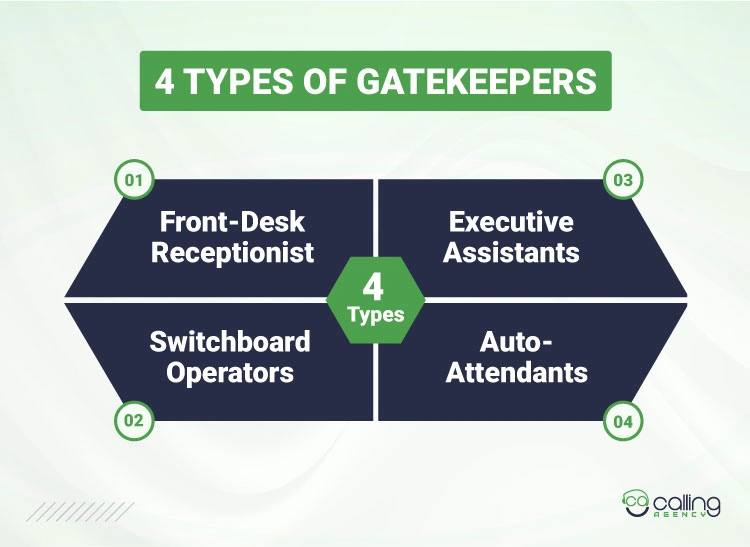
4 Types of Gatekeepers
- Front-desk receptionist: The person in the lobby who answers phones, checks in guests, signs for deliveries, etc.
- Switchboard Operators: Their only job is to answer the phone and route calls
- Executive Assistants: Administrative resource that often answer the phone for executives
- Auto-Attendants: Automated phone tree that routes and directs calls
Why Fighting With Gatekeepers Fails in B2B Telemarketing?
It fails when you treat gatekeepers in B2B telemarketing like they are just obstacles to be overcome. You need to understand that they are important stakeholders whose influence you need to gain.
Such a confrontational approach usually turns the gatekeeper into a wall that separates you from the decision maker. In fact, only about 2% of salespeople can get through to the decision-maker.
Consequences
- Adversarial Dynamics: Treating gatekeepers as barriers to be “defeated” leads to defensive behavior. They are trained to protect the executive’s time, and any aggressive or deceptive tactics results in immediate rejection.
- Loss of Credibility: Using scripted, generic, or overly aggressive pitches signals to the gatekeeper that you are a low-value solicitor rather than a peer or expert.
- Misunderstanding the Role: Gatekeepers are often influencers who provide critical context about the company’s current needs or decision-making processes. Fighting them closes off this valuable information source.
- Brand Damage: A negative interaction can blackball youfrom the entire organization, as they report to the decision-makers you are trying to reach.
The Cost of Treating Gatekeepers as Obstacles
You may have the perfect ICP, a compelling value proposition, and carefully crafted outreach sequences. Yet if your interaction remains solely with the executive assistant, office manager, or the middle-level filter, your deal will never take off.
The Cost as Obstacles
- High Rate of Wasted Time
- Missed Opportunities/Insights
- Damage to Reputation
- Burnout
Engaging them in a battle or trying to forcibly break through them is a losing game. It is disrespectful to the gatekeepers. Hence, it harms the brand image, since they are the ones who have the keys to the buying process.
How Are Gatekeepers as Internal Information Sources?
Gatekeepers in internal communication might be useful to a certain extent. However, it is very important to also acknowledge and deal with the potential negative consequences of their presence.
Companies need to strike a balance between maintaining order and making sure that the information flows willingly. You can not limit the damage done by gatekeepers but also foster a more open and innovative culture in your organization.
Key Aspects of Gatekeepers as Information Sources
- Information Filtering
- Boundary Spanning
- Knowledge Translation
- Active vs. Passive
| Type | Role and Impact |
| Administrative Assistants | Control executive calendars and filter phone calls, emails, and visitor access. |
| Financial Experts (Accountants) | Determine which financial or sustainability data is reported to management and how it effectively frames the company’s performance. |
| Technical Leads/ R&D Gatekeepers | Highly connected experts who seek out new technological trends and disseminate them to their teams. |
| Legal and IT Departments | Serve as “enforcer” gatekeepers who must sign off on projects before they can proceed.
|
| Corporate Communications | Decide which internal messages are produced and where they appear, managing the organization’s internal image. |
What Is The Mindset Shift Required to Turn Gatekeepers Into Allies?
Being allies with gatekeepers does not mean manipulating or outsmarting them. It is about being on amicable terms with them.
Every interaction that you have with the gatekeepers is an opportunity to create a positive impression. It will help establish a true connection that will provide you with the possibility to convert into a meaningful relationship.
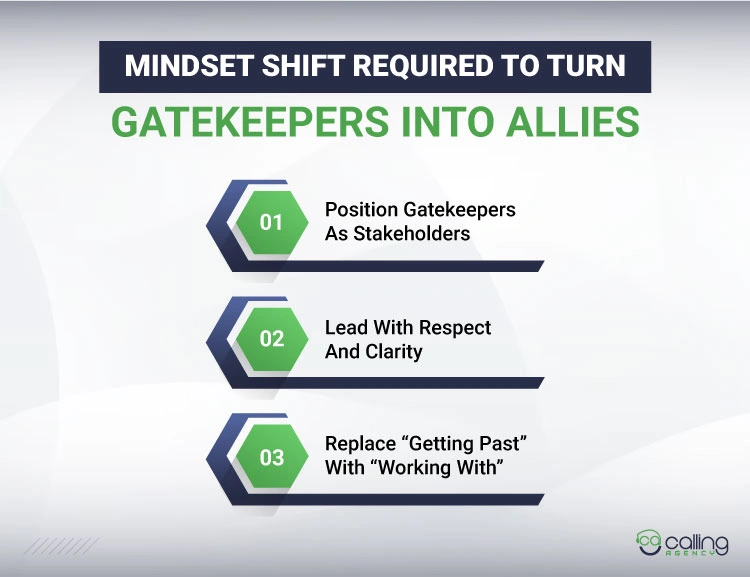
Position Gatekeepers as Stakeholders
Positioning gatekeepers as stakeholders requires a fundamental shift from viewing them as obstructions to allies or partners in the decision-making process.
How to Position Gatekeepers as Stakeholders?
1. Shift your mindset and start viewing them as your allies
- Respect their role
- Build a genuine rapport
- Make the interaction as humane as possible
2. Turn them into “informed” partners
- Share your value proposition early
- Ask for guidance and not for favors
- Use them for intelligence
3. Provide value to the gatekeeper
- Position your offering to make them look good
- Make their job easier
- Follow up with gratitude
4. Integrate them into the process
- Involve them in the outcome
- Treat them as a stakeholder in your planning
Lead With Respect and Clarity
You must alter your consideration of viewing gatekeepers to strategic partners instead of barriers. They are the ones who protect an executive’s most valuable asset: time.
- Adapt a partnership mindset
- Practice radical transparency
- Seek their expertise
- Respect their boundaries
- Follow through and acknowledge
Replace “Getting Past” With “Working With”
The challenge is magnified in B2B environments where decision-makers are heavily insulated. Organizations with multiple layers of management and smaller, fast-growing companies often face challenges due to time constraints and overwhelming inboxes. Gatekeepers exist to protect their executives’ time, manage priorities, and filter out low-value noise.
Changing the attitude of “getting past” gatekeepers to “working with” them converts these people from barriers into strategic partners.
This change in perspective acknowledges that assistants, receptionists, and office managers manage significant influence over executive time. If you give them respect and make them feel like partners, they will be help you within the organization.
Core Principles to Get Past Gatekeepers Without Being Pushy
- Lead with context and not a pitch
- Ask for guidance and not favors
- Be transparent about your intent
- Make saying “No” safe
What Are The Proven Call Strategies That Turn Gatekeepers Into Allies?
You’ve tried everything from cold calling to emails to even social media outreach. Yet, the gatekeeper stops you every time. Without direct access to decision-makers, your efforts feel like they’re going nowhere.
It doesn’t have to be this hard. With the right strategies, you can bypass gatekeepers and get through to the people who matter.
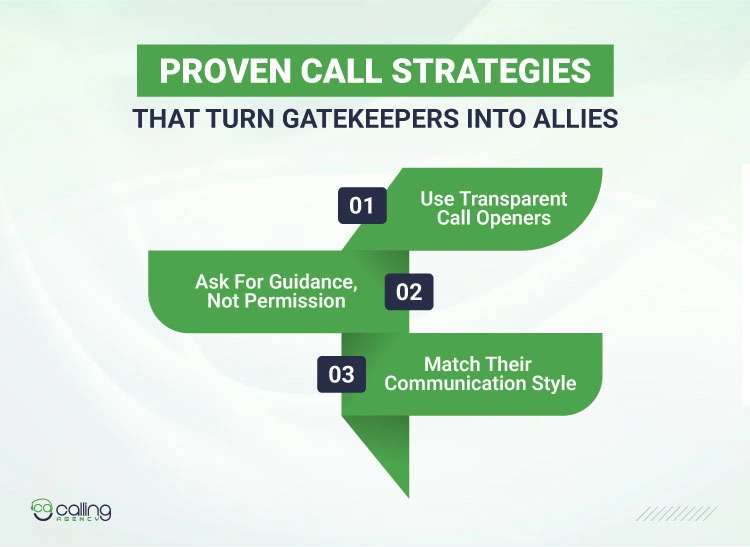
Use Transparent Call Openers
Transparent call openers in modern B2B sales strategy treat gatekeepers as accomplices rather than hindrances. Transparency builds immediate trust, reduces resistance, and increases the likelihood of being connected to the decision-maker.
Ask for Guidance, Not Permission
This approach is a psychological sales strategy that transfers the dynamic from a salesperson looking for approval to a professional seeking internal expertise.
With the implementation of this gesture, the knowledgeable gatekeepers become your advisors. You can now enlist them as allies who will help you navigate organizational hierarchies.
Match Their Communication Style
Mirroring your gatekeeper’s communication style is a well-documented approach that will assist you in establishing rapport and eventually transforming them from barriers into allies. When you modify your tone, speed, and energy level, you create less friction, and the chances of getting hold of a decision- maker go up.
Proven Strategies for Matching Style
- Synchronize Pace and Energy
- Adopt Their Vernacular
- Balance Confidence with Formality
What Are The Language Frameworks That Build Gatekeeper Trust?
It is a specialized protocol and communication strategy that is designed to establish security and reliability when interacting with the gatekeepers. The frameworks are primarily segmented into Technical Interaction Protocols for AI and Sociotechnical/Security Frameworks for organizational access.
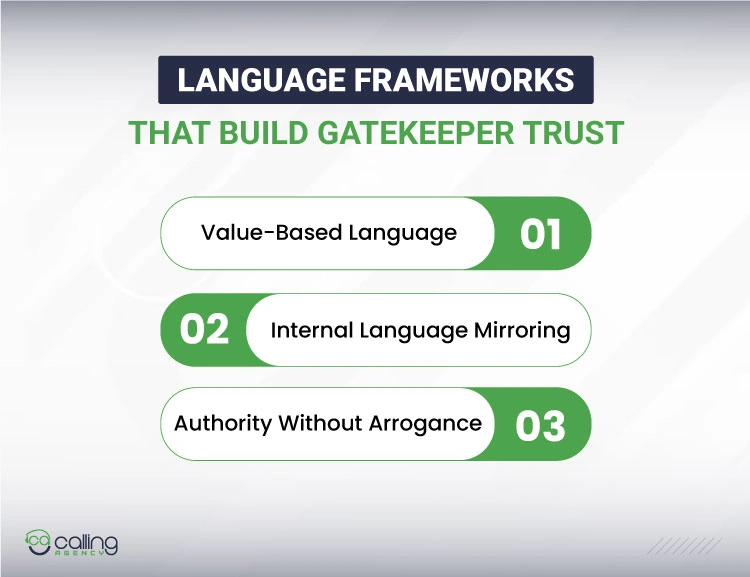
Value-based Language
Value-based language aligns AI or technical protocols with human values to establish trust with the gatekeepers. It uses “value-laden” language to build confidence. It moves from simple technical specifications to articulating benefits such as safety, security, privacy, and “fair” data usage.
Practical Frameworks for Building Trust
- Lead with Context, Not Features
- Establish Value Similarity (LLM Agents)
- Horizontalization of Relationships
- Respect and Authority Language
Internal Language Mirroring
Internal language mirroring is a method where an AI model or communication system analyzes the style, words, and ideas used by “gatekeepers”. Then it gradually imitates them to create a relationship, trust, and agreement.
When the system reflects the gatekeepers’ language, it indicates it has been listening, reducing their perceived risk and facilitating permission for access.
Authority Without Arrogance
One way to win gatekeepers’ trust is to build a trustworthy authority without showing off. Your resulting changed attitude will be less of an “I have to control the conversation” and more of “I can guide the process”.
Gatekeepers, such as secretaries, coordinators, or purchasing professionals, are also responsible for finding the right solutions that will assist their bosses. The scripts of talk creating trust concentrate on respect, transparency, and helpfulness and thus convert the gatekeeper into an associate.
Key Framework Tactics to Build Trust
- Lead with Curiosity
- Anchor in Evidence
- Address Objections Upfront
- Practice Consistent Repetition
- Preparation as Power
What Questions Turn Gatekeepers Into Information Allies?
It has been noted that gatekeepers often have an adverse disposition towards all unsolicited sales attempts. However, their unfriendly and unresponsive attitude can be changed if you inadvertently turn them into an ally. After all, gatekeepers are human too and their conduct can be changed and managed by employing a good strategy.
Timing Questions
Tactical questioning emphasized that timing can change gatekeepers from barriers into valuable partners. You can ask them for their expert guidance on the prospect’s schedule and priorities. You are the one to validate their importance and attain critical internal intelligence.
Tactical Approaches to Timing
- Call During Off-Peak Hours
- Enlist Their Help Directly
- Acknowledge Their Protective Role
- Verify the Owner and Path
Process Questions
This approach emphasizes the importance of gatekeepers and enlists their expertise to navigate the organization. The questions make sure to treat them as collaborators who have critical knowledge about the decision-maker’s schedules, preferences and priorities.
4 key types of process questions:
- Seeking advice and collaboration
- Information gathering
- Converting objections into process
- Building rapport and trust
Priority Questions
For this combined partnership, you need to have a “me vs. them” mindset. A successful outreach relies on recognizing its capability as a primary protector of the decision-maker’s time.
1. Questions That Seek Guidance
These are the types of questions that lower defensiveness by positioning the gatekeeper as a consultant who knows the organization better.
“I’m hoping you might help me. I’m trying to find the right person who handles [specific project]. Could you point me in the right direction?”
2. Questions That Validate Their Expertise
By asking for their opinion, you acknowledge their influence and understanding of internal goals.
“I’d love your perspective—is this a topic your team is currently focusing on?”
3. Questions That Protect Their Time (and the Boss’s)
Gatekeepers are rewarded for minimizing risk and protecting workflow. Show you are a “safe” contact by respecting their boundaries.
“Is this a good time for us to speak briefly, or should I try calling back next Tuesday morning?”
4. Strategic “No-Oriented” Questions
Based on advanced negotiation techniques, these questions make the gatekeeper feel safe and in control.
“Would it be a bad idea for me to send a brief overview for you to look at first?”
3 Common Mistakes That Destroy Gatekeeper Relationships
To avoid destroying relationships with gatekeepers, treat them with the same respect that you would to a C-Suite Executive. You should tend to be direct, honest and take time to build a genuine and polite connection.
1. Using Deceptive Tactics
Gatekeepers perform the essential functions of filtering and acting as intermediaries of information. Maintaining professional credibility depends largely on how well they can manage access and safeguard their principals’ time and interests.
Deceptive tactics by a professional presents a gatekeeper with a dilemma, making him appear either incapable or negligent to his employer. The foundation to a great relationship with a gatekeeper is trust, respect, and empathy, the complete negation of deceit.
2. Sounding Scripted or Rushed
Gatekeepers are usually trained to screen calls and are often busy. They can quickly identify and filter out anyone who sounds monotonous or is trying to “shove” through the pitch.
Building a sincere relationship with the gatekeeper can turn them into an ally for reaching the decision-maker, instead of an obstacle.
Strategy for Success
- Slow Down Your Pacing
- Customize the Approach
- Be Transparent, Not Evasive
- Practice for Naturalism
3. Ignoring the Gatekeeper After Initial Contact
Ignoring a gatekeeper after your first contact is a huge mistake. These people act as your strategic allies who basically control access to the decision-makers.
Treating gatekeepers as mere obstacles rather than long-term partners can stall your sales process and harm your professional credibility.
How to Maintain the Relationship After Initial Contact
- Acknowledge and Keep Them in the Loop: If a gatekeeper helped you previously, thank them.
- Ask for Their Advice: Treat them as part of the sales process.
- Record Details in CRM: Note their name and any personal details they shared. Using their name in future calls builds immediate rapport.
- Consistency over Aggression: Follow up with a consistent, polite cadence rather than high-pressure tactics.
- Use Them as an Ally: Instead of bypassing them, ask for their help to get on the calendar.
How to Maintain Long-Term Gatekeeper Alliances?
Lasting relationships with gatekeepers are built on respect, trust, consistent communication, and offering mutual value.
Follow Up With Courtesy
Consistent and respectful follow-ups help transform a gatekeeper from viewing someone as an adversary to seeing them as a collaborator.
If you consider gatekeepers as professionals whose work you really appreciate, your chances of getting to the decision-makers will be less complicated. You will also be able to have their support in the sales process
Share Relevant Updates Only
Maintaining alliances with gatekeepers requires shifting from a transactional mindset to one based on mutual respect, trust, and providing genuine value. These are the people who are responsible for protecting the decision-maker’s time. So aligning with their goals is crucial for your benefit.
Key Strategies
- Curate relevant, high-value information
- Build trust and understanding
- Maintain data accuracy and professionalism
- Leverage relationships for mutual gain
Build Familiarity Over Multiple Touchpoints
You can create familiarity through consistent, personalized, and value-added touchpoints. You turn gatekeepers into internal champions who advocate for your solution.
1. Transform Mindset: Gatekeeper as Ally
- Acknowledge their Authority
- Build Rapport First
- Respect their Role
2. Multi-Touchpoint Strategies for Familiarity
- LinkedIn Engagement
- Value-Added Emails
- Strategic Socializing
- Warm Up with SMS
3. Executing the “Long Game” Approach
- Record Personal Details
- Consistent Follow-Up
- Use Their Knowledge
- Leverage Referrals
4. Best Practices for Maintaining the Alliance
- Be Patient and Consistent
- Never Pitch the Gatekeeper
- Leverage Reciprocity
- Be Direct and Confident
Conclusion
When you know how, getting past the gatekeeper is simple. You may easily create rapport with the gatekeeper by addressing your call with conviction and recognizing that they have a job to do. This will encourage them to move you on.
Demonstrate your understanding of the company, but reserve your pitch for your prospect. If you follow our suggestions, you’ll have a better chance of generating leads.